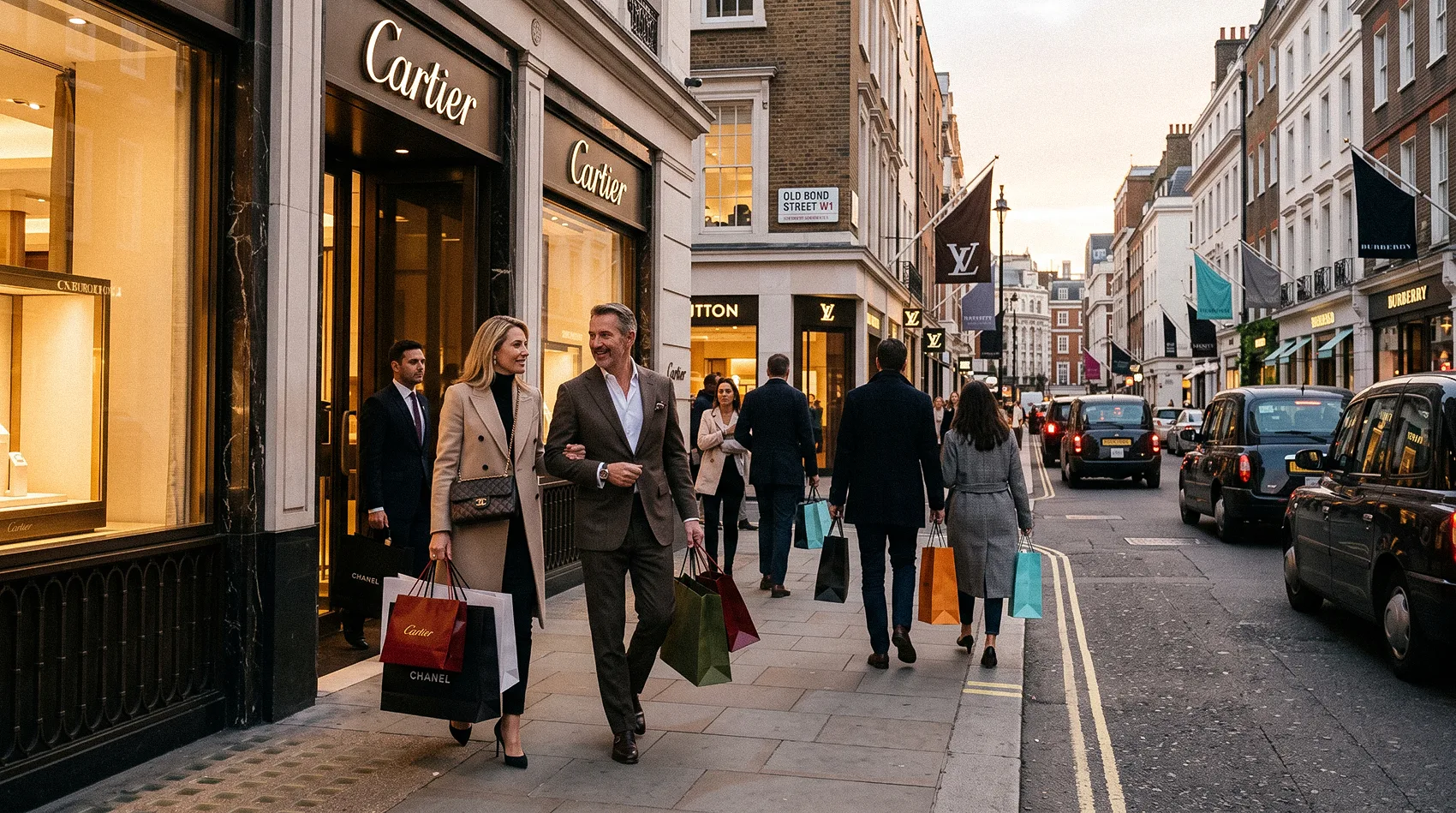
Feb 19, 2026
The Power of Affluent Consumers in a Recession
UK luxury spending reached £7.7 billion in 2026 despite economic headwinds. Here is why the affluent segment remains the most resilient, and how smart brands target them.
⏱ 4 min read
By mediareach
Why Targeting Affluent Consumers is Key during a recession?
Recessions do not affect everyone equally. While mass-market consumers retrench, affluent buyers often maintain, or even increase, their discretionary spending. The UK luxury goods market is valued at $27.43 billion in 2026, up from $26.32 billion in 2025. Luxury product retail revenue has skyrocketed to £7.7 billion, growing at a compound annual rate of 11.5% over the past five years. These figures were achieved while 45% of UK adults cut non-essential spending and inflation remained above target.
Economic downturns separate resilient consumers from vulnerable ones. Brands that shift marketing investment toward the affluent segment outperform competitors who chase volume at lower price points.
The Data: Affluent Spending Defies the Downturn
The UK high-net-worth population is growing, not shrinking. Capgemini's World Wealth Report 2026 found that UK HNWI wealth grew 4.1% year-over-year to over $2.4 trillion in 2025. Among ultra-high-net-worth individuals, wealth surged 6.7%. The UK now houses approximately 23,000–25,000 UHNWIs, and the top 10% of earners account for 28% of total national income.
Contrast this with the mass market. Barclays data from May 2026 shows consumer card spending grew just 0.8% year-on-year, still trailing 3.4% inflation. Two-thirds of households are making financial adjustments, with 45% limiting non-essential purchases.
Yet within this same economy, the luxury sector thrives. Between 2023 and 2025, an estimated 80% of luxury market growth stemmed from price increases rather than volume gains. Brands raised prices. Consumers at the top paid them. This is a market dependent on concentrated wealth, and that wealth is expanding.
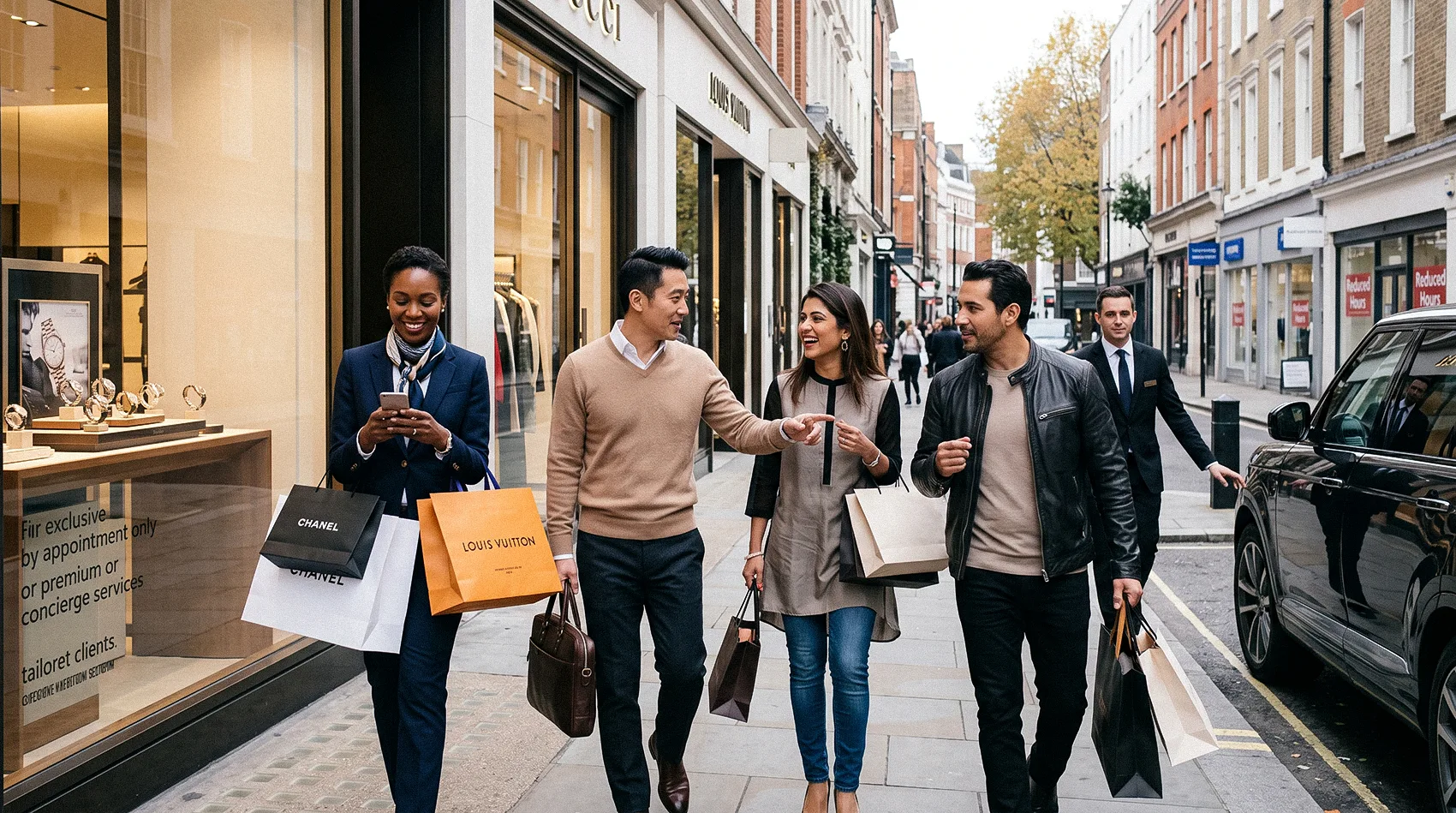
The Bifurcation: Aspirational vs. Core Luxury Consumers
Not all luxury consumers behave the same way in a recession. Harvard Business Review research identifies four distinct segments during downturns: the "slam-on-the-brakes" group, the "pained-but-patient" majority, the "live-for-today" segment, and the "comfortably-well-off", those who feel secure and continue consuming at near-normal levels.
In the luxury market, this manifests as a clear split. Aspirational shoppers, those spending €3,000–€10,000 annually on luxury, have pulled back sharply. An estimated 35% of aspirational luxury customers have delayed or reduced spending amid price increases and economic uncertainty. These are the consumers who bought entry-level handbags and logo-heavy accessories. They are now retreating.
Core luxury consumers and UHNWIs have not. They continue purchasing heritage pieces, hard luxury categories like jewellery and watches, and bespoke services. The result is a polarised market: brands that depended on aspirational volume are struggling, while those focused on the ultra-wealthy report resilient margins. Hermès, with its scarcity model, continues to outperform. Saks Global, dependent on a broader, more aspirational customer base, recently filed for bankruptcy.
For marketers, the lesson is precise: do not market to "luxury consumers" as a monolith. Market to the segment that retains purchasing power.
How to Target Affluent Consumers Effectively
Targeting HNWIs is not simply a matter of placing ads in expensive media. It requires understanding how this segment makes decisions, where they spend attention, and what they value beyond the product itself.
Prioritise experience over possession.
The UK luxury market is increasingly driven by the "experience economy." Affluent consumers aged 25–40, now the major segment of global luxury purchasing power, prioritise authenticity, sustainability, and brand narrative alongside traditional prestige. Single-brand stores, which command 38–45% of UK luxury distribution, succeed because they offer immersive brand experiences rather than mere transactions. Private shopping suites, bespoke services, and white-glove delivery are not add-ons. They are the product.
Leverage digital with sophistication.
Over 70% of luxury discovery now happens on smartphones, yet the affluent consumer expects a premium digital experience. High-resolution imagery, 360-degree views, augmented reality try-ons, and AI-driven personalisation are baseline expectations. Online luxury sales are forecast to grow at 5.32–11.5% CAGR through 2034, the fastest-growing channel. But the digital experience must feel exclusive, not mass-market. Personalised recommendations, invitation-only digital events, and concierge chat services bridge the gap between scale and exclusivity.
Communicate value, not discounts.
Deep discounting is fatal to luxury positioning. Saks Fifth Avenue's aggressive price cuts during the 2001 recession brought short-term revenue but undercut its luxury status; sales were slow to recover when the economy rebounded. Instead, communicate craftsmanship, heritage, scarcity, and service. Offer loyalty members exclusive access, early releases, or bespoke experiences rather than percentage-off promotions. The affluent consumer is not price-sensitive in the traditional sense. They are value-sensitive in a deeper one.
Build community, not just customer lists.
HNWIs are increasingly mobile and globally fluid. An estimated 25% of UK HNWIs have considered relocating abroad, driven by tax changes and lifestyle preferences. Yet they maintain strong ties to the UK. Brands that create genuine community, through exclusive events, cultural partnerships, and shared experiences, build relationships that transcend geography. The goal is to become part of the client's identity, not merely their wardrobe.
The UK Context: Opportunities and Risks
London remains a global luxury capital, with international tourists spending approximately £32 billion in the UK in 2024, a substantial portion on luxury shopping in central London districts. Bond Street, Sloane Street, and Regent Street continue to generate significant revenue for heritage and contemporary brands alike.
However, risks exist. The UK is forecast to lose a record 16,500 millionaires in 2026, the largest net outflow recorded by Henley & Partners since tracking began. The abolition of non-domicile tax status in April 2025, combined with rising capital gains and inheritance taxes, has prompted wealthy residents to reassess their UK base.
The response is not to retreat, but to adapt. Brands must deepen relationships with the HNWIs who remain, while capturing international visitors and the next generation of wealthy consumers. The men's luxury segment is projected to grow at 4.92% CAGR, faster than women's, driven by younger male shoppers embracing premium fashion and streetwear. Gen Z and millennial HNWIs, who will inherit an estimated $6 trillion in 2026 alone, prioritise sustainability and authenticity over ostentation. These are the growth vectors.
Conclusion: Recession Is a Segmentation Opportunity
Economic downturns do not destroy demand. They redistribute it. The brands that understand this, that recognise the bifurcation between retreating aspirational shoppers and resilient core affluents, can capture market share while competitors panic.
The evidence from the UK in 2026 is unambiguous. Luxury spending is growing. HNWI wealth is expanding. The top 20% of customers drive 80% of profits. Yet too many brands still market as if all consumers face the same constraints. They do not. The affluent segment is not recession-proof, but it is recession-resistant in ways that mass-market segments are not.
For marketers, the strategy is clear: identify your highest-value customers, understand what they value beyond price, communicate that value with precision, and invest in relationships that outlast economic cycles. Recessions are not moments to retreat. They are moments to focus. The brands that focus on the affluent now will emerge with stronger positioning, deeper customer relationships, and greater profitability when the recovery comes.
Target the Consumers Who Keep Spending
Mediareach brings four decades of expertise in multicultural and luxury marketing. From precision audience targeting to culturally intelligent creative, we help brands connect with the UK's most valuable consumers.
Sources & References
Mordor Intelligence, "UK Luxury Goods Market Size & Share Analysis," August 2026. mordorintelligence.com
IMARC Group, "UK Luxury Fashion Market Size, Share 2026-2034." imarcgroup.com
IBISWorld, "Luxury Product Retailers in the UK Industry Analysis," March 2026. ibisworld.com
Capgemini Research Institute, "World Wealth Report 2026," June 2026. capgemini.com
Business of Fashion, "The State of Fashion 2026 Report," January 2026. businessoffashion.com
Barclays, "May 2026 Spend Trends," June 2026. home.barclays
Office for National Statistics, "Public Opinions and Social Trends," August 2026. ons.gov.uk
Henley & Partners, "Private Wealth Migration Report 2026." henleyglobal.com
Saltus, "Wealth Index Report, February 2026." saltus.co.uk
Bain & Company, "The Ultimate Guide to a Recession-Proof Brand," via Annex Cloud, May 2025. annexcloud.com
Harvard Business School, "Marketing Your Way Through a Recession," Working Knowledge, March 2008. library.hbs.edu
PKF O'Connor Davies, "The Luxury Market — What Happened?" March 2026. pkfod.com
Mediareach Advertising, "Luxury and Affluent Consumer Marketing Services," 2026. mediareach.co
affluent consumer marketing UK
luxury marketing recession 2026
high net worth individuals UK
targeting wealthy consumers downturn
UK luxury market statistics
HNWI consumer behaviour
recession proof marketing strategy
premium brand positioning UK
affluent audience targeting
luxury goods market UK 2026
ultra high net worth UK
luxury consumer segmentation
recession marketing strategy UK
high value customer retention
luxury brand marketing London
The UK's pioneering multicultural marketing and advertising agency. Over 40 years connecting brands with diverse communities through cultural insight, creative excellence, and intelligent media strategy. mediareach.co



Feb 19, 2026
The Power of Affluent Consumers in a Recession
UK luxury spending reached £7.7 billion in 2026 despite economic headwinds. Here is why the affluent segment remains the most resilient, and how smart brands target them.
⏱ 4 min read
By mediareach
Why Targeting Affluent Consumers is Key during a recession?
Recessions do not affect everyone equally. While mass-market consumers retrench, affluent buyers often maintain, or even increase, their discretionary spending. The UK luxury goods market is valued at $27.43 billion in 2026, up from $26.32 billion in 2025. Luxury product retail revenue has skyrocketed to £7.7 billion, growing at a compound annual rate of 11.5% over the past five years. These figures were achieved while 45% of UK adults cut non-essential spending and inflation remained above target.
Economic downturns separate resilient consumers from vulnerable ones. Brands that shift marketing investment toward the affluent segment outperform competitors who chase volume at lower price points.
The Data: Affluent Spending Defies the Downturn
The UK high-net-worth population is growing, not shrinking. Capgemini's World Wealth Report 2026 found that UK HNWI wealth grew 4.1% year-over-year to over $2.4 trillion in 2025. Among ultra-high-net-worth individuals, wealth surged 6.7%. The UK now houses approximately 23,000–25,000 UHNWIs, and the top 10% of earners account for 28% of total national income.
Contrast this with the mass market. Barclays data from May 2026 shows consumer card spending grew just 0.8% year-on-year, still trailing 3.4% inflation. Two-thirds of households are making financial adjustments, with 45% limiting non-essential purchases.
Yet within this same economy, the luxury sector thrives. Between 2023 and 2025, an estimated 80% of luxury market growth stemmed from price increases rather than volume gains. Brands raised prices. Consumers at the top paid them. This is a market dependent on concentrated wealth, and that wealth is expanding.
The Bifurcation: Aspirational vs. Core Luxury Consumers
Not all luxury consumers behave the same way in a recession. Harvard Business Review research identifies four distinct segments during downturns: the "slam-on-the-brakes" group, the "pained-but-patient" majority, the "live-for-today" segment, and the "comfortably-well-off", those who feel secure and continue consuming at near-normal levels.
In the luxury market, this manifests as a clear split. Aspirational shoppers, those spending €3,000–€10,000 annually on luxury, have pulled back sharply. An estimated 35% of aspirational luxury customers have delayed or reduced spending amid price increases and economic uncertainty. These are the consumers who bought entry-level handbags and logo-heavy accessories. They are now retreating.
Core luxury consumers and UHNWIs have not. They continue purchasing heritage pieces, hard luxury categories like jewellery and watches, and bespoke services. The result is a polarised market: brands that depended on aspirational volume are struggling, while those focused on the ultra-wealthy report resilient margins. Hermès, with its scarcity model, continues to outperform. Saks Global, dependent on a broader, more aspirational customer base, recently filed for bankruptcy.
For marketers, the lesson is precise: do not market to "luxury consumers" as a monolith. Market to the segment that retains purchasing power.
How to Target Affluent Consumers Effectively
Targeting HNWIs is not simply a matter of placing ads in expensive media. It requires understanding how this segment makes decisions, where they spend attention, and what they value beyond the product itself.
Prioritise experience over possession.
The UK luxury market is increasingly driven by the "experience economy." Affluent consumers aged 25–40, now the major segment of global luxury purchasing power, prioritise authenticity, sustainability, and brand narrative alongside traditional prestige. Single-brand stores, which command 38–45% of UK luxury distribution, succeed because they offer immersive brand experiences rather than mere transactions. Private shopping suites, bespoke services, and white-glove delivery are not add-ons. They are the product.
Leverage digital with sophistication.
Over 70% of luxury discovery now happens on smartphones, yet the affluent consumer expects a premium digital experience. High-resolution imagery, 360-degree views, augmented reality try-ons, and AI-driven personalisation are baseline expectations. Online luxury sales are forecast to grow at 5.32–11.5% CAGR through 2034, the fastest-growing channel. But the digital experience must feel exclusive, not mass-market. Personalised recommendations, invitation-only digital events, and concierge chat services bridge the gap between scale and exclusivity.
Communicate value, not discounts.
Deep discounting is fatal to luxury positioning. Saks Fifth Avenue's aggressive price cuts during the 2001 recession brought short-term revenue but undercut its luxury status; sales were slow to recover when the economy rebounded. Instead, communicate craftsmanship, heritage, scarcity, and service. Offer loyalty members exclusive access, early releases, or bespoke experiences rather than percentage-off promotions. The affluent consumer is not price-sensitive in the traditional sense. They are value-sensitive in a deeper one.
Build community, not just customer lists.
HNWIs are increasingly mobile and globally fluid. An estimated 25% of UK HNWIs have considered relocating abroad, driven by tax changes and lifestyle preferences. Yet they maintain strong ties to the UK. Brands that create genuine community, through exclusive events, cultural partnerships, and shared experiences, build relationships that transcend geography. The goal is to become part of the client's identity, not merely their wardrobe.
The UK Context: Opportunities and Risks
London remains a global luxury capital, with international tourists spending approximately £32 billion in the UK in 2024, a substantial portion on luxury shopping in central London districts. Bond Street, Sloane Street, and Regent Street continue to generate significant revenue for heritage and contemporary brands alike.
However, risks exist. The UK is forecast to lose a record 16,500 millionaires in 2026, the largest net outflow recorded by Henley & Partners since tracking began. The abolition of non-domicile tax status in April 2025, combined with rising capital gains and inheritance taxes, has prompted wealthy residents to reassess their UK base.
The response is not to retreat, but to adapt. Brands must deepen relationships with the HNWIs who remain, while capturing international visitors and the next generation of wealthy consumers. The men's luxury segment is projected to grow at 4.92% CAGR, faster than women's, driven by younger male shoppers embracing premium fashion and streetwear. Gen Z and millennial HNWIs, who will inherit an estimated $6 trillion in 2026 alone, prioritise sustainability and authenticity over ostentation. These are the growth vectors.
Conclusion: Recession Is a Segmentation Opportunity
Economic downturns do not destroy demand. They redistribute it. The brands that understand this, that recognise the bifurcation between retreating aspirational shoppers and resilient core affluents, can capture market share while competitors panic.
The evidence from the UK in 2026 is unambiguous. Luxury spending is growing. HNWI wealth is expanding. The top 20% of customers drive 80% of profits. Yet too many brands still market as if all consumers face the same constraints. They do not. The affluent segment is not recession-proof, but it is recession-resistant in ways that mass-market segments are not.
For marketers, the strategy is clear: identify your highest-value customers, understand what they value beyond price, communicate that value with precision, and invest in relationships that outlast economic cycles. Recessions are not moments to retreat. They are moments to focus. The brands that focus on the affluent now will emerge with stronger positioning, deeper customer relationships, and greater profitability when the recovery comes.
Target the Consumers Who Keep Spending
Mediareach brings four decades of expertise in multicultural and luxury marketing. From precision audience targeting to culturally intelligent creative, we help brands connect with the UK's most valuable consumers.
Sources & References
Mordor Intelligence, "UK Luxury Goods Market Size & Share Analysis," August 2026. mordorintelligence.com
IMARC Group, "UK Luxury Fashion Market Size, Share 2026-2034." imarcgroup.com
IBISWorld, "Luxury Product Retailers in the UK Industry Analysis," March 2026. ibisworld.com
Capgemini Research Institute, "World Wealth Report 2026," June 2026. capgemini.com
Business of Fashion, "The State of Fashion 2026 Report," January 2026. businessoffashion.com
Barclays, "May 2026 Spend Trends," June 2026. home.barclays
Office for National Statistics, "Public Opinions and Social Trends," August 2026. ons.gov.uk
Henley & Partners, "Private Wealth Migration Report 2026." henleyglobal.com
Saltus, "Wealth Index Report, February 2026." saltus.co.uk
Bain & Company, "The Ultimate Guide to a Recession-Proof Brand," via Annex Cloud, May 2025. annexcloud.com
Harvard Business School, "Marketing Your Way Through a Recession," Working Knowledge, March 2008. library.hbs.edu
PKF O'Connor Davies, "The Luxury Market — What Happened?" March 2026. pkfod.com
Mediareach Advertising, "Luxury and Affluent Consumer Marketing Services," 2026. mediareach.co
affluent consumer marketing UK
luxury marketing recession 2026
high net worth individuals UK
targeting wealthy consumers downturn
UK luxury market statistics
HNWI consumer behaviour
recession proof marketing strategy
premium brand positioning UK
affluent audience targeting
luxury goods market UK 2026
ultra high net worth UK
luxury consumer segmentation
recession marketing strategy UK
high value customer retention
luxury brand marketing London
The UK's pioneering multicultural marketing and advertising agency. Over 40 years connecting brands with diverse communities through cultural insight, creative excellence, and intelligent media strategy. mediareach.co
Feb 19, 2026
The Power of Affluent Consumers in a Recession
UK luxury spending reached £7.7 billion in 2026 despite economic headwinds. Here is why the affluent segment remains the most resilient, and how smart brands target them.
⏱ 4 min read
By mediareach
Why Targeting Affluent Consumers is Key during a recession?
Recessions do not affect everyone equally. While mass-market consumers retrench, affluent buyers often maintain, or even increase, their discretionary spending. The UK luxury goods market is valued at $27.43 billion in 2026, up from $26.32 billion in 2025. Luxury product retail revenue has skyrocketed to £7.7 billion, growing at a compound annual rate of 11.5% over the past five years. These figures were achieved while 45% of UK adults cut non-essential spending and inflation remained above target.
Economic downturns separate resilient consumers from vulnerable ones. Brands that shift marketing investment toward the affluent segment outperform competitors who chase volume at lower price points.
The Data: Affluent Spending Defies the Downturn
The UK high-net-worth population is growing, not shrinking. Capgemini's World Wealth Report 2026 found that UK HNWI wealth grew 4.1% year-over-year to over $2.4 trillion in 2025. Among ultra-high-net-worth individuals, wealth surged 6.7%. The UK now houses approximately 23,000–25,000 UHNWIs, and the top 10% of earners account for 28% of total national income.
Contrast this with the mass market. Barclays data from May 2026 shows consumer card spending grew just 0.8% year-on-year, still trailing 3.4% inflation. Two-thirds of households are making financial adjustments, with 45% limiting non-essential purchases.
Yet within this same economy, the luxury sector thrives. Between 2023 and 2025, an estimated 80% of luxury market growth stemmed from price increases rather than volume gains. Brands raised prices. Consumers at the top paid them. This is a market dependent on concentrated wealth, and that wealth is expanding.
The Bifurcation: Aspirational vs. Core Luxury Consumers
Not all luxury consumers behave the same way in a recession. Harvard Business Review research identifies four distinct segments during downturns: the "slam-on-the-brakes" group, the "pained-but-patient" majority, the "live-for-today" segment, and the "comfortably-well-off", those who feel secure and continue consuming at near-normal levels.
In the luxury market, this manifests as a clear split. Aspirational shoppers, those spending €3,000–€10,000 annually on luxury, have pulled back sharply. An estimated 35% of aspirational luxury customers have delayed or reduced spending amid price increases and economic uncertainty. These are the consumers who bought entry-level handbags and logo-heavy accessories. They are now retreating.
Core luxury consumers and UHNWIs have not. They continue purchasing heritage pieces, hard luxury categories like jewellery and watches, and bespoke services. The result is a polarised market: brands that depended on aspirational volume are struggling, while those focused on the ultra-wealthy report resilient margins. Hermès, with its scarcity model, continues to outperform. Saks Global, dependent on a broader, more aspirational customer base, recently filed for bankruptcy.
For marketers, the lesson is precise: do not market to "luxury consumers" as a monolith. Market to the segment that retains purchasing power.
How to Target Affluent Consumers Effectively
Targeting HNWIs is not simply a matter of placing ads in expensive media. It requires understanding how this segment makes decisions, where they spend attention, and what they value beyond the product itself.
Prioritise experience over possession.
The UK luxury market is increasingly driven by the "experience economy." Affluent consumers aged 25–40, now the major segment of global luxury purchasing power, prioritise authenticity, sustainability, and brand narrative alongside traditional prestige. Single-brand stores, which command 38–45% of UK luxury distribution, succeed because they offer immersive brand experiences rather than mere transactions. Private shopping suites, bespoke services, and white-glove delivery are not add-ons. They are the product.
Leverage digital with sophistication.
Over 70% of luxury discovery now happens on smartphones, yet the affluent consumer expects a premium digital experience. High-resolution imagery, 360-degree views, augmented reality try-ons, and AI-driven personalisation are baseline expectations. Online luxury sales are forecast to grow at 5.32–11.5% CAGR through 2034, the fastest-growing channel. But the digital experience must feel exclusive, not mass-market. Personalised recommendations, invitation-only digital events, and concierge chat services bridge the gap between scale and exclusivity.
Communicate value, not discounts.
Deep discounting is fatal to luxury positioning. Saks Fifth Avenue's aggressive price cuts during the 2001 recession brought short-term revenue but undercut its luxury status; sales were slow to recover when the economy rebounded. Instead, communicate craftsmanship, heritage, scarcity, and service. Offer loyalty members exclusive access, early releases, or bespoke experiences rather than percentage-off promotions. The affluent consumer is not price-sensitive in the traditional sense. They are value-sensitive in a deeper one.
Build community, not just customer lists.
HNWIs are increasingly mobile and globally fluid. An estimated 25% of UK HNWIs have considered relocating abroad, driven by tax changes and lifestyle preferences. Yet they maintain strong ties to the UK. Brands that create genuine community, through exclusive events, cultural partnerships, and shared experiences, build relationships that transcend geography. The goal is to become part of the client's identity, not merely their wardrobe.
The UK Context: Opportunities and Risks
London remains a global luxury capital, with international tourists spending approximately £32 billion in the UK in 2024, a substantial portion on luxury shopping in central London districts. Bond Street, Sloane Street, and Regent Street continue to generate significant revenue for heritage and contemporary brands alike.
However, risks exist. The UK is forecast to lose a record 16,500 millionaires in 2026, the largest net outflow recorded by Henley & Partners since tracking began. The abolition of non-domicile tax status in April 2025, combined with rising capital gains and inheritance taxes, has prompted wealthy residents to reassess their UK base.
The response is not to retreat, but to adapt. Brands must deepen relationships with the HNWIs who remain, while capturing international visitors and the next generation of wealthy consumers. The men's luxury segment is projected to grow at 4.92% CAGR, faster than women's, driven by younger male shoppers embracing premium fashion and streetwear. Gen Z and millennial HNWIs, who will inherit an estimated $6 trillion in 2026 alone, prioritise sustainability and authenticity over ostentation. These are the growth vectors.
Conclusion: Recession Is a Segmentation Opportunity
Economic downturns do not destroy demand. They redistribute it. The brands that understand this, that recognise the bifurcation between retreating aspirational shoppers and resilient core affluents, can capture market share while competitors panic.
The evidence from the UK in 2026 is unambiguous. Luxury spending is growing. HNWI wealth is expanding. The top 20% of customers drive 80% of profits. Yet too many brands still market as if all consumers face the same constraints. They do not. The affluent segment is not recession-proof, but it is recession-resistant in ways that mass-market segments are not.
For marketers, the strategy is clear: identify your highest-value customers, understand what they value beyond price, communicate that value with precision, and invest in relationships that outlast economic cycles. Recessions are not moments to retreat. They are moments to focus. The brands that focus on the affluent now will emerge with stronger positioning, deeper customer relationships, and greater profitability when the recovery comes.
Target the Consumers Who Keep Spending
Mediareach brings four decades of expertise in multicultural and luxury marketing. From precision audience targeting to culturally intelligent creative, we help brands connect with the UK's most valuable consumers.
Sources & References
Mordor Intelligence, "UK Luxury Goods Market Size & Share Analysis," August 2026. mordorintelligence.com
IMARC Group, "UK Luxury Fashion Market Size, Share 2026-2034." imarcgroup.com
IBISWorld, "Luxury Product Retailers in the UK Industry Analysis," March 2026. ibisworld.com
Capgemini Research Institute, "World Wealth Report 2026," June 2026. capgemini.com
Business of Fashion, "The State of Fashion 2026 Report," January 2026. businessoffashion.com
Barclays, "May 2026 Spend Trends," June 2026. home.barclays
Office for National Statistics, "Public Opinions and Social Trends," August 2026. ons.gov.uk
Henley & Partners, "Private Wealth Migration Report 2026." henleyglobal.com
Saltus, "Wealth Index Report, February 2026." saltus.co.uk
Bain & Company, "The Ultimate Guide to a Recession-Proof Brand," via Annex Cloud, May 2025. annexcloud.com
Harvard Business School, "Marketing Your Way Through a Recession," Working Knowledge, March 2008. library.hbs.edu
PKF O'Connor Davies, "The Luxury Market — What Happened?" March 2026. pkfod.com
Mediareach Advertising, "Luxury and Affluent Consumer Marketing Services," 2026. mediareach.co
affluent consumer marketing UK
luxury marketing recession 2026
high net worth individuals UK
targeting wealthy consumers downturn
UK luxury market statistics
HNWI consumer behaviour
recession proof marketing strategy
premium brand positioning UK
affluent audience targeting
luxury goods market UK 2026
ultra high net worth UK
luxury consumer segmentation
recession marketing strategy UK
high value customer retention
luxury brand marketing London
The UK's pioneering multicultural marketing and advertising agency. Over 40 years connecting brands with diverse communities through cultural insight, creative excellence, and intelligent media strategy. mediareach.co