Feb 24, 2026
Halal Food Market in London & Europe
The European halal food market is projected to reach $1.09 trillion by 2033. Brands that recognise the power of halal are thriving. Those that do not are losing ground.
⏱ 5 min read
By mediareach
In the dynamic world of marketing, staying ahead of the competition often demands innovative strategies. As the economic landscape continually evolves, UK and European brands are discovering a thriving market segment that holds the potential to boost sales and capture a larger market share, the halal food market. This burgeoning sector is helping brands make a significant impact and gain an edge in the increasingly diverse multicultural consumer landscape.
McDonald’s Success Story: A Case in Point
A notable success story comes from McDonald’s, where a branch in Southall was experiencing difficulties. Recognizing the potential of the halal market, the owners introduced halal burgers, resulting in a remarkable 300% increase in sales, according to McDonald’s sales data. This achievement has sparked interest within the organization to explore similar expansions across the UK, particularly in areas with a significant Muslim population.
£97.5B
UK halal food market value in 2025
$1.09T
European halal food market projected by 2033
35%
of UK non-Muslims have tried halal products
300%
sales increase for McDonald's Southall after introducing halal
The DMC: A Potent Consumer Segment
The Diverse Multicultural Communities (DMC) represent a formidable audience segment that cannot be overlooked. Comprising around 20% of the UK population, this group, predominantly consisting of millennials and Gen Z, wields remarkable spending power, equivalent to a staggering 35% of the total population's expenditure. Their influence extends beyond the realm of food purchasing, encompassing significant investments in real estate, luxury vehicles, financial services (including investments, money transfers, savings, and insurance), and more.
Within the DMC, the Muslim community's preferences and cultural practices have significantly driven the growth of the halal food segment, prompting a substantial number of food establishments to incorporate halal offerings into their menus. The results have been transformative, with these restaurants witnessing a remarkable surge in fortunes. Conversely, those brands that failed to recognise the potential of halal offerings saw their businesses dwindle.
"Brands aspiring to thrive in this market must prioritise the DMC, crafting and executing regular targeted campaigns. By doing so, they can cultivate loyal customer bases that will support their growth for years to come."
Mediareach Advertising
The Halal Food Market: By the Numbers
The scale of the halal opportunity is staggering. The UK halal food market was valued at £97.52 billion in 2025 and is projected to reach £204.62 billion by 2034, growing at 8.58% annually. The European halal food market is expected to reach $1.09 trillion by 2033 from $490.99 billion in 2024, with a CAGR of 9.34%. Europe represents 14.7% of the global halal food market, with France leading at 18.95% of European share, followed by Germany and the UK.
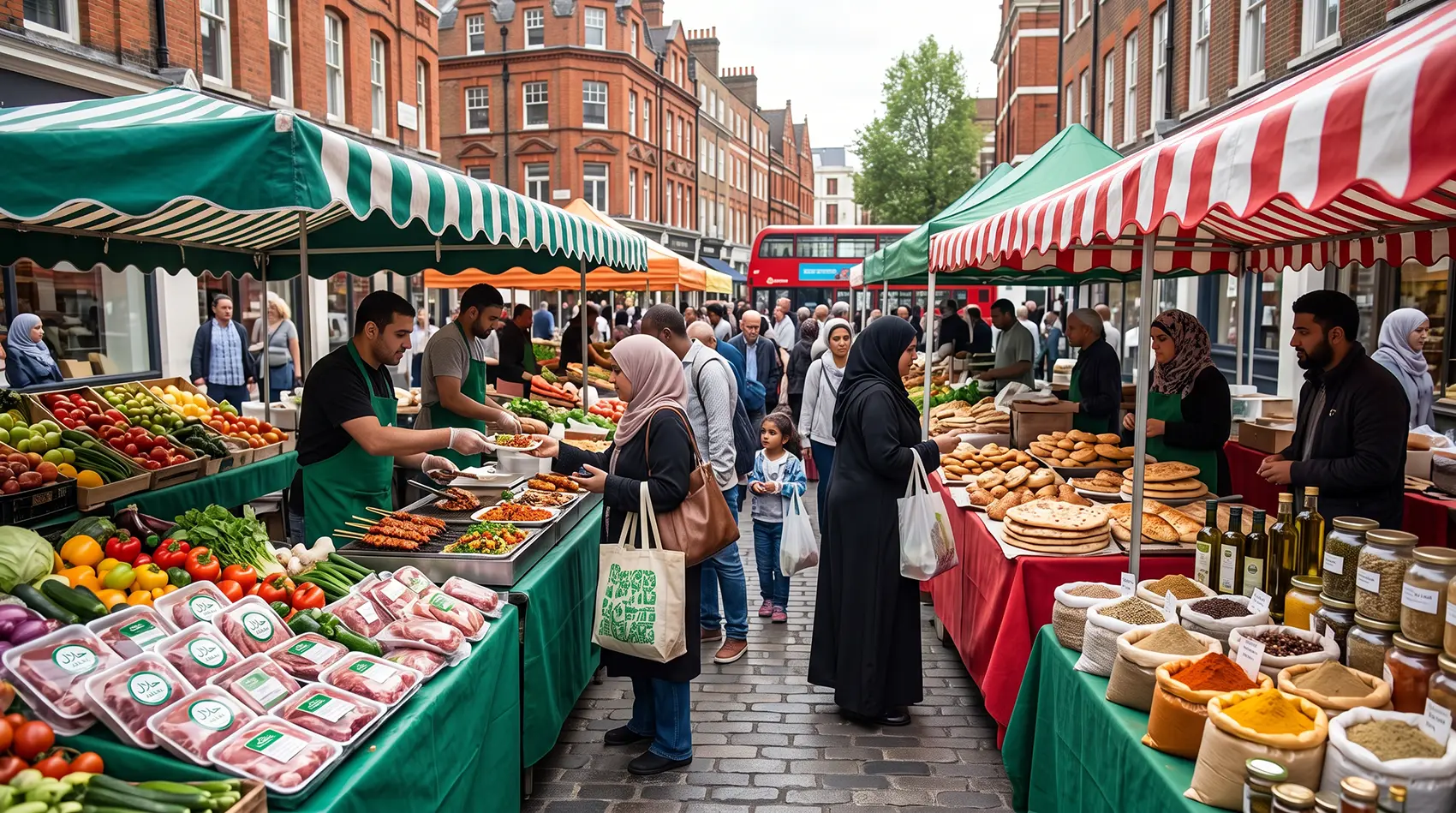
The global halal food market was valued at $911.53 billion in 2025 and is projected to grow to $1.26 trillion by 2034. Meat, poultry, and seafood dominate the UK market with a 50.3% share, while traditional retailers lead distribution channels at 51.7%. Muslims account for 30% of England's lamb consumption, and the average halal shopper spends £49.20 weekly on meat , more than double the UK average of £19.46.
Crucially, halal is no longer just for Muslims. A 2024 survey found that 35% of UK non-Muslims have tried halal products, citing health and ethics as primary motivations. Halal certification is increasingly perceived as a mark of quality, cleanliness, humane animal treatment, and strict hygiene standards. This broader acceptance is helping halal food move beyond religious boundaries into the wider ethical food market.
The Park Royal Case Study: Halal vs. Non-Halal in Action
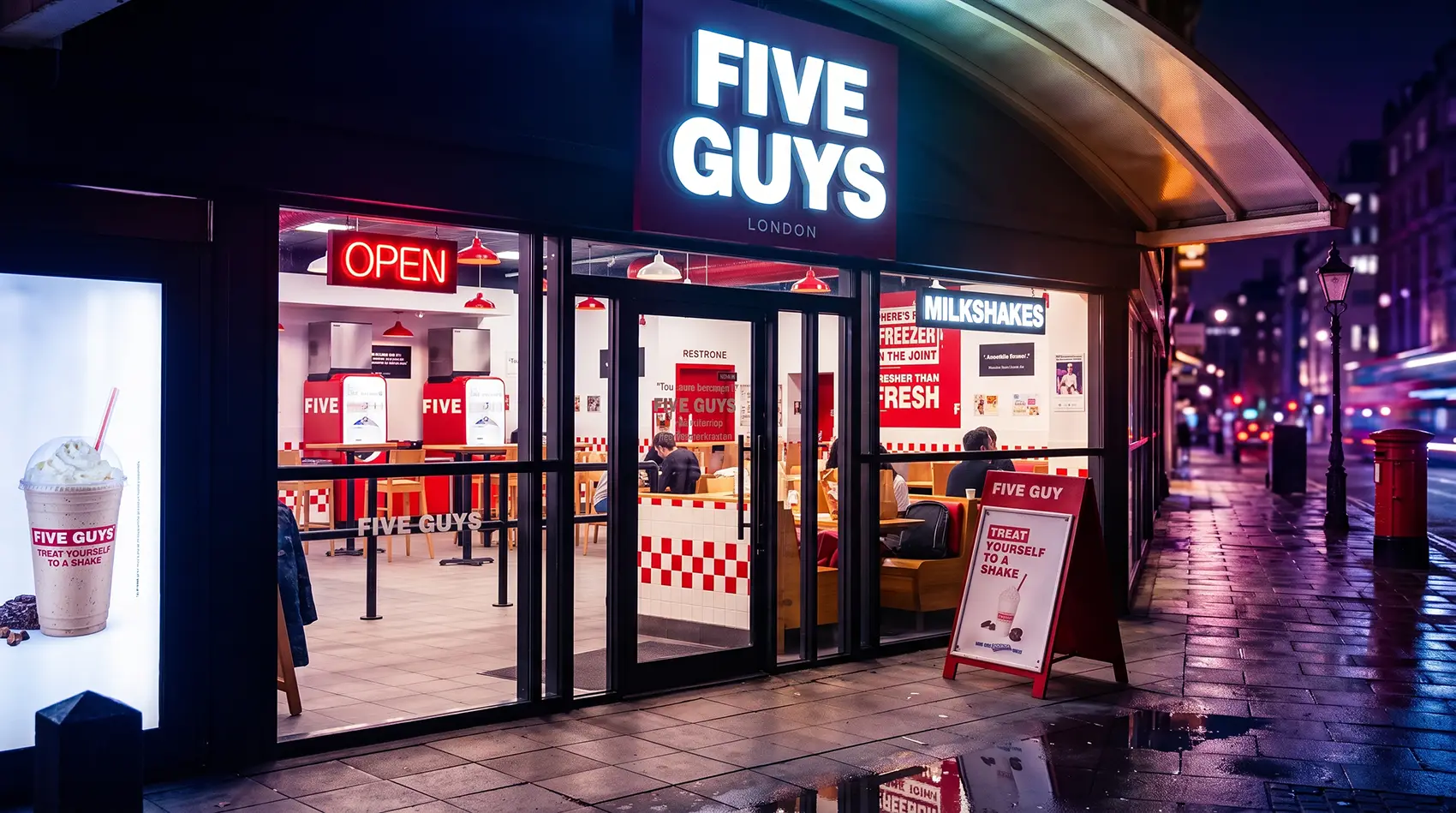
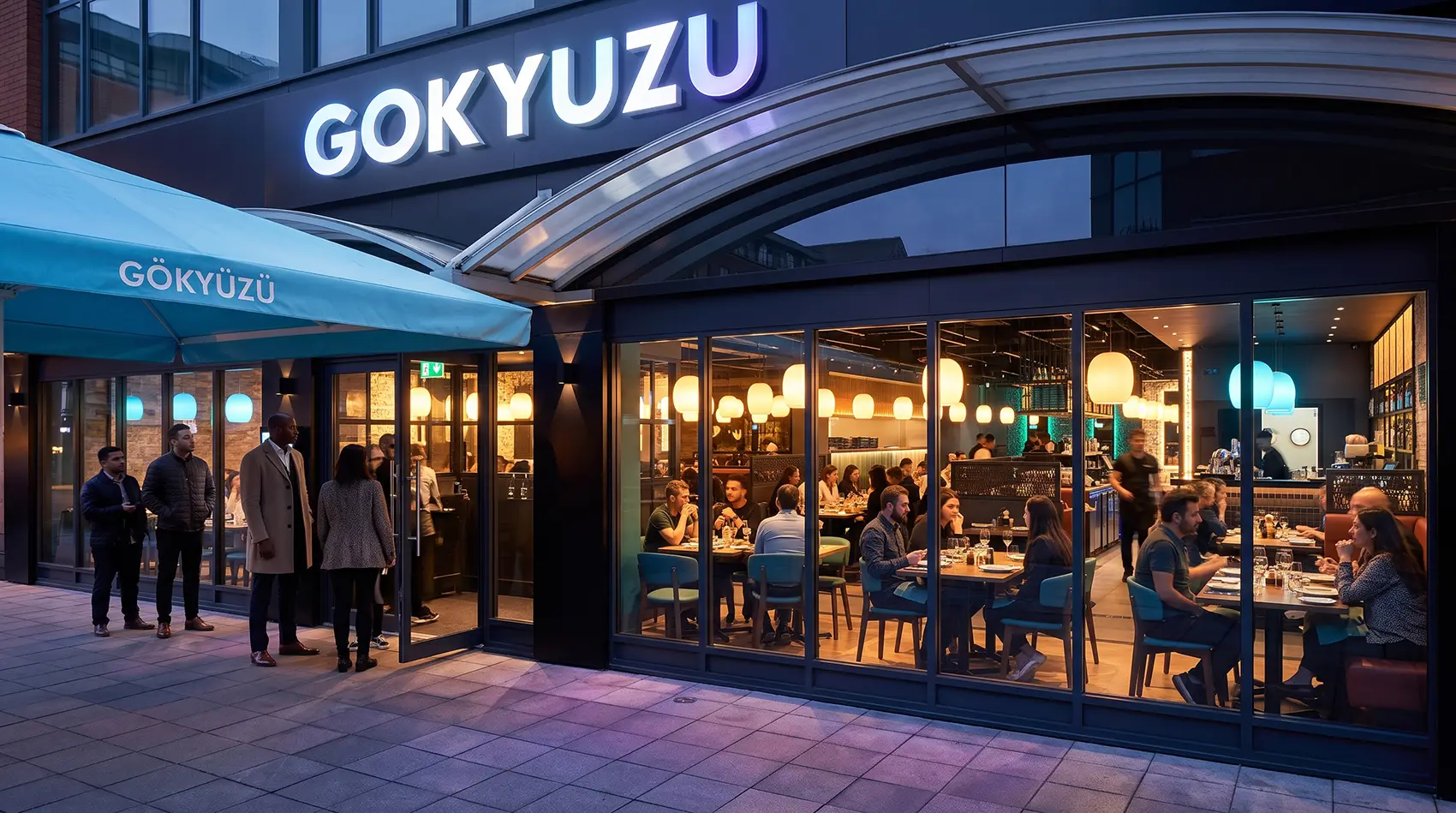
Take the Turkish restaurant Gokyuzu in Park Royal, which opened a 300-seater establishment adjacent to a Five Guys outlet. The Turkish restaurant, offering halal options, consistently boasts full-house bookings, with queues extending beyond its premises. Nando's, an establishment that also offers halal options, enjoys similar success just across the street. In stark contrast, Five Guys, which does not serve halal meat, typically struggles to fill its 150-seat restaurant.
This is not an isolated example. It is a pattern repeated across high streets, shopping centres, and food courts throughout the UK. In areas with significant Muslim populations, which now include not just traditional hubs like Bradford, Tower Hamlets, and Birmingham, but increasingly suburban and regional centres, halal certification is becoming a baseline expectation, not a niche offering. Restaurants that meet this expectation thrive. Those that do not, fade.
Why Halal Appeals Beyond the Muslim Community
The halal market's growth is not solely driven by religious adherence. European halal food imports grew 26% between 2021 and 2023. In France, halal ready meals expanded shelf space by 20% between 2022 and 2024. Germany reported a 15% increase in halal dairy SKUs during 2021–2024. These figures reflect a mainstreaming trend that transcends religious boundaries.
Non-Muslim consumers are drawn to halal for several reasons. The strict hygiene and quality control standards associated with halal certification appeal to health-conscious shoppers. The emphasis on ethical sourcing and animal welfare resonates with environmentally aware consumers. And the traceability and transparency that halal certification demands align with broader consumer trends toward knowing where food comes from and how it is produced.
For brands, this means that halal marketing is not about segmenting off a religious minority. It is about positioning products for a growing mainstream market that values quality, ethics, and transparency. The 35% of non-Muslims who have tried halal products are not outliers. They are early adopters of a trend that will only accelerate.
Targeted Marketing: The Key to Success
Marketers in this segment must carefully segment their audiences and tailor their approaches to align with consumer preferences, mirroring the tactics employed in digital marketing. It is crucial to focus on delivering products and services that resonate with these diverse audiences.
Brands aspiring to thrive in this market must prioritise the DMC, crafting and executing regular targeted campaigns. By doing so, they can cultivate loyal customer bases that will support their growth for years to come. This is not about one-off Ramadan promotions or adding a halal symbol to existing packaging. It is about sustained, culturally intelligent engagement that demonstrates genuine understanding and respect for the communities being served.
The Strategic Imperative
The halal food market in London and Europe is a powerful force that is reshaping the dynamics of the restaurant and food industry. Brands that recognise the potential of catering to diverse multicultural consumers, particularly the Muslim community, are reaping the rewards of increased sales and market share. Those who fail to adapt may find themselves struggling to keep up with this rapidly evolving landscape.
For mediareach, this is not a new insight. We have been helping brands navigate the multicultural food market for over four decades. Our team includes strategists, creatives, and media planners from the very communities our clients need to reach. We understand the cultural nuances, the regulatory requirements, and the commercial opportunities of halal marketing because we live them every day.
Bottom line
The halal food market is projected to exceed $1 trillion in Europe by 2033. The UK market alone is growing at 8.58% annually. Muslim consumers command 30% of England's lamb consumption and spend more than double the national average on meat. And 35% of non-Muslims have already tried halal products. The question for brands is no longer whether to enter the halal market. It is how fast they can do it, and how authentically.
Capture the Halal Market with Cultural Intelligence
Mediareach combines four decades of multicultural expertise with deep understanding of the halal food sector to help brands build genuine connections with the UK's diverse Muslim communities.
Sources & References
IMARC Group, "UK Halal Food Market Size, Trends and Forecast 2026-2034," June 2025. imarcgroup.com
Research and Markets, "Europe Halal Food Market Growth Trends Report 2025-2033," August 2025. researchandmarkets.com
Mordor Intelligence, "Europe Halal Food And Beverage Market Size and Share," September 2025. mordorintelligence.com
Yahoo Finance, "UK Halal Food Market Analysis Report 2025," October 2025. finance.yahoo.com
Fortune Business Insights, "Halal Food Market Size, Share, Growth, 2034," July 2026. fortunebusinessinsights.com
Renub Research, "Europe Halal Food Market Trends 2026," 2026. renub.com
Maximize Market Research, "Halal Food Market: Meat Segment Leads Growth," March 2026. maximizemarketresearch.com
ONS, "Census 2021 — Religion, England and Wales," November 2022. ons.gov.uk
Muslim Council of Britain, "British Muslims in Numbers: Census Report Summary 2025," April 2025. mcb.org.uk
halal food market UK
halal food market Europe
Muslim consumer spending UK
halal marketing strategy
diverse multicultural communities DMC
halal restaurant marketing
McDonald's halal sales
Nando's halal UK
halal food industry growth
multicultural food marketing
UK Muslim population
halal certification Europe
ethnic minority food market
modest fashion UK
multicultural consumer spending
The UK's pioneering multicultural marketing and advertising agency. Over 40 years connecting brands with diverse communities through cultural insight, creative excellence, and intelligent media strategy. mediareach.co


Feb 24, 2026
Halal Food Market in London & Europe
The European halal food market is projected to reach $1.09 trillion by 2033. Brands that recognise the power of halal are thriving. Those that do not are losing ground.
⏱ 5 min read
By mediareach
In the dynamic world of marketing, staying ahead of the competition often demands innovative strategies. As the economic landscape continually evolves, UK and European brands are discovering a thriving market segment that holds the potential to boost sales and capture a larger market share, the halal food market. This burgeoning sector is helping brands make a significant impact and gain an edge in the increasingly diverse multicultural consumer landscape.
McDonald’s Success Story: A Case in Point
A notable success story comes from McDonald’s, where a branch in Southall was experiencing difficulties. Recognizing the potential of the halal market, the owners introduced halal burgers, resulting in a remarkable 300% increase in sales, according to McDonald’s sales data. This achievement has sparked interest within the organization to explore similar expansions across the UK, particularly in areas with a significant Muslim population.
£97.5B
UK halal food market value in 2025
$1.09T
European halal food market projected by 2033
35%
of UK non-Muslims have tried halal products
300%
sales increase for McDonald's Southall after introducing halal
The DMC: A Potent Consumer Segment
The Diverse Multicultural Communities (DMC) represent a formidable audience segment that cannot be overlooked. Comprising around 20% of the UK population, this group, predominantly consisting of millennials and Gen Z, wields remarkable spending power, equivalent to a staggering 35% of the total population's expenditure. Their influence extends beyond the realm of food purchasing, encompassing significant investments in real estate, luxury vehicles, financial services (including investments, money transfers, savings, and insurance), and more.
Within the DMC, the Muslim community's preferences and cultural practices have significantly driven the growth of the halal food segment, prompting a substantial number of food establishments to incorporate halal offerings into their menus. The results have been transformative, with these restaurants witnessing a remarkable surge in fortunes. Conversely, those brands that failed to recognise the potential of halal offerings saw their businesses dwindle.
"Brands aspiring to thrive in this market must prioritise the DMC, crafting and executing regular targeted campaigns. By doing so, they can cultivate loyal customer bases that will support their growth for years to come."
Mediareach Advertising
The Halal Food Market: By the Numbers
The scale of the halal opportunity is staggering. The UK halal food market was valued at £97.52 billion in 2025 and is projected to reach £204.62 billion by 2034, growing at 8.58% annually. The European halal food market is expected to reach $1.09 trillion by 2033 from $490.99 billion in 2024, with a CAGR of 9.34%. Europe represents 14.7% of the global halal food market, with France leading at 18.95% of European share, followed by Germany and the UK.
The global halal food market was valued at $911.53 billion in 2025 and is projected to grow to $1.26 trillion by 2034. Meat, poultry, and seafood dominate the UK market with a 50.3% share, while traditional retailers lead distribution channels at 51.7%. Muslims account for 30% of England's lamb consumption, and the average halal shopper spends £49.20 weekly on meat , more than double the UK average of £19.46.
Crucially, halal is no longer just for Muslims. A 2024 survey found that 35% of UK non-Muslims have tried halal products, citing health and ethics as primary motivations. Halal certification is increasingly perceived as a mark of quality, cleanliness, humane animal treatment, and strict hygiene standards. This broader acceptance is helping halal food move beyond religious boundaries into the wider ethical food market.
The Park Royal Case Study: Halal vs. Non-Halal in Action
Take the Turkish restaurant Gokyuzu in Park Royal, which opened a 300-seater establishment adjacent to a Five Guys outlet. The Turkish restaurant, offering halal options, consistently boasts full-house bookings, with queues extending beyond its premises. Nando's, an establishment that also offers halal options, enjoys similar success just across the street. In stark contrast, Five Guys, which does not serve halal meat, typically struggles to fill its 150-seat restaurant.
This is not an isolated example. It is a pattern repeated across high streets, shopping centres, and food courts throughout the UK. In areas with significant Muslim populations, which now include not just traditional hubs like Bradford, Tower Hamlets, and Birmingham, but increasingly suburban and regional centres, halal certification is becoming a baseline expectation, not a niche offering. Restaurants that meet this expectation thrive. Those that do not, fade.
Why Halal Appeals Beyond the Muslim Community
The halal market's growth is not solely driven by religious adherence. European halal food imports grew 26% between 2021 and 2023. In France, halal ready meals expanded shelf space by 20% between 2022 and 2024. Germany reported a 15% increase in halal dairy SKUs during 2021–2024. These figures reflect a mainstreaming trend that transcends religious boundaries.
Non-Muslim consumers are drawn to halal for several reasons. The strict hygiene and quality control standards associated with halal certification appeal to health-conscious shoppers. The emphasis on ethical sourcing and animal welfare resonates with environmentally aware consumers. And the traceability and transparency that halal certification demands align with broader consumer trends toward knowing where food comes from and how it is produced.
For brands, this means that halal marketing is not about segmenting off a religious minority. It is about positioning products for a growing mainstream market that values quality, ethics, and transparency. The 35% of non-Muslims who have tried halal products are not outliers. They are early adopters of a trend that will only accelerate.
Targeted Marketing: The Key to Success
Marketers in this segment must carefully segment their audiences and tailor their approaches to align with consumer preferences, mirroring the tactics employed in digital marketing. It is crucial to focus on delivering products and services that resonate with these diverse audiences.
Brands aspiring to thrive in this market must prioritise the DMC, crafting and executing regular targeted campaigns. By doing so, they can cultivate loyal customer bases that will support their growth for years to come. This is not about one-off Ramadan promotions or adding a halal symbol to existing packaging. It is about sustained, culturally intelligent engagement that demonstrates genuine understanding and respect for the communities being served.
The Strategic Imperative
The halal food market in London and Europe is a powerful force that is reshaping the dynamics of the restaurant and food industry. Brands that recognise the potential of catering to diverse multicultural consumers, particularly the Muslim community, are reaping the rewards of increased sales and market share. Those who fail to adapt may find themselves struggling to keep up with this rapidly evolving landscape.
For mediareach, this is not a new insight. We have been helping brands navigate the multicultural food market for over four decades. Our team includes strategists, creatives, and media planners from the very communities our clients need to reach. We understand the cultural nuances, the regulatory requirements, and the commercial opportunities of halal marketing because we live them every day.
Bottom line
The halal food market is projected to exceed $1 trillion in Europe by 2033. The UK market alone is growing at 8.58% annually. Muslim consumers command 30% of England's lamb consumption and spend more than double the national average on meat. And 35% of non-Muslims have already tried halal products. The question for brands is no longer whether to enter the halal market. It is how fast they can do it, and how authentically.
Capture the Halal Market with Cultural Intelligence
Mediareach combines four decades of multicultural expertise with deep understanding of the halal food sector to help brands build genuine connections with the UK's diverse Muslim communities.
Sources & References
IMARC Group, "UK Halal Food Market Size, Trends and Forecast 2026-2034," June 2025. imarcgroup.com
Research and Markets, "Europe Halal Food Market Growth Trends Report 2025-2033," August 2025. researchandmarkets.com
Mordor Intelligence, "Europe Halal Food And Beverage Market Size and Share," September 2025. mordorintelligence.com
Yahoo Finance, "UK Halal Food Market Analysis Report 2025," October 2025. finance.yahoo.com
Fortune Business Insights, "Halal Food Market Size, Share, Growth, 2034," July 2026. fortunebusinessinsights.com
Renub Research, "Europe Halal Food Market Trends 2026," 2026. renub.com
Maximize Market Research, "Halal Food Market: Meat Segment Leads Growth," March 2026. maximizemarketresearch.com
ONS, "Census 2021 — Religion, England and Wales," November 2022. ons.gov.uk
Muslim Council of Britain, "British Muslims in Numbers: Census Report Summary 2025," April 2025. mcb.org.uk
halal food market UK
halal food market Europe
Muslim consumer spending UK
halal marketing strategy
diverse multicultural communities DMC
halal restaurant marketing
McDonald's halal sales
Nando's halal UK
halal food industry growth
multicultural food marketing
UK Muslim population
halal certification Europe
ethnic minority food market
modest fashion UK
multicultural consumer spending
The UK's pioneering multicultural marketing and advertising agency. Over 40 years connecting brands with diverse communities through cultural insight, creative excellence, and intelligent media strategy. mediareach.co
Feb 24, 2026
Halal Food Market in London & Europe
The European halal food market is projected to reach $1.09 trillion by 2033. Brands that recognise the power of halal are thriving. Those that do not are losing ground.
⏱ 5 min read
By mediareach
In the dynamic world of marketing, staying ahead of the competition often demands innovative strategies. As the economic landscape continually evolves, UK and European brands are discovering a thriving market segment that holds the potential to boost sales and capture a larger market share, the halal food market. This burgeoning sector is helping brands make a significant impact and gain an edge in the increasingly diverse multicultural consumer landscape.
McDonald’s Success Story: A Case in Point
A notable success story comes from McDonald’s, where a branch in Southall was experiencing difficulties. Recognizing the potential of the halal market, the owners introduced halal burgers, resulting in a remarkable 300% increase in sales, according to McDonald’s sales data. This achievement has sparked interest within the organization to explore similar expansions across the UK, particularly in areas with a significant Muslim population.
£97.5B
UK halal food market value in 2025
$1.09T
European halal food market projected by 2033
35%
of UK non-Muslims have tried halal products
300%
sales increase for McDonald's Southall after introducing halal
The DMC: A Potent Consumer Segment
The Diverse Multicultural Communities (DMC) represent a formidable audience segment that cannot be overlooked. Comprising around 20% of the UK population, this group, predominantly consisting of millennials and Gen Z, wields remarkable spending power, equivalent to a staggering 35% of the total population's expenditure. Their influence extends beyond the realm of food purchasing, encompassing significant investments in real estate, luxury vehicles, financial services (including investments, money transfers, savings, and insurance), and more.
Within the DMC, the Muslim community's preferences and cultural practices have significantly driven the growth of the halal food segment, prompting a substantial number of food establishments to incorporate halal offerings into their menus. The results have been transformative, with these restaurants witnessing a remarkable surge in fortunes. Conversely, those brands that failed to recognise the potential of halal offerings saw their businesses dwindle.
"Brands aspiring to thrive in this market must prioritise the DMC, crafting and executing regular targeted campaigns. By doing so, they can cultivate loyal customer bases that will support their growth for years to come."
Mediareach Advertising
The Halal Food Market: By the Numbers
The scale of the halal opportunity is staggering. The UK halal food market was valued at £97.52 billion in 2025 and is projected to reach £204.62 billion by 2034, growing at 8.58% annually. The European halal food market is expected to reach $1.09 trillion by 2033 from $490.99 billion in 2024, with a CAGR of 9.34%. Europe represents 14.7% of the global halal food market, with France leading at 18.95% of European share, followed by Germany and the UK.
The global halal food market was valued at $911.53 billion in 2025 and is projected to grow to $1.26 trillion by 2034. Meat, poultry, and seafood dominate the UK market with a 50.3% share, while traditional retailers lead distribution channels at 51.7%. Muslims account for 30% of England's lamb consumption, and the average halal shopper spends £49.20 weekly on meat , more than double the UK average of £19.46.
Crucially, halal is no longer just for Muslims. A 2024 survey found that 35% of UK non-Muslims have tried halal products, citing health and ethics as primary motivations. Halal certification is increasingly perceived as a mark of quality, cleanliness, humane animal treatment, and strict hygiene standards. This broader acceptance is helping halal food move beyond religious boundaries into the wider ethical food market.
The Park Royal Case Study: Halal vs. Non-Halal in Action
Take the Turkish restaurant Gokyuzu in Park Royal, which opened a 300-seater establishment adjacent to a Five Guys outlet. The Turkish restaurant, offering halal options, consistently boasts full-house bookings, with queues extending beyond its premises. Nando's, an establishment that also offers halal options, enjoys similar success just across the street. In stark contrast, Five Guys, which does not serve halal meat, typically struggles to fill its 150-seat restaurant.
This is not an isolated example. It is a pattern repeated across high streets, shopping centres, and food courts throughout the UK. In areas with significant Muslim populations, which now include not just traditional hubs like Bradford, Tower Hamlets, and Birmingham, but increasingly suburban and regional centres, halal certification is becoming a baseline expectation, not a niche offering. Restaurants that meet this expectation thrive. Those that do not, fade.
Why Halal Appeals Beyond the Muslim Community
The halal market's growth is not solely driven by religious adherence. European halal food imports grew 26% between 2021 and 2023. In France, halal ready meals expanded shelf space by 20% between 2022 and 2024. Germany reported a 15% increase in halal dairy SKUs during 2021–2024. These figures reflect a mainstreaming trend that transcends religious boundaries.
Non-Muslim consumers are drawn to halal for several reasons. The strict hygiene and quality control standards associated with halal certification appeal to health-conscious shoppers. The emphasis on ethical sourcing and animal welfare resonates with environmentally aware consumers. And the traceability and transparency that halal certification demands align with broader consumer trends toward knowing where food comes from and how it is produced.
For brands, this means that halal marketing is not about segmenting off a religious minority. It is about positioning products for a growing mainstream market that values quality, ethics, and transparency. The 35% of non-Muslims who have tried halal products are not outliers. They are early adopters of a trend that will only accelerate.
Targeted Marketing: The Key to Success
Marketers in this segment must carefully segment their audiences and tailor their approaches to align with consumer preferences, mirroring the tactics employed in digital marketing. It is crucial to focus on delivering products and services that resonate with these diverse audiences.
Brands aspiring to thrive in this market must prioritise the DMC, crafting and executing regular targeted campaigns. By doing so, they can cultivate loyal customer bases that will support their growth for years to come. This is not about one-off Ramadan promotions or adding a halal symbol to existing packaging. It is about sustained, culturally intelligent engagement that demonstrates genuine understanding and respect for the communities being served.
The Strategic Imperative
The halal food market in London and Europe is a powerful force that is reshaping the dynamics of the restaurant and food industry. Brands that recognise the potential of catering to diverse multicultural consumers, particularly the Muslim community, are reaping the rewards of increased sales and market share. Those who fail to adapt may find themselves struggling to keep up with this rapidly evolving landscape.
For mediareach, this is not a new insight. We have been helping brands navigate the multicultural food market for over four decades. Our team includes strategists, creatives, and media planners from the very communities our clients need to reach. We understand the cultural nuances, the regulatory requirements, and the commercial opportunities of halal marketing because we live them every day.
Bottom line
The halal food market is projected to exceed $1 trillion in Europe by 2033. The UK market alone is growing at 8.58% annually. Muslim consumers command 30% of England's lamb consumption and spend more than double the national average on meat. And 35% of non-Muslims have already tried halal products. The question for brands is no longer whether to enter the halal market. It is how fast they can do it, and how authentically.
Capture the Halal Market with Cultural Intelligence
Mediareach combines four decades of multicultural expertise with deep understanding of the halal food sector to help brands build genuine connections with the UK's diverse Muslim communities.
Sources & References
IMARC Group, "UK Halal Food Market Size, Trends and Forecast 2026-2034," June 2025. imarcgroup.com
Research and Markets, "Europe Halal Food Market Growth Trends Report 2025-2033," August 2025. researchandmarkets.com
Mordor Intelligence, "Europe Halal Food And Beverage Market Size and Share," September 2025. mordorintelligence.com
Yahoo Finance, "UK Halal Food Market Analysis Report 2025," October 2025. finance.yahoo.com
Fortune Business Insights, "Halal Food Market Size, Share, Growth, 2034," July 2026. fortunebusinessinsights.com
Renub Research, "Europe Halal Food Market Trends 2026," 2026. renub.com
Maximize Market Research, "Halal Food Market: Meat Segment Leads Growth," March 2026. maximizemarketresearch.com
ONS, "Census 2021 — Religion, England and Wales," November 2022. ons.gov.uk
Muslim Council of Britain, "British Muslims in Numbers: Census Report Summary 2025," April 2025. mcb.org.uk
halal food market UK
halal food market Europe
Muslim consumer spending UK
halal marketing strategy
diverse multicultural communities DMC
halal restaurant marketing
McDonald's halal sales
Nando's halal UK
halal food industry growth
multicultural food marketing
UK Muslim population
halal certification Europe
ethnic minority food market
modest fashion UK
multicultural consumer spending
The UK's pioneering multicultural marketing and advertising agency. Over 40 years connecting brands with diverse communities through cultural insight, creative excellence, and intelligent media strategy. mediareach.co