Feb 11, 2026
Why Diverse & Multicultural Communities Are the UK's Fastest-Growing Consumer Powerhouse
With over 10.7 million people, £300+ billion in spending power, and a media ecosystem most brands ignore, the UK's ethnic minority communities represent the single largest untapped growth opportunity in British commerce.
7 min read
By Mediareach
Every global brand faces the same tension
How to achieve scale through consistency while staying truly relevant in each local and cultural market it serves. Diverse Multicultural Communities, or DMC, marketing is the discipline that resolves that tension.
DMC marketing, sometimes called ethnic marketing, is focused on audiences whose language, faith, traditions, family values and celebrations sit outside a nation's majority culture. In the UK, that is far from a niche. Done well, it doesn't just add incremental reach, it becomes a company's most defensible competitive advantage.
What DMC Marketing Really Means (And What It Isn't)
At its core, DMC marketing is about respect for difference. A campaign that works for a White British mainstream audience won't automatically resonate with British Asian, Black British, Arab British or Eastern European communities, not because of demographics alone, but because media habits, trust cues, purchase drivers and even the concept of beauty, success or family differ.
For it to work, product and brand knowledge has to be translated twice: first linguistically, then culturally. That means reframing your message through the lens of local institutional norms, community networks and lived experience. Simply dubbing an English advert with British humour for a European audience, or swapping one word for another, almost always leads to misrepresentation. Consumers notice immediately.
8M+
UK DMC Consumers Often Overlooked
4.3M
Asian British Consumers
1.9M
Black British Consumers
1 in 3
Gen Z with non-white British background
Tips for Marketing to Diverse Multicultural Communities
Practice Universalisation, Not Just Globalisation
Global cosmetics leader L'Oréal is the textbook case study in multicultural white papers for a reason. Instead of pushing one definition of beauty worldwide, they adopted universalisation, global scale that respects local cultural codes.
With offices in 130+ countries, L'Oréal delivered +20.9% growth in H1 2022, outperforming in India, China, Brazil and Germany and holding over 20% of the European cosmetics market. How? They internationalised leadership rather than displacing it, built mixed-heritage teams around senior experts, placed culturally diverse talent in their Paris product development centre, and crucially, they outspend competitors on R&D, dedicating around 3.5% of total budget to reformulating and creating products that suit different hair textures, skin tones, modesty preferences and beauty rituals. The lesson: cosmetics aren't just chemicals. Beauty is cultural.
Authenticity Beats Tokenism Every Time
The fastest way to lose trust is token casting. In the Middle East, for example, brands have historically used Indian or Latin American models to portray Arab consumers. Audiences feel devalued instantly and actively pivot to brands that get it right.
Authenticity means involving community voices in the creative process, using the right language variant (not just Google Translate), casting correctly, and reflecting real values, collectivist family decision-making, respect for elders, faith-based modesty, rather than stereotypes. At Mediareach, every creative is culturally validated before it goes live.
Interrogate Your Data Sources
Many large research houses base multicultural insights on very small DMC samples, then extrapolate to budgets. That creates a dangerous loop: small samples underestimate true purchasing power, which leads to under-investment, which reinforces the myth that the audience is small.
Partner with specialists who maintain proprietary multicultural databases, over-sample DMC audiences, and understand intra-community differences — British Pakistani vs British Bangladeshi, Nigerian vs Ghanaian British, second vs third generation.
"We know that brands who invest come out stronger in times of economic uncertainty. As people look to prioritise their expenditure and change their habits, businesses need to rethink any previous assumptions about Minority Ethnic spending."
Mark Read
CEO, WPP
The Research Gap
When brands rely on a 50-person DMC sub-sample within a 2,000-person nationally representative study, the margin of error erases cultural nuance. Mediareach's DMC Report 2023 was created specifically because Census question design continues to misrepresent actual community sizes, leading to under-representation in public services and media spend. Robust, community-led insight is non-negotiable.
Benefits of Reaching DMC Audiences
Targeting DMCs isn't a CSR checkbox. It's commercial.
1. Unlock a New Festival Commerce Calendar
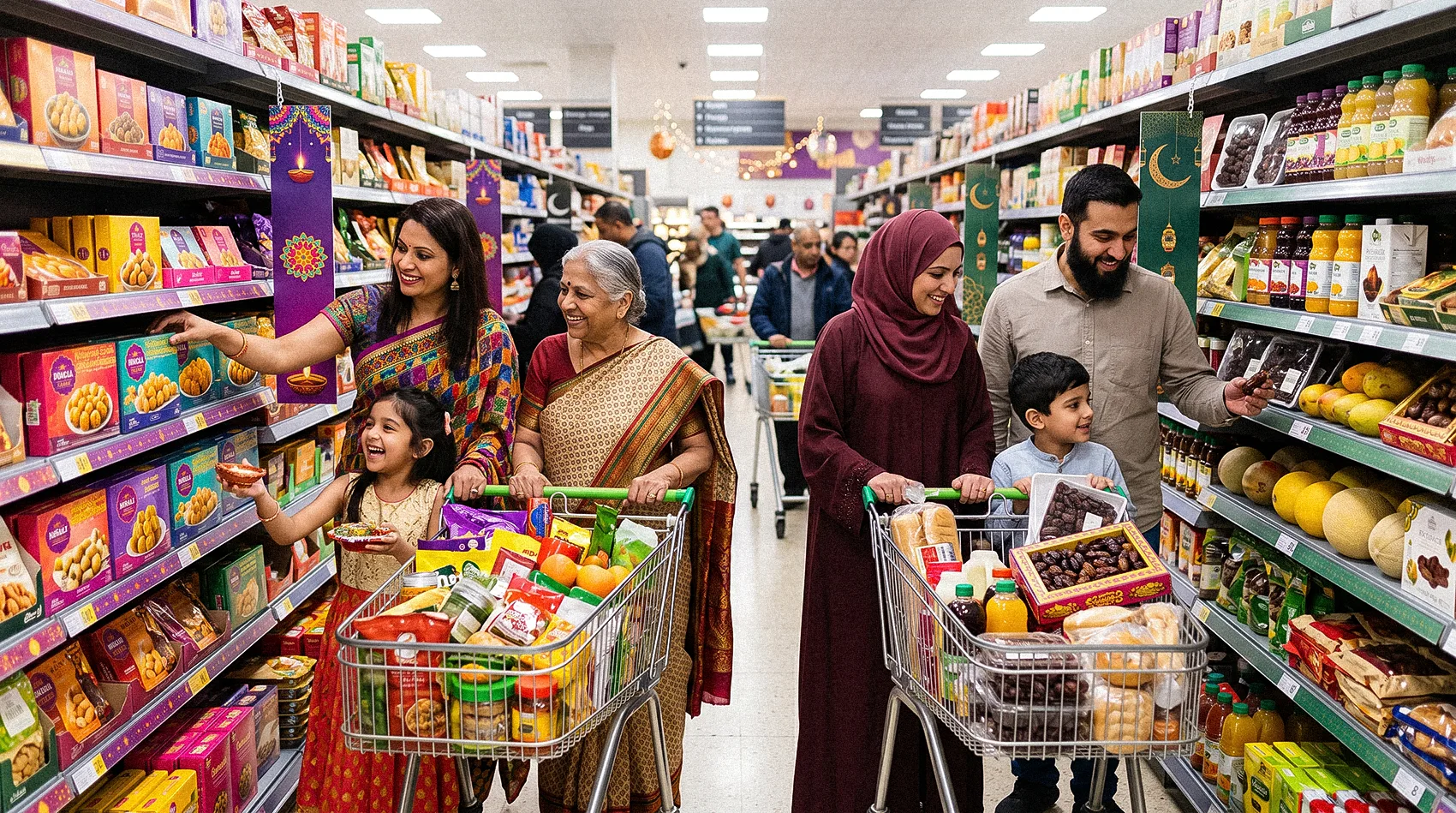
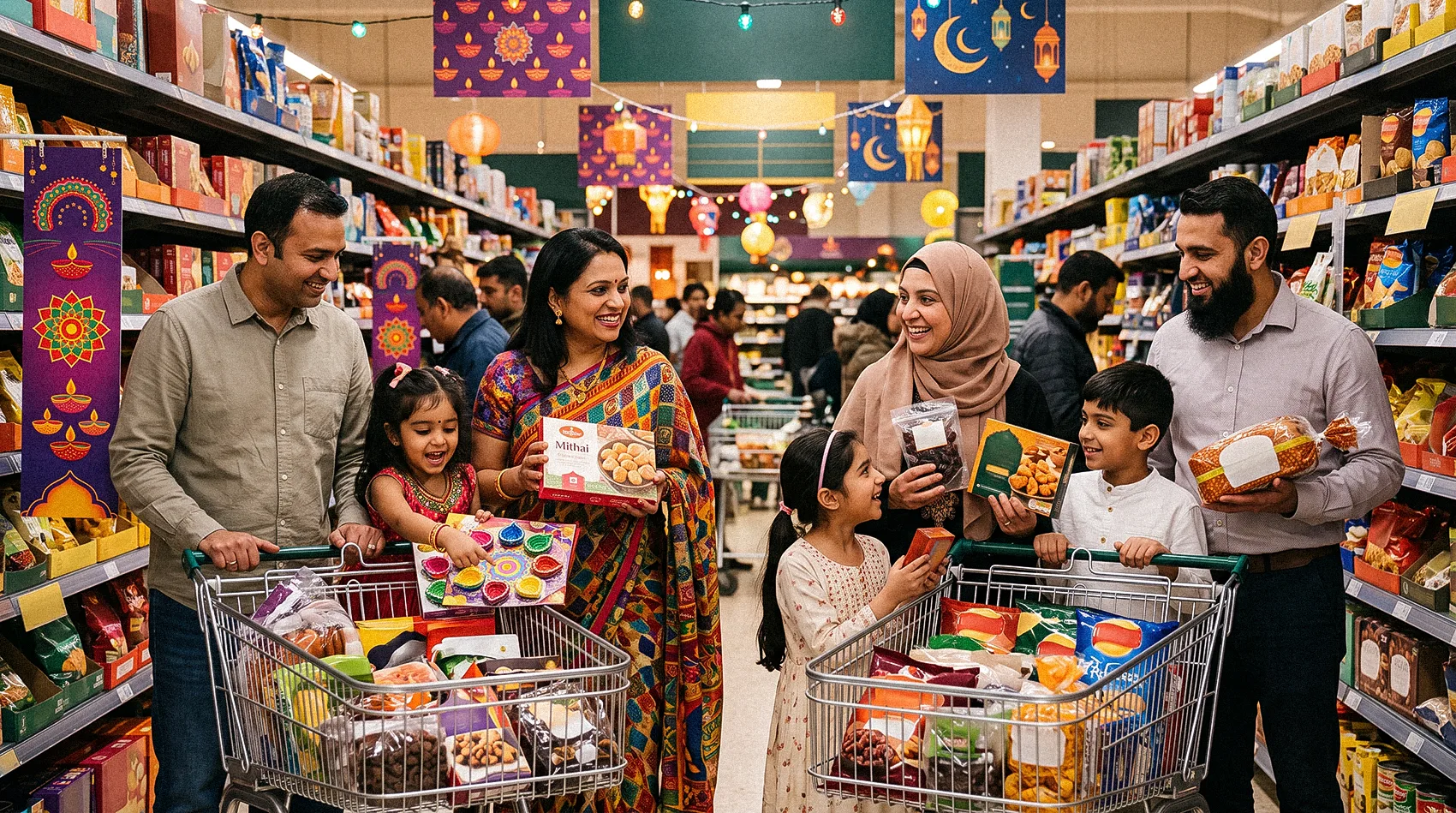
Why compete only at Easter, Black Friday and Christmas? DMC households drive huge spikes in food, fashion, gifting and white goods around:
Ramadan & Eid: Grocery, modest fashion, beauty, remittances and home entertaining surge for 30+ days
Diwali & Navratri: Gold, sweets, home décor, apparel and fireworks
Chinese New Year: Travel, luxury gifting, food and family reunions
Vaisakhi & Nawrooz: Community gatherings, fashion and cultural food
These are not add-ons. For many families, they are the primary gifting season.
2. Extend Reach and Optimise Budget
A UK brand spending 100% of its budget on the White majority is effectively ignoring 4.3 million Asian British consumers, 1.9 million Black British consumers and nearly 2 million people from other ethnic backgrounds — over 8 million people with strong brand loyalty when they feel seen. By segmenting and targeting smaller, more defined DMC audiences with culturally relevant creative and diaspora media (TV, radio, OOH, community press and WhatsApp groups), you lower CPM wastage and raise conversion.
3. Stronger Teams Build Better Market Intelligence
Organisations with genuinely multicultural teams are better at spotting cultural complexities and turning them into opportunities. Diverse teams challenge assumptions in briefing, casting and media planning that homogenous teams miss.
4. Fuel Innovation for the Mainstream
Targeting different audiences forces product innovation that often migrates back to the primary market. Sushi, kombucha, oat milk, dukkah, halal meal kits and K-beauty all started as culturally specific and are now supermarket staples. DMC-led innovation is future mainstream R&D.
The Strategic Shift: From Ethnocentric to Geocentric
The numbers make inaction risky. Europe is home to over 70 million first- and second-generation migrants. In the US, DMC communities now represent 36.7% of the population. In the UK, ten cities including London, Birmingham, Leicester, Bradford, Luton and Peterborough already have an ethnic-majority or plural population under 30.
Markets and competencies are no longer concentrated at HQ. They are dispersed. Brands need to move from an ethnocentric model, where HQ knowledge is imposed, to a geocentric one, where insights from multiple locations are integrated to co-create products and campaigns with mass appeal.
Brands that fail to recognise DMCs won't just miss growth; they will fall behind competitors who have already built cultural trust. Trust, once earned in tight-knit communities where family recommendation carries disproportionate weight, creates advocacy that is almost impossible to displace.
Ready to Connect Authentically with DMC Audiences?
For 40+ years, Mediareach has helped brands like Sainsbury's, NHS, MoneyGram and TalkTalk move beyond translation to true cultural connection. Get our Diverse Multicultural Communities Report 2023 and turn insight into growth.
Sources & References
Office for National Statistics (ONS), "Population of England and Wales by Ethnicity," Census 2021/2022. ethnicity-facts-figures.service.gov.uk
Multicultural UK, "A Strategic Advantage for Modern Brands," March 2026. multiculturaluk.com
WPP, "Study Reveals How Brands Can Unlock £16.7 Trillion Spending Power of Minority Ethnic Consumers," November 2022. wpp.com
Mediareach, "UK Ethnic Minority Population Statistics & Marketing Opportunities in 2026," May 2026. mediareach.co
ContentMation, "Multicultural Marketing Stats 2026," April 2026. contentmation.com
Londra Gazete, "The Evolution of Ethnic Media in the UK," July 2026. londragazete.com
GottaBe! Ethnic, "Understanding Ethnic Media," 2022. gottabeethnic.co.uk
Mintel, "UK Diversity, Equity and Inclusion Report 2025," December 2025. mintel.com
Mediareach, "How to Reach Ethnic Minorities," Insights. mediareach.co
IPA Ethnic Diversity Forum and Mediareach, "Multicultural Britain: BME Purchasing Power Report," 2012. mediareach.co
diverse multicultural communities
DMC marketing
multicultural marketing UK
ethnic marketing strategy
Ramadan marketing
Diwali marketing
Chinese New Year marketing
authentic representation
universalisation strategy
cultural intelligence
inclusive marketing agency
multicultural consumer insight
diverse audience targeting
festival commerce UK
The UK's pioneering multicultural marketing and advertising agency. For over 40 years, we have helped brands connect meaningfully with diverse communities through cultural insight, creative excellence and intelligent media strategy. mediareach.co



Feb 11, 2026
Why Diverse & Multicultural Communities Are the UK's Fastest-Growing Consumer Powerhouse
With over 10.7 million people, £300+ billion in spending power, and a media ecosystem most brands ignore, the UK's ethnic minority communities represent the single largest untapped growth opportunity in British commerce.
7 min read
By Mediareach
Every global brand faces the same tension
How to achieve scale through consistency while staying truly relevant in each local and cultural market it serves. Diverse Multicultural Communities, or DMC, marketing is the discipline that resolves that tension.
DMC marketing, sometimes called ethnic marketing, is focused on audiences whose language, faith, traditions, family values and celebrations sit outside a nation's majority culture. In the UK, that is far from a niche. Done well, it doesn't just add incremental reach, it becomes a company's most defensible competitive advantage.
What DMC Marketing Really Means (And What It Isn't)
At its core, DMC marketing is about respect for difference. A campaign that works for a White British mainstream audience won't automatically resonate with British Asian, Black British, Arab British or Eastern European communities, not because of demographics alone, but because media habits, trust cues, purchase drivers and even the concept of beauty, success or family differ.
For it to work, product and brand knowledge has to be translated twice: first linguistically, then culturally. That means reframing your message through the lens of local institutional norms, community networks and lived experience. Simply dubbing an English advert with British humour for a European audience, or swapping one word for another, almost always leads to misrepresentation. Consumers notice immediately.
8M+
UK DMC Consumers Often Overlooked
4.3M
Asian British Consumers
1.9M
Black British Consumers
1 in 3
Gen Z with non-white British background
Tips for Marketing to Diverse Multicultural Communities
Practice Universalisation, Not Just Globalisation
Global cosmetics leader L'Oréal is the textbook case study in multicultural white papers for a reason. Instead of pushing one definition of beauty worldwide, they adopted universalisation, global scale that respects local cultural codes.
With offices in 130+ countries, L'Oréal delivered +20.9% growth in H1 2022, outperforming in India, China, Brazil and Germany and holding over 20% of the European cosmetics market. How? They internationalised leadership rather than displacing it, built mixed-heritage teams around senior experts, placed culturally diverse talent in their Paris product development centre, and crucially, they outspend competitors on R&D, dedicating around 3.5% of total budget to reformulating and creating products that suit different hair textures, skin tones, modesty preferences and beauty rituals. The lesson: cosmetics aren't just chemicals. Beauty is cultural.
Authenticity Beats Tokenism Every Time
The fastest way to lose trust is token casting. In the Middle East, for example, brands have historically used Indian or Latin American models to portray Arab consumers. Audiences feel devalued instantly and actively pivot to brands that get it right.
Authenticity means involving community voices in the creative process, using the right language variant (not just Google Translate), casting correctly, and reflecting real values, collectivist family decision-making, respect for elders, faith-based modesty, rather than stereotypes. At Mediareach, every creative is culturally validated before it goes live.
Interrogate Your Data Sources
Many large research houses base multicultural insights on very small DMC samples, then extrapolate to budgets. That creates a dangerous loop: small samples underestimate true purchasing power, which leads to under-investment, which reinforces the myth that the audience is small.
Partner with specialists who maintain proprietary multicultural databases, over-sample DMC audiences, and understand intra-community differences — British Pakistani vs British Bangladeshi, Nigerian vs Ghanaian British, second vs third generation.
"We know that brands who invest come out stronger in times of economic uncertainty. As people look to prioritise their expenditure and change their habits, businesses need to rethink any previous assumptions about Minority Ethnic spending."
Mark Read
CEO, WPP
The Research Gap
When brands rely on a 50-person DMC sub-sample within a 2,000-person nationally representative study, the margin of error erases cultural nuance. Mediareach's DMC Report 2023 was created specifically because Census question design continues to misrepresent actual community sizes, leading to under-representation in public services and media spend. Robust, community-led insight is non-negotiable.
Benefits of Reaching DMC Audiences
Targeting DMCs isn't a CSR checkbox. It's commercial.
1. Unlock a New Festival Commerce Calendar
Why compete only at Easter, Black Friday and Christmas? DMC households drive huge spikes in food, fashion, gifting and white goods around:
Ramadan & Eid: Grocery, modest fashion, beauty, remittances and home entertaining surge for 30+ days
Diwali & Navratri: Gold, sweets, home décor, apparel and fireworks
Chinese New Year: Travel, luxury gifting, food and family reunions
Vaisakhi & Nawrooz: Community gatherings, fashion and cultural food
These are not add-ons. For many families, they are the primary gifting season.
2. Extend Reach and Optimise Budget
A UK brand spending 100% of its budget on the White majority is effectively ignoring 4.3 million Asian British consumers, 1.9 million Black British consumers and nearly 2 million people from other ethnic backgrounds — over 8 million people with strong brand loyalty when they feel seen. By segmenting and targeting smaller, more defined DMC audiences with culturally relevant creative and diaspora media (TV, radio, OOH, community press and WhatsApp groups), you lower CPM wastage and raise conversion.
3. Stronger Teams Build Better Market Intelligence
Organisations with genuinely multicultural teams are better at spotting cultural complexities and turning them into opportunities. Diverse teams challenge assumptions in briefing, casting and media planning that homogenous teams miss.
4. Fuel Innovation for the Mainstream
Targeting different audiences forces product innovation that often migrates back to the primary market. Sushi, kombucha, oat milk, dukkah, halal meal kits and K-beauty all started as culturally specific and are now supermarket staples. DMC-led innovation is future mainstream R&D.
The Strategic Shift: From Ethnocentric to Geocentric
The numbers make inaction risky. Europe is home to over 70 million first- and second-generation migrants. In the US, DMC communities now represent 36.7% of the population. In the UK, ten cities including London, Birmingham, Leicester, Bradford, Luton and Peterborough already have an ethnic-majority or plural population under 30.
Markets and competencies are no longer concentrated at HQ. They are dispersed. Brands need to move from an ethnocentric model, where HQ knowledge is imposed, to a geocentric one, where insights from multiple locations are integrated to co-create products and campaigns with mass appeal.
Brands that fail to recognise DMCs won't just miss growth; they will fall behind competitors who have already built cultural trust. Trust, once earned in tight-knit communities where family recommendation carries disproportionate weight, creates advocacy that is almost impossible to displace.
Ready to Connect Authentically with DMC Audiences?
For 40+ years, Mediareach has helped brands like Sainsbury's, NHS, MoneyGram and TalkTalk move beyond translation to true cultural connection. Get our Diverse Multicultural Communities Report 2023 and turn insight into growth.
Sources & References
Office for National Statistics (ONS), "Population of England and Wales by Ethnicity," Census 2021/2022. ethnicity-facts-figures.service.gov.uk
Multicultural UK, "A Strategic Advantage for Modern Brands," March 2026. multiculturaluk.com
WPP, "Study Reveals How Brands Can Unlock £16.7 Trillion Spending Power of Minority Ethnic Consumers," November 2022. wpp.com
Mediareach, "UK Ethnic Minority Population Statistics & Marketing Opportunities in 2026," May 2026. mediareach.co
ContentMation, "Multicultural Marketing Stats 2026," April 2026. contentmation.com
Londra Gazete, "The Evolution of Ethnic Media in the UK," July 2026. londragazete.com
GottaBe! Ethnic, "Understanding Ethnic Media," 2022. gottabeethnic.co.uk
Mintel, "UK Diversity, Equity and Inclusion Report 2025," December 2025. mintel.com
Mediareach, "How to Reach Ethnic Minorities," Insights. mediareach.co
IPA Ethnic Diversity Forum and Mediareach, "Multicultural Britain: BME Purchasing Power Report," 2012. mediareach.co
diverse multicultural communities
DMC marketing
multicultural marketing UK
ethnic marketing strategy
Ramadan marketing
Diwali marketing
Chinese New Year marketing
authentic representation
universalisation strategy
cultural intelligence
inclusive marketing agency
multicultural consumer insight
diverse audience targeting
festival commerce UK
The UK's pioneering multicultural marketing and advertising agency. For over 40 years, we have helped brands connect meaningfully with diverse communities through cultural insight, creative excellence and intelligent media strategy. mediareach.co
Feb 11, 2026
Why Diverse & Multicultural Communities Are the UK's Fastest-Growing Consumer Powerhouse
With over 10.7 million people, £300+ billion in spending power, and a media ecosystem most brands ignore, the UK's ethnic minority communities represent the single largest untapped growth opportunity in British commerce.
7 min read
By Mediareach
Every global brand faces the same tension
How to achieve scale through consistency while staying truly relevant in each local and cultural market it serves. Diverse Multicultural Communities, or DMC, marketing is the discipline that resolves that tension.
DMC marketing, sometimes called ethnic marketing, is focused on audiences whose language, faith, traditions, family values and celebrations sit outside a nation's majority culture. In the UK, that is far from a niche. Done well, it doesn't just add incremental reach, it becomes a company's most defensible competitive advantage.
What DMC Marketing Really Means (And What It Isn't)
At its core, DMC marketing is about respect for difference. A campaign that works for a White British mainstream audience won't automatically resonate with British Asian, Black British, Arab British or Eastern European communities, not because of demographics alone, but because media habits, trust cues, purchase drivers and even the concept of beauty, success or family differ.
For it to work, product and brand knowledge has to be translated twice: first linguistically, then culturally. That means reframing your message through the lens of local institutional norms, community networks and lived experience. Simply dubbing an English advert with British humour for a European audience, or swapping one word for another, almost always leads to misrepresentation. Consumers notice immediately.
8M+
UK DMC Consumers Often Overlooked
4.3M
Asian British Consumers
1.9M
Black British Consumers
1 in 3
Gen Z with non-white British background
Tips for Marketing to Diverse Multicultural Communities
Practice Universalisation, Not Just Globalisation
Global cosmetics leader L'Oréal is the textbook case study in multicultural white papers for a reason. Instead of pushing one definition of beauty worldwide, they adopted universalisation, global scale that respects local cultural codes.
With offices in 130+ countries, L'Oréal delivered +20.9% growth in H1 2022, outperforming in India, China, Brazil and Germany and holding over 20% of the European cosmetics market. How? They internationalised leadership rather than displacing it, built mixed-heritage teams around senior experts, placed culturally diverse talent in their Paris product development centre, and crucially, they outspend competitors on R&D, dedicating around 3.5% of total budget to reformulating and creating products that suit different hair textures, skin tones, modesty preferences and beauty rituals. The lesson: cosmetics aren't just chemicals. Beauty is cultural.
Authenticity Beats Tokenism Every Time
The fastest way to lose trust is token casting. In the Middle East, for example, brands have historically used Indian or Latin American models to portray Arab consumers. Audiences feel devalued instantly and actively pivot to brands that get it right.
Authenticity means involving community voices in the creative process, using the right language variant (not just Google Translate), casting correctly, and reflecting real values, collectivist family decision-making, respect for elders, faith-based modesty, rather than stereotypes. At Mediareach, every creative is culturally validated before it goes live.
Interrogate Your Data Sources
Many large research houses base multicultural insights on very small DMC samples, then extrapolate to budgets. That creates a dangerous loop: small samples underestimate true purchasing power, which leads to under-investment, which reinforces the myth that the audience is small.
Partner with specialists who maintain proprietary multicultural databases, over-sample DMC audiences, and understand intra-community differences — British Pakistani vs British Bangladeshi, Nigerian vs Ghanaian British, second vs third generation.
"We know that brands who invest come out stronger in times of economic uncertainty. As people look to prioritise their expenditure and change their habits, businesses need to rethink any previous assumptions about Minority Ethnic spending."
Mark Read
CEO, WPP
The Research Gap
When brands rely on a 50-person DMC sub-sample within a 2,000-person nationally representative study, the margin of error erases cultural nuance. Mediareach's DMC Report 2023 was created specifically because Census question design continues to misrepresent actual community sizes, leading to under-representation in public services and media spend. Robust, community-led insight is non-negotiable.
Benefits of Reaching DMC Audiences
Targeting DMCs isn't a CSR checkbox. It's commercial.
1. Unlock a New Festival Commerce Calendar
Why compete only at Easter, Black Friday and Christmas? DMC households drive huge spikes in food, fashion, gifting and white goods around:
Ramadan & Eid: Grocery, modest fashion, beauty, remittances and home entertaining surge for 30+ days
Diwali & Navratri: Gold, sweets, home décor, apparel and fireworks
Chinese New Year: Travel, luxury gifting, food and family reunions
Vaisakhi & Nawrooz: Community gatherings, fashion and cultural food
These are not add-ons. For many families, they are the primary gifting season.
2. Extend Reach and Optimise Budget
A UK brand spending 100% of its budget on the White majority is effectively ignoring 4.3 million Asian British consumers, 1.9 million Black British consumers and nearly 2 million people from other ethnic backgrounds — over 8 million people with strong brand loyalty when they feel seen. By segmenting and targeting smaller, more defined DMC audiences with culturally relevant creative and diaspora media (TV, radio, OOH, community press and WhatsApp groups), you lower CPM wastage and raise conversion.
3. Stronger Teams Build Better Market Intelligence
Organisations with genuinely multicultural teams are better at spotting cultural complexities and turning them into opportunities. Diverse teams challenge assumptions in briefing, casting and media planning that homogenous teams miss.
4. Fuel Innovation for the Mainstream
Targeting different audiences forces product innovation that often migrates back to the primary market. Sushi, kombucha, oat milk, dukkah, halal meal kits and K-beauty all started as culturally specific and are now supermarket staples. DMC-led innovation is future mainstream R&D.
The Strategic Shift: From Ethnocentric to Geocentric
The numbers make inaction risky. Europe is home to over 70 million first- and second-generation migrants. In the US, DMC communities now represent 36.7% of the population. In the UK, ten cities including London, Birmingham, Leicester, Bradford, Luton and Peterborough already have an ethnic-majority or plural population under 30.
Markets and competencies are no longer concentrated at HQ. They are dispersed. Brands need to move from an ethnocentric model, where HQ knowledge is imposed, to a geocentric one, where insights from multiple locations are integrated to co-create products and campaigns with mass appeal.
Brands that fail to recognise DMCs won't just miss growth; they will fall behind competitors who have already built cultural trust. Trust, once earned in tight-knit communities where family recommendation carries disproportionate weight, creates advocacy that is almost impossible to displace.
Ready to Connect Authentically with DMC Audiences?
For 40+ years, Mediareach has helped brands like Sainsbury's, NHS, MoneyGram and TalkTalk move beyond translation to true cultural connection. Get our Diverse Multicultural Communities Report 2023 and turn insight into growth.
Sources & References
Office for National Statistics (ONS), "Population of England and Wales by Ethnicity," Census 2021/2022. ethnicity-facts-figures.service.gov.uk
Multicultural UK, "A Strategic Advantage for Modern Brands," March 2026. multiculturaluk.com
WPP, "Study Reveals How Brands Can Unlock £16.7 Trillion Spending Power of Minority Ethnic Consumers," November 2022. wpp.com
Mediareach, "UK Ethnic Minority Population Statistics & Marketing Opportunities in 2026," May 2026. mediareach.co
ContentMation, "Multicultural Marketing Stats 2026," April 2026. contentmation.com
Londra Gazete, "The Evolution of Ethnic Media in the UK," July 2026. londragazete.com
GottaBe! Ethnic, "Understanding Ethnic Media," 2022. gottabeethnic.co.uk
Mintel, "UK Diversity, Equity and Inclusion Report 2025," December 2025. mintel.com
Mediareach, "How to Reach Ethnic Minorities," Insights. mediareach.co
IPA Ethnic Diversity Forum and Mediareach, "Multicultural Britain: BME Purchasing Power Report," 2012. mediareach.co
diverse multicultural communities
DMC marketing
multicultural marketing UK
ethnic marketing strategy
Ramadan marketing
Diwali marketing
Chinese New Year marketing
authentic representation
universalisation strategy
cultural intelligence
inclusive marketing agency
multicultural consumer insight
diverse audience targeting
festival commerce UK
The UK's pioneering multicultural marketing and advertising agency. For over 40 years, we have helped brands connect meaningfully with diverse communities through cultural insight, creative excellence and intelligent media strategy. mediareach.co