Sep 1, 2026
How to reach ethnic minorities
One of the most important weapons in a marketer's armoury is knowing who your customer actually is. In 2026, that means understanding the 18% of the UK, and 46% of London, the mainstream still mislabels.
⏱ 4 min read
mediareach insight
In 2017, we wrote that ethnic minorities had £60bn in disposable income. In 2024, WPP put the real opportunity at £727 billion in a single year, rising to £575bn in annual disposable income by 2061 when minority ethnic groups will make up 27% of UK adults.
That old article opened with a confession many marketers still make privately: they cannot tell where a typical person from an ethnic minority comes from, what languages they speak, or what religious background they come from. Some still describe all Black people as Caribbean and all brown people as Asian.
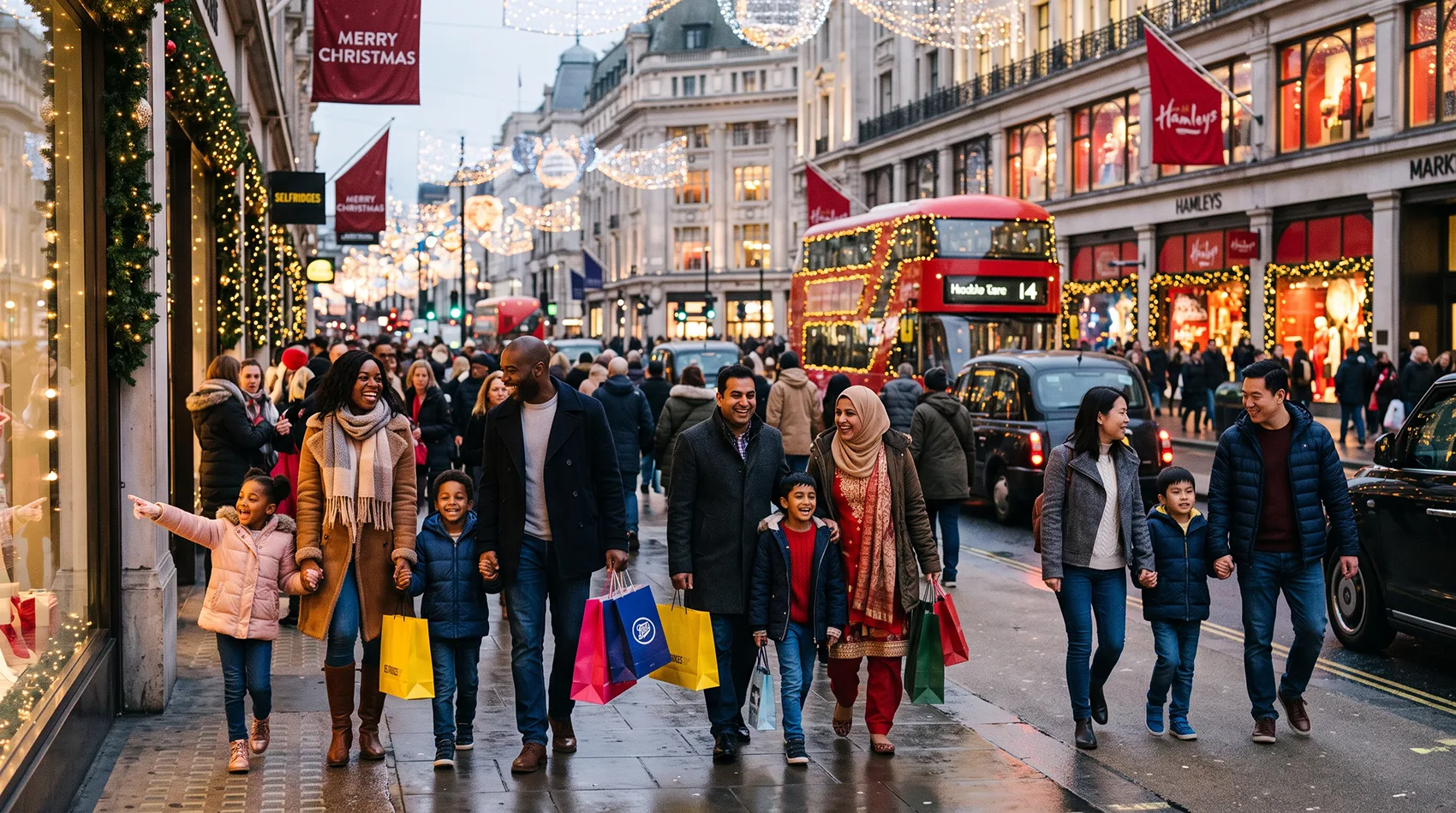
That is not just a diversity problem. It is a commercial blind spot. The 2021 Census confirmed 18.3% of the UK population — 10.9 million people — are ethnic minority, 18% in England and Wales as Black, Asian, mixed or other. In London, 46.2% identify as Asian, Black, mixed or other, plus 17% white ethnic minorities. The city is 63% diverse. In the West Midlands, the North West and Yorkshire, the figure is climbing fastest.
The 2026 Consumer Landscape Has Changed
The original piece described ethnic audiences as young, aspirational, loyal to roots and religiously sensitive. That remains true, but the data is sharper now.
It is young and growing fast.
More than 50% of the Black and South Asian population was under 25 in the old data; today the median age for mixed ethnic groups is 19 versus 41 for White British. Family is still the most important social unit, but it is now often digitally connected — grandparents in Lahore or Lagos on WhatsApp video while shopping in Bradford or Birmingham.
It is affluent and specific.
Multi-ethnic consumers spend 25% more than average in health and beauty and travel. Black women spend 30% of their beauty budget in specialist shops, and 4 in 10 still say it is difficult to buy cosmetics that match their skin tone. The average monthly disposable income for this group was estimated at £375m — £4.5bn annually — in earlier specialist reports, before WPP's more comprehensive modelling revealed the £727bn prize.
It is immune to blanket messaging.
WPP's Consumer Equality Equation, based on 8,300 participants across six ethnicities, found that 77% of minority ethnic consumers actively choose brands with a strong social purpose, compared to 56% of white respondents. Generic campaigns are not just ignored; they actively signal that a brand does not understand them.
The Diversity Within Diversity
This is where most brands fail. The ethnic population is not a segment. It is a mosaic of segments that respond differently from the mainstream and from each other.
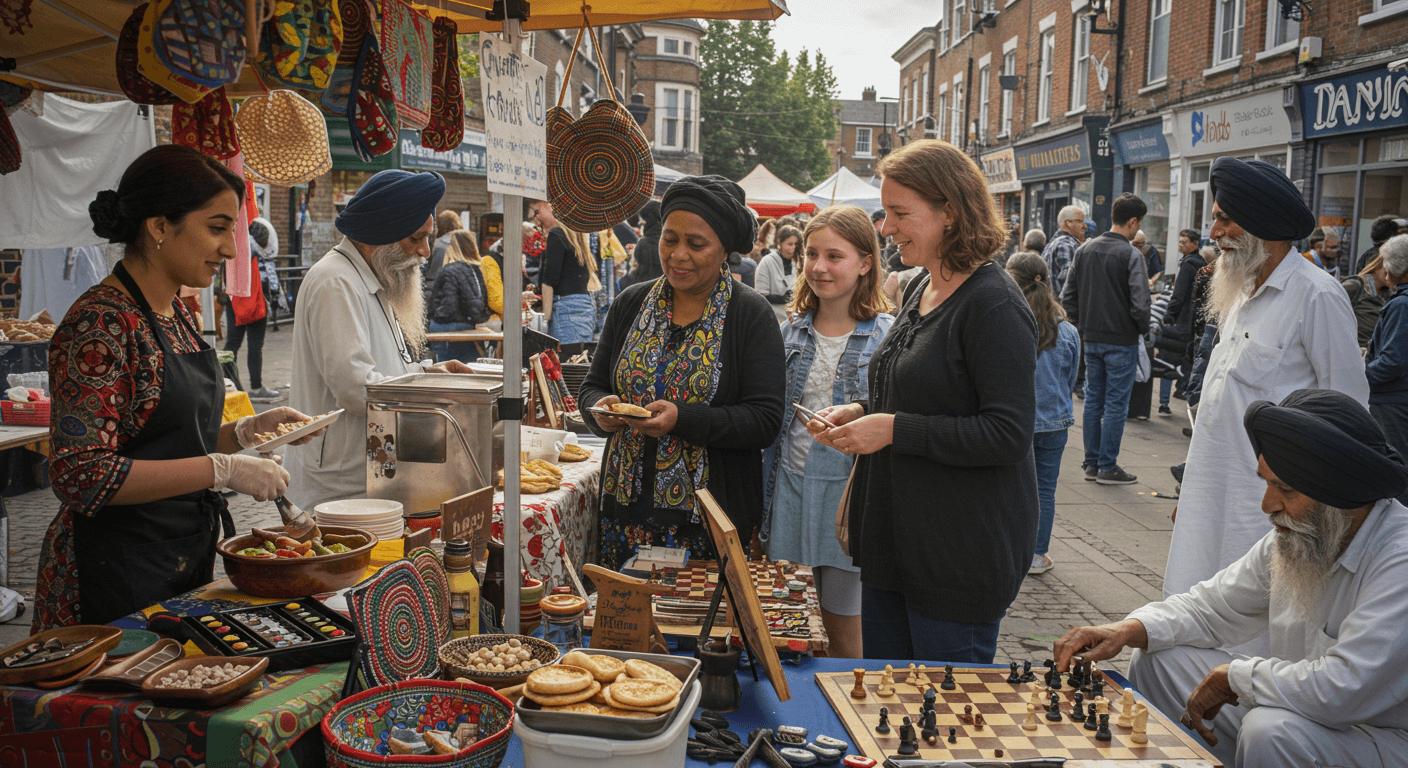
Among South Asians alone, there are huge disparities. Indians, Pakistanis and Bangladeshis differ in language, religion, food habits, festivals and clothing. A Gujarati Hindu Diwali campaign will not resonate with a Pakistani Punjabi Muslim audience preparing for Eid, and neither will land with Bangladeshi families in Tower Hamlets whose media habits skew to Bengali TV and local community networks.
The same applies to Black communities. Black African and Black Caribbean audiences have distinct media, church networks, food retail and aspiration cues. Black African communities — now larger than Black Caribbean in England and Wales, skew younger, more urban, and more reliant on Pentecostal church influence for opinion forming.
And for newer Eastern European, Romanian and Bulgarian communities counted within white ethnic minorities, Orthodox Easter, name days and remittance behaviour drive spending patterns mainstream media never mentions.
For marketers, the implication is practical. Understanding dietary restrictions linked to faith, important religious holidays, typical family dynamics, and language preferences at home is not optional detail, it is the brief.
UK Ethnic Minority Market at a Glance 2026
Population: 18.3% UK (10.9m), 18% England & Wales Black, Asian, mixed or other; London 46.2% non-white + 17% white ethnic minorities Growth: 14.6% minority ethnic in 2024, rising to 27% of adults by 2061 (WPP) Spending Power: £727bn opportunity in 2024 alone; £16.7tn cumulative to 2061; £575bn annual disposable income by 2061 London: Most diverse region — 46% Asian, Black, mixed or other; one-third of businesses owned by ethnic minority Behaviour: 77% choose brands with social purpose vs 56% white; 25% more spend in beauty & travel; family is primary social unit Youth: Mixed ethnic median age 19 vs 41 White British; digital + community hybrid media consumption Channel Shift: Language barriers for women, older generations, newer immigrants drive reliance on ethnic TV, radio, print and community networks
What Smart Brands Do Differently
The best multicultural campaigns share three characteristics: they decode culture, not just translate; they respect community influence; and they invest where attention actually lives.
Stop translating. Start decoding. Running your English ad in ethnic media with subtitles is not ethnic marketing. Cultural decoding means understanding why a message works. For South Asian joint families, a car is a family purchase involving grandparents, not an individual status symbol. For Black African communities, education and status signalling around medicine, banking and IT careers remains strong. Language translation without that context can offend at worst and be irrelevant at best.
Respect the community gatekeepers. Community and religious leaders play an influential role in opinion forming and behaviour change for South Asian, Afro-Caribbean and Chinese communities. The 2017 article noted this; in 2026 it is measurable. WhatsApp broadcast lists from imams and pastors, YouTube channels from community chefs, and TikTok creators speaking in Sylheti, Yoruba or Tamil drive more trust than a national TV spot. Experts who have those contacts are not a nice-to-have, they are the media plan.
Think beyond tokenism. Forget the box-ticking gesture of adding one Black face to a mainstream campaign. In today's fragmented market, ethnic marketing offers a new strategic focus for product and market development. That means product: halal-certified, shade-inclusive, modest fashion ranges. Means channel: ethnic TV, radio, OOH in high-density postcodes, and community Facebook groups that burgeoned in the last 10 years and are now mature, high-trust environments. And means creative that reflects real family structures, large joint families where grandparents, parents, brothers and children live together, not just the Western nuclear model.
Listen before you impose. The basic rule from 2017 still holds: understand a diverse, multicultural audience and address their needs. But above all, listen to what they want to see, what they want to view and what they want to hear, rather than imposing what you think they want to hear. Brands that co-create with creators from those communities — paying them properly, outperform those that assume.
Conclusion: Ignore at Your Own Competitive Peril
In 2017 we warned that companies which ignore this market do so at their own competitive peril. People from ethnic minorities were already becoming immune to blanket messages not tailored to their sensitivities.
In 2026, that immunity is complete. With the number of people from ethnic minorities living in Britain only on the rise, doubling to almost a third of adults by 2061, pretending homogeneous campaigns are still the most effective way to market is shortsighted.
The opportunity is not just moral. Engaging just 1% of minority ethnic groups to change spending habits across seven sectors unlocks a £2.34bn short-term growth opportunity, £12.3bn over a decade to 2031, and £107bn over a lifetime to 2061, according to WPP. British businesses already lose an estimated £4.5bn in sales by overlooking Black and Asian consumers alone, particularly in health and beauty where 22% of spend goes to specialist shops.
There are experts who can guide you through the maze of ethnic media and cultural sensitivities. The question is not whether you can afford to target ethnic minorities properly. It is whether you can afford not to.
Stop Translating. Start Connecting
Mediareach has been the UK's first ethnic and multicultural advertising agency since 1986. From cultural insight and language decoding to precision planning across 40+ community channels, we help brands turn diversity into growth.
Sources & References
ONS Census 2021, "Ethnic groups in the UK," – 18.3% minority, London 46.2% Asian, Black, mixed or other + 17% white minorities. ons.gov.uk
WPP, "Consumer Equality Equation: Drive Business Growth to Tackle Racial Inequality," 2024 – £727bn opportunity 2024, £16.7tn cumulative, 27% by 2061. wpp.com
Gov.uk Ethnicity Facts and Figures, "Population of England and Wales" and "Regional ethnic diversity," 2021 Census. ethnicity-facts-figures.service.gov.uk
Campaign Live, "Are brands ignoring 16% of UK population – and a £4.5bn spend?" – monthly disposable £375m, 25% more spend in beauty & travel. campaignlive.co.uk
Retail Gazette, "British businesses lose £4.5bn of sales by overlooking black and Asian consumers" – 22% spend in specialist shops. retailgazette.co.uk
Full Fact, "London is not 55% non-white" – verification of 46.2% figure and white ethnic minorities. fullfact.org
Research Live / Ogilvy, "Minority ethnic groups want brands to be engaged in social issues" – 77% choose brands with purpose. research-live.com
how to reach ethnic minorities UK
ethnic minority marketing UK
multicultural marketing strategy UK
UK ethnic minority spending power
diverse marketing UK 2026
BAME marketing strategy
inclusive marketing UK
cultural decoding vs translation
ethnic media planning UK
minority ethnic consumer behaviour
London ethnic diversity marketing
WPP consumer equality equation
UK census ethnicity 2021
multicultural advertising agency
The UK's pioneering multicultural marketing and advertising agency. Over 40 years connecting brands with diverse communities through cultural insight, creative excellence, and intelligent media strategy. mediareach.co
Sep 1, 2026
How to reach ethnic minorities
One of the most important weapons in a marketer's armoury is knowing who your customer actually is. In 2026, that means understanding the 18% of the UK, and 46% of London, the mainstream still mislabels.
⏱ 4 min read
mediareach insight
In 2017, we wrote that ethnic minorities had £60bn in disposable income. In 2024, WPP put the real opportunity at £727 billion in a single year, rising to £575bn in annual disposable income by 2061 when minority ethnic groups will make up 27% of UK adults.
That old article opened with a confession many marketers still make privately: they cannot tell where a typical person from an ethnic minority comes from, what languages they speak, or what religious background they come from. Some still describe all Black people as Caribbean and all brown people as Asian.
That is not just a diversity problem. It is a commercial blind spot. The 2021 Census confirmed 18.3% of the UK population — 10.9 million people — are ethnic minority, 18% in England and Wales as Black, Asian, mixed or other. In London, 46.2% identify as Asian, Black, mixed or other, plus 17% white ethnic minorities. The city is 63% diverse. In the West Midlands, the North West and Yorkshire, the figure is climbing fastest.
The 2026 Consumer Landscape Has Changed
The original piece described ethnic audiences as young, aspirational, loyal to roots and religiously sensitive. That remains true, but the data is sharper now.
It is young and growing fast.
More than 50% of the Black and South Asian population was under 25 in the old data; today the median age for mixed ethnic groups is 19 versus 41 for White British. Family is still the most important social unit, but it is now often digitally connected — grandparents in Lahore or Lagos on WhatsApp video while shopping in Bradford or Birmingham.
It is affluent and specific.
Multi-ethnic consumers spend 25% more than average in health and beauty and travel. Black women spend 30% of their beauty budget in specialist shops, and 4 in 10 still say it is difficult to buy cosmetics that match their skin tone. The average monthly disposable income for this group was estimated at £375m — £4.5bn annually — in earlier specialist reports, before WPP's more comprehensive modelling revealed the £727bn prize.
It is immune to blanket messaging.
WPP's Consumer Equality Equation, based on 8,300 participants across six ethnicities, found that 77% of minority ethnic consumers actively choose brands with a strong social purpose, compared to 56% of white respondents. Generic campaigns are not just ignored; they actively signal that a brand does not understand them.
The Diversity Within Diversity
This is where most brands fail. The ethnic population is not a segment. It is a mosaic of segments that respond differently from the mainstream and from each other.
Among South Asians alone, there are huge disparities. Indians, Pakistanis and Bangladeshis differ in language, religion, food habits, festivals and clothing. A Gujarati Hindu Diwali campaign will not resonate with a Pakistani Punjabi Muslim audience preparing for Eid, and neither will land with Bangladeshi families in Tower Hamlets whose media habits skew to Bengali TV and local community networks.
The same applies to Black communities. Black African and Black Caribbean audiences have distinct media, church networks, food retail and aspiration cues. Black African communities — now larger than Black Caribbean in England and Wales, skew younger, more urban, and more reliant on Pentecostal church influence for opinion forming.
And for newer Eastern European, Romanian and Bulgarian communities counted within white ethnic minorities, Orthodox Easter, name days and remittance behaviour drive spending patterns mainstream media never mentions.
For marketers, the implication is practical. Understanding dietary restrictions linked to faith, important religious holidays, typical family dynamics, and language preferences at home is not optional detail, it is the brief.
UK Ethnic Minority Market at a Glance 2026
Population: 18.3% UK (10.9m), 18% England & Wales Black, Asian, mixed or other; London 46.2% non-white + 17% white ethnic minorities Growth: 14.6% minority ethnic in 2024, rising to 27% of adults by 2061 (WPP) Spending Power: £727bn opportunity in 2024 alone; £16.7tn cumulative to 2061; £575bn annual disposable income by 2061 London: Most diverse region — 46% Asian, Black, mixed or other; one-third of businesses owned by ethnic minority Behaviour: 77% choose brands with social purpose vs 56% white; 25% more spend in beauty & travel; family is primary social unit Youth: Mixed ethnic median age 19 vs 41 White British; digital + community hybrid media consumption Channel Shift: Language barriers for women, older generations, newer immigrants drive reliance on ethnic TV, radio, print and community networks
What Smart Brands Do Differently
The best multicultural campaigns share three characteristics: they decode culture, not just translate; they respect community influence; and they invest where attention actually lives.
Stop translating. Start decoding. Running your English ad in ethnic media with subtitles is not ethnic marketing. Cultural decoding means understanding why a message works. For South Asian joint families, a car is a family purchase involving grandparents, not an individual status symbol. For Black African communities, education and status signalling around medicine, banking and IT careers remains strong. Language translation without that context can offend at worst and be irrelevant at best.
Respect the community gatekeepers. Community and religious leaders play an influential role in opinion forming and behaviour change for South Asian, Afro-Caribbean and Chinese communities. The 2017 article noted this; in 2026 it is measurable. WhatsApp broadcast lists from imams and pastors, YouTube channels from community chefs, and TikTok creators speaking in Sylheti, Yoruba or Tamil drive more trust than a national TV spot. Experts who have those contacts are not a nice-to-have, they are the media plan.
Think beyond tokenism. Forget the box-ticking gesture of adding one Black face to a mainstream campaign. In today's fragmented market, ethnic marketing offers a new strategic focus for product and market development. That means product: halal-certified, shade-inclusive, modest fashion ranges. Means channel: ethnic TV, radio, OOH in high-density postcodes, and community Facebook groups that burgeoned in the last 10 years and are now mature, high-trust environments. And means creative that reflects real family structures, large joint families where grandparents, parents, brothers and children live together, not just the Western nuclear model.
Listen before you impose. The basic rule from 2017 still holds: understand a diverse, multicultural audience and address their needs. But above all, listen to what they want to see, what they want to view and what they want to hear, rather than imposing what you think they want to hear. Brands that co-create with creators from those communities — paying them properly, outperform those that assume.
Conclusion: Ignore at Your Own Competitive Peril
In 2017 we warned that companies which ignore this market do so at their own competitive peril. People from ethnic minorities were already becoming immune to blanket messages not tailored to their sensitivities.
In 2026, that immunity is complete. With the number of people from ethnic minorities living in Britain only on the rise, doubling to almost a third of adults by 2061, pretending homogeneous campaigns are still the most effective way to market is shortsighted.
The opportunity is not just moral. Engaging just 1% of minority ethnic groups to change spending habits across seven sectors unlocks a £2.34bn short-term growth opportunity, £12.3bn over a decade to 2031, and £107bn over a lifetime to 2061, according to WPP. British businesses already lose an estimated £4.5bn in sales by overlooking Black and Asian consumers alone, particularly in health and beauty where 22% of spend goes to specialist shops.
There are experts who can guide you through the maze of ethnic media and cultural sensitivities. The question is not whether you can afford to target ethnic minorities properly. It is whether you can afford not to.
Stop Translating. Start Connecting
Mediareach has been the UK's first ethnic and multicultural advertising agency since 1986. From cultural insight and language decoding to precision planning across 40+ community channels, we help brands turn diversity into growth.
Sources & References
ONS Census 2021, "Ethnic groups in the UK," – 18.3% minority, London 46.2% Asian, Black, mixed or other + 17% white minorities. ons.gov.uk
WPP, "Consumer Equality Equation: Drive Business Growth to Tackle Racial Inequality," 2024 – £727bn opportunity 2024, £16.7tn cumulative, 27% by 2061. wpp.com
Gov.uk Ethnicity Facts and Figures, "Population of England and Wales" and "Regional ethnic diversity," 2021 Census. ethnicity-facts-figures.service.gov.uk
Campaign Live, "Are brands ignoring 16% of UK population – and a £4.5bn spend?" – monthly disposable £375m, 25% more spend in beauty & travel. campaignlive.co.uk
Retail Gazette, "British businesses lose £4.5bn of sales by overlooking black and Asian consumers" – 22% spend in specialist shops. retailgazette.co.uk
Full Fact, "London is not 55% non-white" – verification of 46.2% figure and white ethnic minorities. fullfact.org
Research Live / Ogilvy, "Minority ethnic groups want brands to be engaged in social issues" – 77% choose brands with purpose. research-live.com
how to reach ethnic minorities UK
ethnic minority marketing UK
multicultural marketing strategy UK
UK ethnic minority spending power
diverse marketing UK 2026
BAME marketing strategy
inclusive marketing UK
cultural decoding vs translation
ethnic media planning UK
minority ethnic consumer behaviour
London ethnic diversity marketing
WPP consumer equality equation
UK census ethnicity 2021
multicultural advertising agency
The UK's pioneering multicultural marketing and advertising agency. Over 40 years connecting brands with diverse communities through cultural insight, creative excellence, and intelligent media strategy. mediareach.co
Sep 1, 2026
How to reach ethnic minorities
One of the most important weapons in a marketer's armoury is knowing who your customer actually is. In 2026, that means understanding the 18% of the UK, and 46% of London, the mainstream still mislabels.
⏱ 4 min read
mediareach insight
In 2017, we wrote that ethnic minorities had £60bn in disposable income. In 2024, WPP put the real opportunity at £727 billion in a single year, rising to £575bn in annual disposable income by 2061 when minority ethnic groups will make up 27% of UK adults.
That old article opened with a confession many marketers still make privately: they cannot tell where a typical person from an ethnic minority comes from, what languages they speak, or what religious background they come from. Some still describe all Black people as Caribbean and all brown people as Asian.
That is not just a diversity problem. It is a commercial blind spot. The 2021 Census confirmed 18.3% of the UK population — 10.9 million people — are ethnic minority, 18% in England and Wales as Black, Asian, mixed or other. In London, 46.2% identify as Asian, Black, mixed or other, plus 17% white ethnic minorities. The city is 63% diverse. In the West Midlands, the North West and Yorkshire, the figure is climbing fastest.
The 2026 Consumer Landscape Has Changed
The original piece described ethnic audiences as young, aspirational, loyal to roots and religiously sensitive. That remains true, but the data is sharper now.
It is young and growing fast.
More than 50% of the Black and South Asian population was under 25 in the old data; today the median age for mixed ethnic groups is 19 versus 41 for White British. Family is still the most important social unit, but it is now often digitally connected — grandparents in Lahore or Lagos on WhatsApp video while shopping in Bradford or Birmingham.
It is affluent and specific.
Multi-ethnic consumers spend 25% more than average in health and beauty and travel. Black women spend 30% of their beauty budget in specialist shops, and 4 in 10 still say it is difficult to buy cosmetics that match their skin tone. The average monthly disposable income for this group was estimated at £375m — £4.5bn annually — in earlier specialist reports, before WPP's more comprehensive modelling revealed the £727bn prize.
It is immune to blanket messaging.
WPP's Consumer Equality Equation, based on 8,300 participants across six ethnicities, found that 77% of minority ethnic consumers actively choose brands with a strong social purpose, compared to 56% of white respondents. Generic campaigns are not just ignored; they actively signal that a brand does not understand them.
The Diversity Within Diversity
This is where most brands fail. The ethnic population is not a segment. It is a mosaic of segments that respond differently from the mainstream and from each other.
Among South Asians alone, there are huge disparities. Indians, Pakistanis and Bangladeshis differ in language, religion, food habits, festivals and clothing. A Gujarati Hindu Diwali campaign will not resonate with a Pakistani Punjabi Muslim audience preparing for Eid, and neither will land with Bangladeshi families in Tower Hamlets whose media habits skew to Bengali TV and local community networks.
The same applies to Black communities. Black African and Black Caribbean audiences have distinct media, church networks, food retail and aspiration cues. Black African communities — now larger than Black Caribbean in England and Wales, skew younger, more urban, and more reliant on Pentecostal church influence for opinion forming.
And for newer Eastern European, Romanian and Bulgarian communities counted within white ethnic minorities, Orthodox Easter, name days and remittance behaviour drive spending patterns mainstream media never mentions.
For marketers, the implication is practical. Understanding dietary restrictions linked to faith, important religious holidays, typical family dynamics, and language preferences at home is not optional detail, it is the brief.
UK Ethnic Minority Market at a Glance 2026
Population: 18.3% UK (10.9m), 18% England & Wales Black, Asian, mixed or other; London 46.2% non-white + 17% white ethnic minorities Growth: 14.6% minority ethnic in 2024, rising to 27% of adults by 2061 (WPP) Spending Power: £727bn opportunity in 2024 alone; £16.7tn cumulative to 2061; £575bn annual disposable income by 2061 London: Most diverse region — 46% Asian, Black, mixed or other; one-third of businesses owned by ethnic minority Behaviour: 77% choose brands with social purpose vs 56% white; 25% more spend in beauty & travel; family is primary social unit Youth: Mixed ethnic median age 19 vs 41 White British; digital + community hybrid media consumption Channel Shift: Language barriers for women, older generations, newer immigrants drive reliance on ethnic TV, radio, print and community networks
What Smart Brands Do Differently
The best multicultural campaigns share three characteristics: they decode culture, not just translate; they respect community influence; and they invest where attention actually lives.
Stop translating. Start decoding. Running your English ad in ethnic media with subtitles is not ethnic marketing. Cultural decoding means understanding why a message works. For South Asian joint families, a car is a family purchase involving grandparents, not an individual status symbol. For Black African communities, education and status signalling around medicine, banking and IT careers remains strong. Language translation without that context can offend at worst and be irrelevant at best.
Respect the community gatekeepers. Community and religious leaders play an influential role in opinion forming and behaviour change for South Asian, Afro-Caribbean and Chinese communities. The 2017 article noted this; in 2026 it is measurable. WhatsApp broadcast lists from imams and pastors, YouTube channels from community chefs, and TikTok creators speaking in Sylheti, Yoruba or Tamil drive more trust than a national TV spot. Experts who have those contacts are not a nice-to-have, they are the media plan.
Think beyond tokenism. Forget the box-ticking gesture of adding one Black face to a mainstream campaign. In today's fragmented market, ethnic marketing offers a new strategic focus for product and market development. That means product: halal-certified, shade-inclusive, modest fashion ranges. Means channel: ethnic TV, radio, OOH in high-density postcodes, and community Facebook groups that burgeoned in the last 10 years and are now mature, high-trust environments. And means creative that reflects real family structures, large joint families where grandparents, parents, brothers and children live together, not just the Western nuclear model.
Listen before you impose. The basic rule from 2017 still holds: understand a diverse, multicultural audience and address their needs. But above all, listen to what they want to see, what they want to view and what they want to hear, rather than imposing what you think they want to hear. Brands that co-create with creators from those communities — paying them properly, outperform those that assume.
Conclusion: Ignore at Your Own Competitive Peril
In 2017 we warned that companies which ignore this market do so at their own competitive peril. People from ethnic minorities were already becoming immune to blanket messages not tailored to their sensitivities.
In 2026, that immunity is complete. With the number of people from ethnic minorities living in Britain only on the rise, doubling to almost a third of adults by 2061, pretending homogeneous campaigns are still the most effective way to market is shortsighted.
The opportunity is not just moral. Engaging just 1% of minority ethnic groups to change spending habits across seven sectors unlocks a £2.34bn short-term growth opportunity, £12.3bn over a decade to 2031, and £107bn over a lifetime to 2061, according to WPP. British businesses already lose an estimated £4.5bn in sales by overlooking Black and Asian consumers alone, particularly in health and beauty where 22% of spend goes to specialist shops.
There are experts who can guide you through the maze of ethnic media and cultural sensitivities. The question is not whether you can afford to target ethnic minorities properly. It is whether you can afford not to.
Stop Translating. Start Connecting
Mediareach has been the UK's first ethnic and multicultural advertising agency since 1986. From cultural insight and language decoding to precision planning across 40+ community channels, we help brands turn diversity into growth.
Sources & References
ONS Census 2021, "Ethnic groups in the UK," – 18.3% minority, London 46.2% Asian, Black, mixed or other + 17% white minorities. ons.gov.uk
WPP, "Consumer Equality Equation: Drive Business Growth to Tackle Racial Inequality," 2024 – £727bn opportunity 2024, £16.7tn cumulative, 27% by 2061. wpp.com
Gov.uk Ethnicity Facts and Figures, "Population of England and Wales" and "Regional ethnic diversity," 2021 Census. ethnicity-facts-figures.service.gov.uk
Campaign Live, "Are brands ignoring 16% of UK population – and a £4.5bn spend?" – monthly disposable £375m, 25% more spend in beauty & travel. campaignlive.co.uk
Retail Gazette, "British businesses lose £4.5bn of sales by overlooking black and Asian consumers" – 22% spend in specialist shops. retailgazette.co.uk
Full Fact, "London is not 55% non-white" – verification of 46.2% figure and white ethnic minorities. fullfact.org
Research Live / Ogilvy, "Minority ethnic groups want brands to be engaged in social issues" – 77% choose brands with purpose. research-live.com
how to reach ethnic minorities UK
ethnic minority marketing UK
multicultural marketing strategy UK
UK ethnic minority spending power
diverse marketing UK 2026
BAME marketing strategy
inclusive marketing UK
cultural decoding vs translation
ethnic media planning UK
minority ethnic consumer behaviour
London ethnic diversity marketing
WPP consumer equality equation
UK census ethnicity 2021
multicultural advertising agency
The UK's pioneering multicultural marketing and advertising agency. Over 40 years connecting brands with diverse communities through cultural insight, creative excellence, and intelligent media strategy. mediareach.co