
Aug 25, 2026
Targeting Success in Diversity Marketing in New Zealand
New Zealand is 32.2% non-European. Learn how brands like Air New Zealand and Tourism NZ are leading diversity marketing — and what happens when cultural respect goes wrong.
⏱ 6 min read
By mediareach
The small island nation of New Zealand is known for its picturesque lakes, rich Māori culture, and its ability to completely eradicate the COVID-19 virus. This piece of paradise is now becoming the test-run of how a western economy will survive post-coronavirus.
But can the country also serve as a case study for equal and educated inclusion of minority ethnic groups into core advertising planning? In this article, we review some of New Zealand's successes, failures, and learnings on its path to fairly represent all of its people in true Kiwi marketing campaigns.
European
67.8%
Down from 74% in 2013, reflecting rapid diversification
Māori
17.8%
The indigenous tangata whenua, up from 14.9% in 2013
Asian
17.3%
Fastest-growing group, up from 11.8% in 2013
Languages
150+
Spoken across New Zealand's nearly 5 million people
A Society Full of Diversity and Opportunity
A 2016 Ministry of Social Development study found that over 80% of New Zealand's population aged over 15 found it "easy" to be themselves in terms of their identity. This is a reflection of how diversity plays a core part in New Zealand's identity and how progressive its society is in terms of acceptance of difference.
The 2023 Census confirmed this trajectory. New Zealand's population reached nearly 5 million, with European identity declining to 67.8% from 74% in 2013. Māori increased to 17.8%, Asian to 17.3%, and Pacific peoples to 8.9%. Auckland is now the most diverse region, with only 49.8% European and 31.3% Asian. Nearly 30% of New Zealanders were born overseas, and over 150 languages are spoken nationwide.
Brands and agencies in New Zealand have, for the most part, adopted diversity-inclusive strategies in their marketing campaigns, although of course more needs to be done. Examples include the incorporation of Māori transgender model Te Manahou Mackay into 2017 fashion week, a breakthrough for breaking gender stereotypes, and Air New Zealand featuring Kiwi transgender rapper Randa and Māori actor Julian Dennison in its on-board safety video, which went viral with almost 2.5 million unique YouTube hits.
The inclusion of diversity in New Zealand advertising has become such an integral part of many agencies' strategies that non-diverse commercials really stand out, and are actively called out by the general public and adjusted. One such recent ad was the female empowerment video by advertising agency Flying Fish, which was re-shot due to accusations of a lack of racial diversity amongst the women involved.
"The lack of Māori voices at the table results in stereotypical representation of Māori people. We need meaningful representation, incorporating a realistic and more optimistic perception of minority and under-represented groups, not just playing on stereotypes."
Bridget Taylor
Māori Executive Creative Director, Contagion
Māori Marketing Placed at the Centre
Māori culture is a vital part of New Zealand's society. The Māori people were the first inhabitants of the country and are therefore the tangata whenua or "people of the land." Despite being colonised by the British, they are slowly regaining their footing to achieve some form of equity with the colonial system that governs the country, albeit with a long way to go.
The culture and history of the Māori people is intrinsic to New Zealand as a whole, and Kiwi brands understand the importance of acknowledging, incorporating, and respecting Māori culture in their marketing strategies. Meaningful representation of Māori customs, language, or imagery, with consultation and approval by Māori people, can lead to an authentic relationship being formed and a successful national campaign.
Tourism New Zealand recently introduced an interactive piece of experiential marketing debuting "Kōrero and Kai," which encourages cross-country conversation through a large screen placed at the end of a Māori traditionally-carved table that connects people to both influential and ordinary New Zealanders. The screen provides picturesque landscapes as a backdrop, and whilst conversation takes place, people can dine on traditional Māori cuisine.
The initiative promotes both New Zealand as a country and Māori as a culture, by upholding the Māori belief of kotahitanga (unity) and the interconnection of people being of the utmost importance to a fruitful and harmonious society. This is a very culturally sensitive and understanding method of marketing and a highly effective way to market a nation to the world.
Air New Zealand Flies the Flag
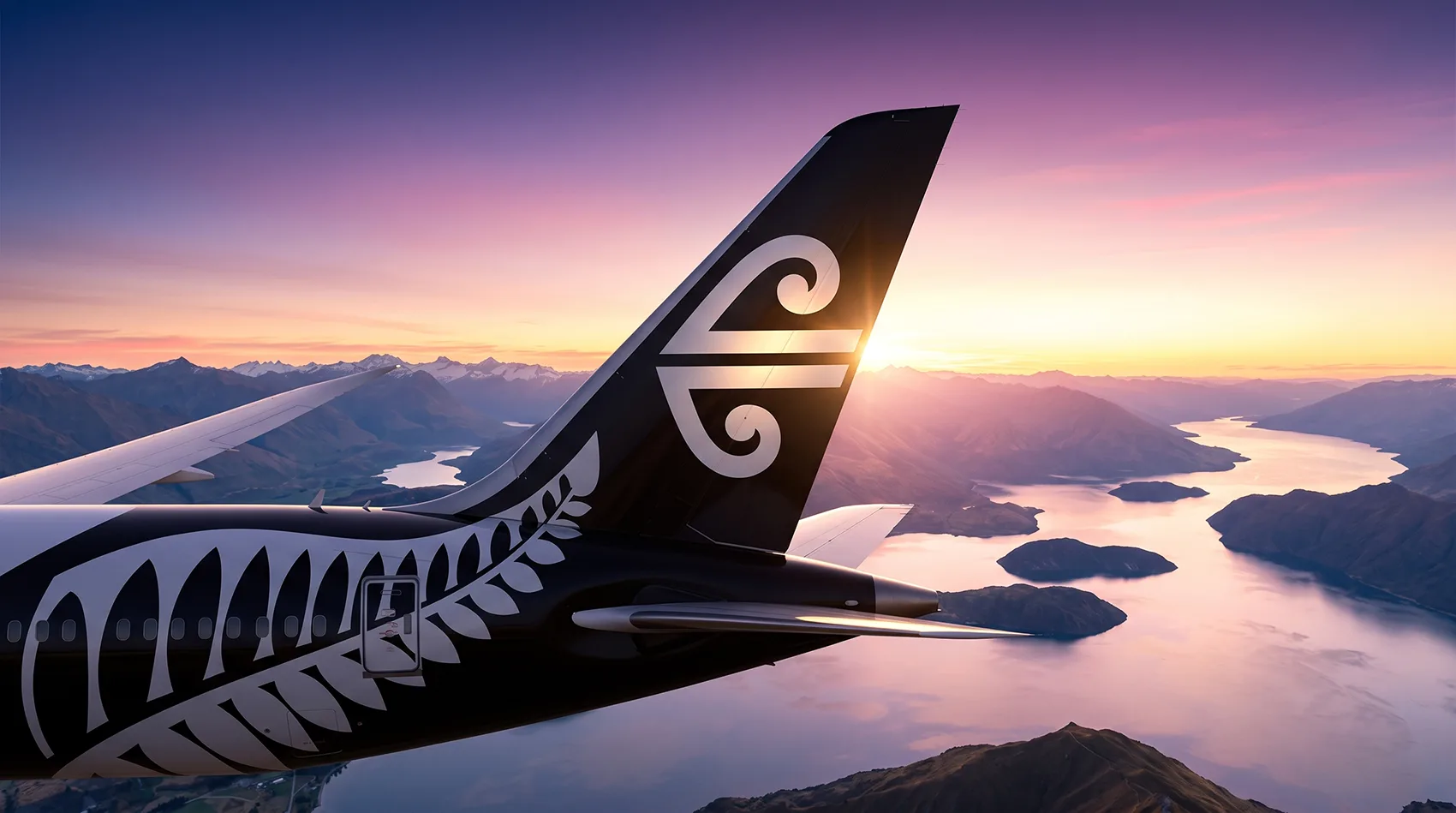
Air New Zealand is a nationally owned airline that has a history of incorporating Māori culture into its brand image and advertising, starting with the principle logo of the company: a koru, which is a traditional Māori symbol that depicts an unfurling fern frond representing the beginning of life, creation, and the way in which life both changes and stays the same. This unification of Māori symbolism with a national airline holds importance to Māori culture being a source of national pride.
The company has also introduced te reo Māori as an option at check-in kiosks and developed the Kia Rere app in partnership with NZ Māori Tourism, offering interactive audio learning and the ability to create a mihimihi. In 2024, Air New Zealand launched Ka Rere, a 12-week diverse business accelerator programme supporting small diverse businesses with mentoring and procurement opportunities.
But Air New Zealand has also received criticism for cultural appropriation, and so the steps taken to be inclusive need to be matched with thorough understanding and consultation with Māori people. The airline's journey demonstrates that even brands with the best intentions must continuously earn cultural credibility through genuine partnership, not just symbolic gestures.
Good Intentions, Poor Execution
Kāpiti Fine Foods is a New Zealand company owned by Fonterra based in Kāpiti, Wellington, that produces gourmet dairy products. In 2019, the company received backlash over their use of a Māori ancestor's name in the branding of one of their cheese products. The 'Tuteremoana' cheddar was branded as being inspired by the sharpness of the peak of a sacred mountain in the Kāpiti region.
The peak is named after the local iwi ancestor Tuteremoana, and the concept of naming an edible product after such a revered leader was considered deeply disrespectful to the local iwi. As a result, Fonterra decided to launch a review of not only Kāpiti's use of te reo Māori, but of all their products' use of the language. The review involved consulting iwi to receive their consent and advice on product names and company practices.
This example proves that it is important for brands who want to be inclusive and representative to carry out rigorous research and gain explicit consent from the parties involved. Despite Fonterra having a manager for Māori strategies, the company still needed to take the extra steps to understand whether any given strategy is culturally respectful or not.
Equal Representation Of Agency Staff
Perhaps surprisingly, despite the positive perception of New Zealand's increasingly diverse advertising, there still remains a lack of racial and gender diversity amongst advertising executives.
Bridget Taylor, the Māori Executive Creative Director of New Zealand advertising agency Contagion, has called out a lack of Māori representation in agency management and claims that the lack of Māori voices at the table results in stereotypical representation of Māori people. This has opened a national conversation about progressing the representation of diversity in advertising to meaningful representation, incorporating a realistic and more optimistic perception of minority and under-represented groups, not just playing on stereotypes.
Furthermore, Taylor also highlighted the lack of women in senior positions within the New Zealand creative advertising industry, demonstrating that diversity challenges persist even in countries with progressive reputations.
To Summarise: Reflect a Country's Collective Values
So how can other countries adopt some of the marketing strategies of New Zealand? The key to how various brands and agencies market effectively in New Zealand is the reflection of the country's collective values.
Understanding the society that you are marketing to involves gaining a deeper understanding of the cultures and voices you need to represent. When brands venture into a new country to market their products, the same strategies used in their home country often won't apply, and so consulting, conversing, and learning will result in more effective and meaningful marketing results.
Adapting to changing demographics in your home country is also important, and these same methods can be applied, wherever you are, to ensure the success of your inclusive advertising campaigns.
But make sure you practise what you preach. Ensure the planning of fair representation within your own brand or agency before you release your next multicultural marketing campaign. The brands that win will be those that build diverse teams first, then create campaigns that reflect that diversity authentically.
Key takeaway
New Zealand proves that diversity marketing is not a trend — it is a baseline expectation. The public actively calls out brands that fail to represent society accurately. The brands that thrive are those that embed cultural respect into their DNA, consult communities before launching campaigns, and build diverse teams that bring lived experience to every brief.
Build Authentic Multicultural Marketing
Mediareach combines four decades of community expertise with global cultural intelligence to help brands create marketing that respects, resonates, and delivers results across diverse markets.
Sources & References
Stats NZ, "2023 Census population counts (by ethnic group, age, and Māori descent) and dwelling counts," May 2024. stats.govt.nz
Stats NZ, "Census results reflect Aotearoa New Zealand's diversity," October 2024. stats.govt.nz
Wikipedia, "Demographics of New Zealand," 2026. wikipedia.org
Air New Zealand, "Supplier Diversity — Ka Rere Programme," 2025. airnewzealand.com
Air New Zealand, "People — Sustainability," 2025. airnewzealand.com
Ministry of Social Development, "The Social Report 2016 — Identity," New Zealand Government.
Taylor, B., Contagion, cited in industry reporting on Māori representation in New Zealand advertising.
New Zealand diversity marketing
Māori marketing strategy
Air New Zealand diversity
multicultural marketing NZ
New Zealand 2023 census diversity
te reo Māori marketing
Kāpiti Fine Foods controversy
inclusive advertising New Zealand
Pasifika marketing
Asian New Zealand consumers
indigenous marketing
cultural appropriation brands
diverse agency teams
Māori representation advertising
global diversity strategy
The UK's pioneering multicultural marketing and advertising agency. Over 40 years connecting brands with diverse communities through cultural insight, creative excellence, and intelligent media strategy. mediareach.co



Aug 25, 2026
Targeting Success in Diversity Marketing in New Zealand
New Zealand is 32.2% non-European. Learn how brands like Air New Zealand and Tourism NZ are leading diversity marketing — and what happens when cultural respect goes wrong.
⏱ 6 min read
By mediareach
The small island nation of New Zealand is known for its picturesque lakes, rich Māori culture, and its ability to completely eradicate the COVID-19 virus. This piece of paradise is now becoming the test-run of how a western economy will survive post-coronavirus.
But can the country also serve as a case study for equal and educated inclusion of minority ethnic groups into core advertising planning? In this article, we review some of New Zealand's successes, failures, and learnings on its path to fairly represent all of its people in true Kiwi marketing campaigns.
European
67.8%
Down from 74% in 2013, reflecting rapid diversification
Māori
17.8%
The indigenous tangata whenua, up from 14.9% in 2013
Asian
17.3%
Fastest-growing group, up from 11.8% in 2013
Languages
150+
Spoken across New Zealand's nearly 5 million people
A Society Full of Diversity and Opportunity
A 2016 Ministry of Social Development study found that over 80% of New Zealand's population aged over 15 found it "easy" to be themselves in terms of their identity. This is a reflection of how diversity plays a core part in New Zealand's identity and how progressive its society is in terms of acceptance of difference.
The 2023 Census confirmed this trajectory. New Zealand's population reached nearly 5 million, with European identity declining to 67.8% from 74% in 2013. Māori increased to 17.8%, Asian to 17.3%, and Pacific peoples to 8.9%. Auckland is now the most diverse region, with only 49.8% European and 31.3% Asian. Nearly 30% of New Zealanders were born overseas, and over 150 languages are spoken nationwide.
Brands and agencies in New Zealand have, for the most part, adopted diversity-inclusive strategies in their marketing campaigns, although of course more needs to be done. Examples include the incorporation of Māori transgender model Te Manahou Mackay into 2017 fashion week, a breakthrough for breaking gender stereotypes, and Air New Zealand featuring Kiwi transgender rapper Randa and Māori actor Julian Dennison in its on-board safety video, which went viral with almost 2.5 million unique YouTube hits.
The inclusion of diversity in New Zealand advertising has become such an integral part of many agencies' strategies that non-diverse commercials really stand out, and are actively called out by the general public and adjusted. One such recent ad was the female empowerment video by advertising agency Flying Fish, which was re-shot due to accusations of a lack of racial diversity amongst the women involved.
"The lack of Māori voices at the table results in stereotypical representation of Māori people. We need meaningful representation, incorporating a realistic and more optimistic perception of minority and under-represented groups, not just playing on stereotypes."
Bridget Taylor
Māori Executive Creative Director, Contagion
Māori Marketing Placed at the Centre
Māori culture is a vital part of New Zealand's society. The Māori people were the first inhabitants of the country and are therefore the tangata whenua or "people of the land." Despite being colonised by the British, they are slowly regaining their footing to achieve some form of equity with the colonial system that governs the country, albeit with a long way to go.
The culture and history of the Māori people is intrinsic to New Zealand as a whole, and Kiwi brands understand the importance of acknowledging, incorporating, and respecting Māori culture in their marketing strategies. Meaningful representation of Māori customs, language, or imagery, with consultation and approval by Māori people, can lead to an authentic relationship being formed and a successful national campaign.
Tourism New Zealand recently introduced an interactive piece of experiential marketing debuting "Kōrero and Kai," which encourages cross-country conversation through a large screen placed at the end of a Māori traditionally-carved table that connects people to both influential and ordinary New Zealanders. The screen provides picturesque landscapes as a backdrop, and whilst conversation takes place, people can dine on traditional Māori cuisine.
The initiative promotes both New Zealand as a country and Māori as a culture, by upholding the Māori belief of kotahitanga (unity) and the interconnection of people being of the utmost importance to a fruitful and harmonious society. This is a very culturally sensitive and understanding method of marketing and a highly effective way to market a nation to the world.
Air New Zealand Flies the Flag
Air New Zealand is a nationally owned airline that has a history of incorporating Māori culture into its brand image and advertising, starting with the principle logo of the company: a koru, which is a traditional Māori symbol that depicts an unfurling fern frond representing the beginning of life, creation, and the way in which life both changes and stays the same. This unification of Māori symbolism with a national airline holds importance to Māori culture being a source of national pride.
The company has also introduced te reo Māori as an option at check-in kiosks and developed the Kia Rere app in partnership with NZ Māori Tourism, offering interactive audio learning and the ability to create a mihimihi. In 2024, Air New Zealand launched Ka Rere, a 12-week diverse business accelerator programme supporting small diverse businesses with mentoring and procurement opportunities.
But Air New Zealand has also received criticism for cultural appropriation, and so the steps taken to be inclusive need to be matched with thorough understanding and consultation with Māori people. The airline's journey demonstrates that even brands with the best intentions must continuously earn cultural credibility through genuine partnership, not just symbolic gestures.
Good Intentions, Poor Execution
Kāpiti Fine Foods is a New Zealand company owned by Fonterra based in Kāpiti, Wellington, that produces gourmet dairy products. In 2019, the company received backlash over their use of a Māori ancestor's name in the branding of one of their cheese products. The 'Tuteremoana' cheddar was branded as being inspired by the sharpness of the peak of a sacred mountain in the Kāpiti region.
The peak is named after the local iwi ancestor Tuteremoana, and the concept of naming an edible product after such a revered leader was considered deeply disrespectful to the local iwi. As a result, Fonterra decided to launch a review of not only Kāpiti's use of te reo Māori, but of all their products' use of the language. The review involved consulting iwi to receive their consent and advice on product names and company practices.
This example proves that it is important for brands who want to be inclusive and representative to carry out rigorous research and gain explicit consent from the parties involved. Despite Fonterra having a manager for Māori strategies, the company still needed to take the extra steps to understand whether any given strategy is culturally respectful or not.
Equal Representation Of Agency Staff
Perhaps surprisingly, despite the positive perception of New Zealand's increasingly diverse advertising, there still remains a lack of racial and gender diversity amongst advertising executives.
Bridget Taylor, the Māori Executive Creative Director of New Zealand advertising agency Contagion, has called out a lack of Māori representation in agency management and claims that the lack of Māori voices at the table results in stereotypical representation of Māori people. This has opened a national conversation about progressing the representation of diversity in advertising to meaningful representation, incorporating a realistic and more optimistic perception of minority and under-represented groups, not just playing on stereotypes.
Furthermore, Taylor also highlighted the lack of women in senior positions within the New Zealand creative advertising industry, demonstrating that diversity challenges persist even in countries with progressive reputations.
To Summarise: Reflect a Country's Collective Values
So how can other countries adopt some of the marketing strategies of New Zealand? The key to how various brands and agencies market effectively in New Zealand is the reflection of the country's collective values.
Understanding the society that you are marketing to involves gaining a deeper understanding of the cultures and voices you need to represent. When brands venture into a new country to market their products, the same strategies used in their home country often won't apply, and so consulting, conversing, and learning will result in more effective and meaningful marketing results.
Adapting to changing demographics in your home country is also important, and these same methods can be applied, wherever you are, to ensure the success of your inclusive advertising campaigns.
But make sure you practise what you preach. Ensure the planning of fair representation within your own brand or agency before you release your next multicultural marketing campaign. The brands that win will be those that build diverse teams first, then create campaigns that reflect that diversity authentically.
Key takeaway
New Zealand proves that diversity marketing is not a trend — it is a baseline expectation. The public actively calls out brands that fail to represent society accurately. The brands that thrive are those that embed cultural respect into their DNA, consult communities before launching campaigns, and build diverse teams that bring lived experience to every brief.
Build Authentic Multicultural Marketing
Mediareach combines four decades of community expertise with global cultural intelligence to help brands create marketing that respects, resonates, and delivers results across diverse markets.
Sources & References
Stats NZ, "2023 Census population counts (by ethnic group, age, and Māori descent) and dwelling counts," May 2024. stats.govt.nz
Stats NZ, "Census results reflect Aotearoa New Zealand's diversity," October 2024. stats.govt.nz
Wikipedia, "Demographics of New Zealand," 2026. wikipedia.org
Air New Zealand, "Supplier Diversity — Ka Rere Programme," 2025. airnewzealand.com
Air New Zealand, "People — Sustainability," 2025. airnewzealand.com
Ministry of Social Development, "The Social Report 2016 — Identity," New Zealand Government.
Taylor, B., Contagion, cited in industry reporting on Māori representation in New Zealand advertising.
New Zealand diversity marketing
Māori marketing strategy
Air New Zealand diversity
multicultural marketing NZ
New Zealand 2023 census diversity
te reo Māori marketing
Kāpiti Fine Foods controversy
inclusive advertising New Zealand
Pasifika marketing
Asian New Zealand consumers
indigenous marketing
cultural appropriation brands
diverse agency teams
Māori representation advertising
global diversity strategy
The UK's pioneering multicultural marketing and advertising agency. Over 40 years connecting brands with diverse communities through cultural insight, creative excellence, and intelligent media strategy. mediareach.co
Aug 25, 2026
Targeting Success in Diversity Marketing in New Zealand
New Zealand is 32.2% non-European. Learn how brands like Air New Zealand and Tourism NZ are leading diversity marketing — and what happens when cultural respect goes wrong.
⏱ 6 min read
By mediareach
The small island nation of New Zealand is known for its picturesque lakes, rich Māori culture, and its ability to completely eradicate the COVID-19 virus. This piece of paradise is now becoming the test-run of how a western economy will survive post-coronavirus.
But can the country also serve as a case study for equal and educated inclusion of minority ethnic groups into core advertising planning? In this article, we review some of New Zealand's successes, failures, and learnings on its path to fairly represent all of its people in true Kiwi marketing campaigns.
European
67.8%
Down from 74% in 2013, reflecting rapid diversification
Māori
17.8%
The indigenous tangata whenua, up from 14.9% in 2013
Asian
17.3%
Fastest-growing group, up from 11.8% in 2013
Languages
150+
Spoken across New Zealand's nearly 5 million people
A Society Full of Diversity and Opportunity
A 2016 Ministry of Social Development study found that over 80% of New Zealand's population aged over 15 found it "easy" to be themselves in terms of their identity. This is a reflection of how diversity plays a core part in New Zealand's identity and how progressive its society is in terms of acceptance of difference.
The 2023 Census confirmed this trajectory. New Zealand's population reached nearly 5 million, with European identity declining to 67.8% from 74% in 2013. Māori increased to 17.8%, Asian to 17.3%, and Pacific peoples to 8.9%. Auckland is now the most diverse region, with only 49.8% European and 31.3% Asian. Nearly 30% of New Zealanders were born overseas, and over 150 languages are spoken nationwide.
Brands and agencies in New Zealand have, for the most part, adopted diversity-inclusive strategies in their marketing campaigns, although of course more needs to be done. Examples include the incorporation of Māori transgender model Te Manahou Mackay into 2017 fashion week, a breakthrough for breaking gender stereotypes, and Air New Zealand featuring Kiwi transgender rapper Randa and Māori actor Julian Dennison in its on-board safety video, which went viral with almost 2.5 million unique YouTube hits.
The inclusion of diversity in New Zealand advertising has become such an integral part of many agencies' strategies that non-diverse commercials really stand out, and are actively called out by the general public and adjusted. One such recent ad was the female empowerment video by advertising agency Flying Fish, which was re-shot due to accusations of a lack of racial diversity amongst the women involved.
"The lack of Māori voices at the table results in stereotypical representation of Māori people. We need meaningful representation, incorporating a realistic and more optimistic perception of minority and under-represented groups, not just playing on stereotypes."
Bridget Taylor
Māori Executive Creative Director, Contagion
Māori Marketing Placed at the Centre
Māori culture is a vital part of New Zealand's society. The Māori people were the first inhabitants of the country and are therefore the tangata whenua or "people of the land." Despite being colonised by the British, they are slowly regaining their footing to achieve some form of equity with the colonial system that governs the country, albeit with a long way to go.
The culture and history of the Māori people is intrinsic to New Zealand as a whole, and Kiwi brands understand the importance of acknowledging, incorporating, and respecting Māori culture in their marketing strategies. Meaningful representation of Māori customs, language, or imagery, with consultation and approval by Māori people, can lead to an authentic relationship being formed and a successful national campaign.
Tourism New Zealand recently introduced an interactive piece of experiential marketing debuting "Kōrero and Kai," which encourages cross-country conversation through a large screen placed at the end of a Māori traditionally-carved table that connects people to both influential and ordinary New Zealanders. The screen provides picturesque landscapes as a backdrop, and whilst conversation takes place, people can dine on traditional Māori cuisine.
The initiative promotes both New Zealand as a country and Māori as a culture, by upholding the Māori belief of kotahitanga (unity) and the interconnection of people being of the utmost importance to a fruitful and harmonious society. This is a very culturally sensitive and understanding method of marketing and a highly effective way to market a nation to the world.
Air New Zealand Flies the Flag
Air New Zealand is a nationally owned airline that has a history of incorporating Māori culture into its brand image and advertising, starting with the principle logo of the company: a koru, which is a traditional Māori symbol that depicts an unfurling fern frond representing the beginning of life, creation, and the way in which life both changes and stays the same. This unification of Māori symbolism with a national airline holds importance to Māori culture being a source of national pride.
The company has also introduced te reo Māori as an option at check-in kiosks and developed the Kia Rere app in partnership with NZ Māori Tourism, offering interactive audio learning and the ability to create a mihimihi. In 2024, Air New Zealand launched Ka Rere, a 12-week diverse business accelerator programme supporting small diverse businesses with mentoring and procurement opportunities.
But Air New Zealand has also received criticism for cultural appropriation, and so the steps taken to be inclusive need to be matched with thorough understanding and consultation with Māori people. The airline's journey demonstrates that even brands with the best intentions must continuously earn cultural credibility through genuine partnership, not just symbolic gestures.
Good Intentions, Poor Execution
Kāpiti Fine Foods is a New Zealand company owned by Fonterra based in Kāpiti, Wellington, that produces gourmet dairy products. In 2019, the company received backlash over their use of a Māori ancestor's name in the branding of one of their cheese products. The 'Tuteremoana' cheddar was branded as being inspired by the sharpness of the peak of a sacred mountain in the Kāpiti region.
The peak is named after the local iwi ancestor Tuteremoana, and the concept of naming an edible product after such a revered leader was considered deeply disrespectful to the local iwi. As a result, Fonterra decided to launch a review of not only Kāpiti's use of te reo Māori, but of all their products' use of the language. The review involved consulting iwi to receive their consent and advice on product names and company practices.
This example proves that it is important for brands who want to be inclusive and representative to carry out rigorous research and gain explicit consent from the parties involved. Despite Fonterra having a manager for Māori strategies, the company still needed to take the extra steps to understand whether any given strategy is culturally respectful or not.
Equal Representation Of Agency Staff
Perhaps surprisingly, despite the positive perception of New Zealand's increasingly diverse advertising, there still remains a lack of racial and gender diversity amongst advertising executives.
Bridget Taylor, the Māori Executive Creative Director of New Zealand advertising agency Contagion, has called out a lack of Māori representation in agency management and claims that the lack of Māori voices at the table results in stereotypical representation of Māori people. This has opened a national conversation about progressing the representation of diversity in advertising to meaningful representation, incorporating a realistic and more optimistic perception of minority and under-represented groups, not just playing on stereotypes.
Furthermore, Taylor also highlighted the lack of women in senior positions within the New Zealand creative advertising industry, demonstrating that diversity challenges persist even in countries with progressive reputations.
To Summarise: Reflect a Country's Collective Values
So how can other countries adopt some of the marketing strategies of New Zealand? The key to how various brands and agencies market effectively in New Zealand is the reflection of the country's collective values.
Understanding the society that you are marketing to involves gaining a deeper understanding of the cultures and voices you need to represent. When brands venture into a new country to market their products, the same strategies used in their home country often won't apply, and so consulting, conversing, and learning will result in more effective and meaningful marketing results.
Adapting to changing demographics in your home country is also important, and these same methods can be applied, wherever you are, to ensure the success of your inclusive advertising campaigns.
But make sure you practise what you preach. Ensure the planning of fair representation within your own brand or agency before you release your next multicultural marketing campaign. The brands that win will be those that build diverse teams first, then create campaigns that reflect that diversity authentically.
Key takeaway
New Zealand proves that diversity marketing is not a trend — it is a baseline expectation. The public actively calls out brands that fail to represent society accurately. The brands that thrive are those that embed cultural respect into their DNA, consult communities before launching campaigns, and build diverse teams that bring lived experience to every brief.
Build Authentic Multicultural Marketing
Mediareach combines four decades of community expertise with global cultural intelligence to help brands create marketing that respects, resonates, and delivers results across diverse markets.
Sources & References
Stats NZ, "2023 Census population counts (by ethnic group, age, and Māori descent) and dwelling counts," May 2024. stats.govt.nz
Stats NZ, "Census results reflect Aotearoa New Zealand's diversity," October 2024. stats.govt.nz
Wikipedia, "Demographics of New Zealand," 2026. wikipedia.org
Air New Zealand, "Supplier Diversity — Ka Rere Programme," 2025. airnewzealand.com
Air New Zealand, "People — Sustainability," 2025. airnewzealand.com
Ministry of Social Development, "The Social Report 2016 — Identity," New Zealand Government.
Taylor, B., Contagion, cited in industry reporting on Māori representation in New Zealand advertising.
New Zealand diversity marketing
Māori marketing strategy
Air New Zealand diversity
multicultural marketing NZ
New Zealand 2023 census diversity
te reo Māori marketing
Kāpiti Fine Foods controversy
inclusive advertising New Zealand
Pasifika marketing
Asian New Zealand consumers
indigenous marketing
cultural appropriation brands
diverse agency teams
Māori representation advertising
global diversity strategy
The UK's pioneering multicultural marketing and advertising agency. Over 40 years connecting brands with diverse communities through cultural insight, creative excellence, and intelligent media strategy. mediareach.co