
Jun 25, 2016
Target The Growing Multicultural Market in the UK
With £90 billion in disposable income and 40% of London from ethnic communities, the UK's multicultural market is not a niche — it is the mainstream. Here's why brands must adapt.
⏱ 5 min read
By mediareach
If there was one challenge facing marketing directors, agencies, government departments, and the creative industry today, it is this: how to engage our ever-increasing, diverse multicultural society. With the minority ethnic population growing to 12% nationally, and reaching over a third in cities like London and Leicester, the question is no longer whether to target these communities, but how.
The Scale of the Opportunity
The numbers are impossible to ignore:
£90 billion in disposable income across minority ethnic communities
40% of London's population is from ethnic communities
320 languages spoken in London
One-third of London businesses are owned and run by ethnic entrepreneurs
More than 2 million Eastern Europeans have come to the UK
1.2 million people expected from Bulgaria and Romania over the next 18 months
Over 50% of the ethnic population is under 25 — a youthful, aspirational audience
The food sector is already dominated by ethnic food and restaurants. Asian cinema halls are seeing a revival, with gate receipts overtaking mainstream cinema complexes. The message is clear: the demography is changing beyond recognition, and brands must change their tactics.
Who Are These Consumers?
Minority ethnic people are loyal to their roots and cultural heritage. They love their food, music, films, and television. They are aspirational, value education and status highly, and seek careers in medicine, pharmacy, IT, banking, and management. They aspire to luxury brands — cars, electronics, watches, and property.
Most are religiously sensitive and culturally conscious. They respond differently to generic communication messages. To get them interested, we need to understand and appreciate their culture and traditions — not impose our assumptions on them.
"The basic rule is to understand this diverse multicultural audience and address their needs, but above all, we need to listen to what they want to see, view, and hear rather than imposing our thoughts on them."
Saad Saraf
CEO, Mediareach Advertising
Why Mainstream Marketing Fails
Conventional channels are not enough to capture "hard to reach communities." Mainstream media under-delivers because ethnic audiences have a strong dependence on their own media — TV, radio, press, digital, and cinema. The irrelevance of terrestrial television programmes has pushed ethnic audiences away, driving a boom in ethnic media channels.
Above all, what is lacking is understanding. Most marketers I have spoken to cannot tell where a typical minority ethnic person comes from, what languages they speak, or what religious background they belong to. Some confess that every Black person they describe as Caribbean and every brown person as Asian.
I am also bemused by the insensitivity of some commissioners and marketers. I find myself drawn to Arabic media and television more than the bland mainstream channels I am forced to pay for — channels whose editorial content does not cater for or represent me, and at times offends my culture and traditions.
The UK Multicultural Market at a Glance
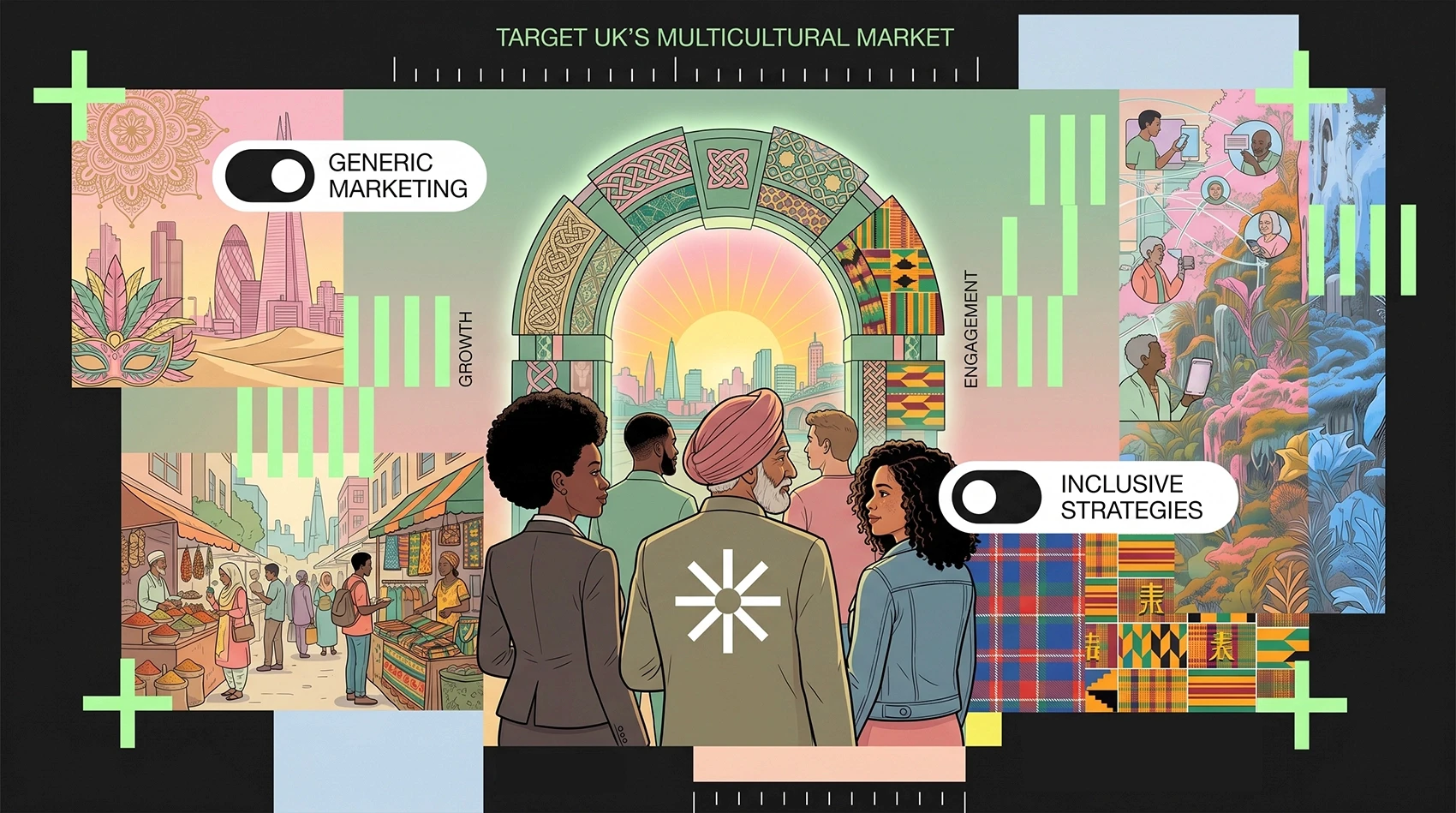
National Ethnic Population: 12% and growing London Ethnic Population: 40% Disposable Income: £90 billion London Languages: 320 Ethnic-Owned London Businesses: 1 in 3 Youth Demographic: 50%+ under 25 Recent Eastern European Arrivals: 2 million+ Key Insight: This is not a niche. This is the new mainstream.
The Complexity Within Communities
Marketing to ethnic communities is not simple. The ethnic population in Britain is diverse not only in nationality and race, but in culture, attitude, lifestyle, and behaviour. What works for the mainstream does not necessarily work for the ethnic consumer — the triggers and hooks are different. Language barriers and cultural sensitivities add further complexity.
Within South Asian communities, the disparity between Indians, Pakistanis, and Bangladeshis is huge — differences in language, religion, food habits, festivals, and attire. Yet similarities exist too: the family as the central social unit, the joint family system, and strong community networks where leaders and religious figures play an influential role in opinion-forming.
Across South Asian, Afro-Caribbean, and Chinese communities, community networks are very strong. Due to language barriers, especially among women, older generations, and new immigrants, these communities rely on their own media and community networks for information and entertainment.
What Works: Outreach and Events
I am intrigued to see ethnic events — Melas, carnivals, fashion shows, music events — attracting tens of thousands, sometimes hundreds of thousands, of minority ethnic audiences ready to spend and be entertained. Meanwhile, mainstream art establishments struggle to draw a handful.
This is not a coincidence. These events meet communities where they are, in formats they value, with content that resonates. Conventional marketing channels alone cannot replicate this. Community outreach must be part of the strategy.
The Competitive Imperative
In today's fragmented and turbulent markets, ethnic marketing offers a new strategic focus for product and market development. Companies that ignore this do so at their own competitive peril. Mainstream clients obsessed with ticking boxes and paying lip service are being found out — minority ethnic communities are reciprocating by not reacting to inadequate communications.
Companies wishing to do business with ethnic minority groups need to review the basic premises of their marketing plans. The multi-ethnic reality of modern Britain demands a multi-ethnic marketing response.
Don't Miss the £90 Billion Opportunity
Mediareach has spent four decades understanding Britain's diverse communities. We know where they live, what they watch, what they value, and how to speak to them. Let us help you get it right.
Sources & References
Office for National Statistics, "UK Ethnic Population Data," 2016. ons.gov.uk
Greater London Authority, "London's Diverse Population and Business Ownership," 2016. london.gov.uk
Mediareach Advertising, "UK Multicultural Market Analysis," 2016. mediareach.co
multicultural market UK
ethnic minority marketing UK
UK ethnic consumer spending
London ethnic population marketing
multicultural marketing strategy
ethnic media UK
South Asian marketing UK
Afro-Caribbean marketing UK
Eastern European marketing UK
ethnic disposable income UK
multicultural consumer behaviour
Mediareach multicultural marketing
ethnic community outreach UK
hard to reach communities
minority ethnic audiences
The UK's pioneering multicultural marketing and advertising agency. Over 40 years connecting brands with diverse communities through cultural insight, creative excellence, and intelligent media strategy. mediareach.co

Jun 25, 2016
Target The Growing Multicultural Market in the UK
With £90 billion in disposable income and 40% of London from ethnic communities, the UK's multicultural market is not a niche — it is the mainstream. Here's why brands must adapt.
⏱ 5 min read
By mediareach
If there was one challenge facing marketing directors, agencies, government departments, and the creative industry today, it is this: how to engage our ever-increasing, diverse multicultural society. With the minority ethnic population growing to 12% nationally, and reaching over a third in cities like London and Leicester, the question is no longer whether to target these communities, but how.
The Scale of the Opportunity
The numbers are impossible to ignore:
£90 billion in disposable income across minority ethnic communities
40% of London's population is from ethnic communities
320 languages spoken in London
One-third of London businesses are owned and run by ethnic entrepreneurs
More than 2 million Eastern Europeans have come to the UK
1.2 million people expected from Bulgaria and Romania over the next 18 months
Over 50% of the ethnic population is under 25 — a youthful, aspirational audience
The food sector is already dominated by ethnic food and restaurants. Asian cinema halls are seeing a revival, with gate receipts overtaking mainstream cinema complexes. The message is clear: the demography is changing beyond recognition, and brands must change their tactics.
Who Are These Consumers?
Minority ethnic people are loyal to their roots and cultural heritage. They love their food, music, films, and television. They are aspirational, value education and status highly, and seek careers in medicine, pharmacy, IT, banking, and management. They aspire to luxury brands — cars, electronics, watches, and property.
Most are religiously sensitive and culturally conscious. They respond differently to generic communication messages. To get them interested, we need to understand and appreciate their culture and traditions — not impose our assumptions on them.
"The basic rule is to understand this diverse multicultural audience and address their needs, but above all, we need to listen to what they want to see, view, and hear rather than imposing our thoughts on them."
Saad Saraf
CEO, Mediareach Advertising
Why Mainstream Marketing Fails
Conventional channels are not enough to capture "hard to reach communities." Mainstream media under-delivers because ethnic audiences have a strong dependence on their own media — TV, radio, press, digital, and cinema. The irrelevance of terrestrial television programmes has pushed ethnic audiences away, driving a boom in ethnic media channels.
Above all, what is lacking is understanding. Most marketers I have spoken to cannot tell where a typical minority ethnic person comes from, what languages they speak, or what religious background they belong to. Some confess that every Black person they describe as Caribbean and every brown person as Asian.
I am also bemused by the insensitivity of some commissioners and marketers. I find myself drawn to Arabic media and television more than the bland mainstream channels I am forced to pay for — channels whose editorial content does not cater for or represent me, and at times offends my culture and traditions.
The UK Multicultural Market at a Glance
National Ethnic Population: 12% and growing London Ethnic Population: 40% Disposable Income: £90 billion London Languages: 320 Ethnic-Owned London Businesses: 1 in 3 Youth Demographic: 50%+ under 25 Recent Eastern European Arrivals: 2 million+ Key Insight: This is not a niche. This is the new mainstream.
The Complexity Within Communities
Marketing to ethnic communities is not simple. The ethnic population in Britain is diverse not only in nationality and race, but in culture, attitude, lifestyle, and behaviour. What works for the mainstream does not necessarily work for the ethnic consumer — the triggers and hooks are different. Language barriers and cultural sensitivities add further complexity.
Within South Asian communities, the disparity between Indians, Pakistanis, and Bangladeshis is huge — differences in language, religion, food habits, festivals, and attire. Yet similarities exist too: the family as the central social unit, the joint family system, and strong community networks where leaders and religious figures play an influential role in opinion-forming.
Across South Asian, Afro-Caribbean, and Chinese communities, community networks are very strong. Due to language barriers, especially among women, older generations, and new immigrants, these communities rely on their own media and community networks for information and entertainment.
What Works: Outreach and Events
I am intrigued to see ethnic events — Melas, carnivals, fashion shows, music events — attracting tens of thousands, sometimes hundreds of thousands, of minority ethnic audiences ready to spend and be entertained. Meanwhile, mainstream art establishments struggle to draw a handful.
This is not a coincidence. These events meet communities where they are, in formats they value, with content that resonates. Conventional marketing channels alone cannot replicate this. Community outreach must be part of the strategy.
The Competitive Imperative
In today's fragmented and turbulent markets, ethnic marketing offers a new strategic focus for product and market development. Companies that ignore this do so at their own competitive peril. Mainstream clients obsessed with ticking boxes and paying lip service are being found out — minority ethnic communities are reciprocating by not reacting to inadequate communications.
Companies wishing to do business with ethnic minority groups need to review the basic premises of their marketing plans. The multi-ethnic reality of modern Britain demands a multi-ethnic marketing response.
Don't Miss the £90 Billion Opportunity
Mediareach has spent four decades understanding Britain's diverse communities. We know where they live, what they watch, what they value, and how to speak to them. Let us help you get it right.
Sources & References
Office for National Statistics, "UK Ethnic Population Data," 2016. ons.gov.uk
Greater London Authority, "London's Diverse Population and Business Ownership," 2016. london.gov.uk
Mediareach Advertising, "UK Multicultural Market Analysis," 2016. mediareach.co
multicultural market UK
ethnic minority marketing UK
UK ethnic consumer spending
London ethnic population marketing
multicultural marketing strategy
ethnic media UK
South Asian marketing UK
Afro-Caribbean marketing UK
Eastern European marketing UK
ethnic disposable income UK
multicultural consumer behaviour
Mediareach multicultural marketing
ethnic community outreach UK
hard to reach communities
minority ethnic audiences
The UK's pioneering multicultural marketing and advertising agency. Over 40 years connecting brands with diverse communities through cultural insight, creative excellence, and intelligent media strategy. mediareach.co
Jun 25, 2016
Target The Growing Multicultural Market in the UK
With £90 billion in disposable income and 40% of London from ethnic communities, the UK's multicultural market is not a niche — it is the mainstream. Here's why brands must adapt.
⏱ 5 min read
By mediareach
If there was one challenge facing marketing directors, agencies, government departments, and the creative industry today, it is this: how to engage our ever-increasing, diverse multicultural society. With the minority ethnic population growing to 12% nationally, and reaching over a third in cities like London and Leicester, the question is no longer whether to target these communities, but how.
The Scale of the Opportunity
The numbers are impossible to ignore:
£90 billion in disposable income across minority ethnic communities
40% of London's population is from ethnic communities
320 languages spoken in London
One-third of London businesses are owned and run by ethnic entrepreneurs
More than 2 million Eastern Europeans have come to the UK
1.2 million people expected from Bulgaria and Romania over the next 18 months
Over 50% of the ethnic population is under 25 — a youthful, aspirational audience
The food sector is already dominated by ethnic food and restaurants. Asian cinema halls are seeing a revival, with gate receipts overtaking mainstream cinema complexes. The message is clear: the demography is changing beyond recognition, and brands must change their tactics.
Who Are These Consumers?
Minority ethnic people are loyal to their roots and cultural heritage. They love their food, music, films, and television. They are aspirational, value education and status highly, and seek careers in medicine, pharmacy, IT, banking, and management. They aspire to luxury brands — cars, electronics, watches, and property.
Most are religiously sensitive and culturally conscious. They respond differently to generic communication messages. To get them interested, we need to understand and appreciate their culture and traditions — not impose our assumptions on them.
"The basic rule is to understand this diverse multicultural audience and address their needs, but above all, we need to listen to what they want to see, view, and hear rather than imposing our thoughts on them."
Saad Saraf
CEO, Mediareach Advertising
Why Mainstream Marketing Fails
Conventional channels are not enough to capture "hard to reach communities." Mainstream media under-delivers because ethnic audiences have a strong dependence on their own media — TV, radio, press, digital, and cinema. The irrelevance of terrestrial television programmes has pushed ethnic audiences away, driving a boom in ethnic media channels.
Above all, what is lacking is understanding. Most marketers I have spoken to cannot tell where a typical minority ethnic person comes from, what languages they speak, or what religious background they belong to. Some confess that every Black person they describe as Caribbean and every brown person as Asian.
I am also bemused by the insensitivity of some commissioners and marketers. I find myself drawn to Arabic media and television more than the bland mainstream channels I am forced to pay for — channels whose editorial content does not cater for or represent me, and at times offends my culture and traditions.
The UK Multicultural Market at a Glance
National Ethnic Population: 12% and growing London Ethnic Population: 40% Disposable Income: £90 billion London Languages: 320 Ethnic-Owned London Businesses: 1 in 3 Youth Demographic: 50%+ under 25 Recent Eastern European Arrivals: 2 million+ Key Insight: This is not a niche. This is the new mainstream.
The Complexity Within Communities
Marketing to ethnic communities is not simple. The ethnic population in Britain is diverse not only in nationality and race, but in culture, attitude, lifestyle, and behaviour. What works for the mainstream does not necessarily work for the ethnic consumer — the triggers and hooks are different. Language barriers and cultural sensitivities add further complexity.
Within South Asian communities, the disparity between Indians, Pakistanis, and Bangladeshis is huge — differences in language, religion, food habits, festivals, and attire. Yet similarities exist too: the family as the central social unit, the joint family system, and strong community networks where leaders and religious figures play an influential role in opinion-forming.
Across South Asian, Afro-Caribbean, and Chinese communities, community networks are very strong. Due to language barriers, especially among women, older generations, and new immigrants, these communities rely on their own media and community networks for information and entertainment.
What Works: Outreach and Events
I am intrigued to see ethnic events — Melas, carnivals, fashion shows, music events — attracting tens of thousands, sometimes hundreds of thousands, of minority ethnic audiences ready to spend and be entertained. Meanwhile, mainstream art establishments struggle to draw a handful.
This is not a coincidence. These events meet communities where they are, in formats they value, with content that resonates. Conventional marketing channels alone cannot replicate this. Community outreach must be part of the strategy.
The Competitive Imperative
In today's fragmented and turbulent markets, ethnic marketing offers a new strategic focus for product and market development. Companies that ignore this do so at their own competitive peril. Mainstream clients obsessed with ticking boxes and paying lip service are being found out — minority ethnic communities are reciprocating by not reacting to inadequate communications.
Companies wishing to do business with ethnic minority groups need to review the basic premises of their marketing plans. The multi-ethnic reality of modern Britain demands a multi-ethnic marketing response.
Don't Miss the £90 Billion Opportunity
Mediareach has spent four decades understanding Britain's diverse communities. We know where they live, what they watch, what they value, and how to speak to them. Let us help you get it right.
Sources & References
Office for National Statistics, "UK Ethnic Population Data," 2016. ons.gov.uk
Greater London Authority, "London's Diverse Population and Business Ownership," 2016. london.gov.uk
Mediareach Advertising, "UK Multicultural Market Analysis," 2016. mediareach.co
multicultural market UK
ethnic minority marketing UK
UK ethnic consumer spending
London ethnic population marketing
multicultural marketing strategy
ethnic media UK
South Asian marketing UK
Afro-Caribbean marketing UK
Eastern European marketing UK
ethnic disposable income UK
multicultural consumer behaviour
Mediareach multicultural marketing
ethnic community outreach UK
hard to reach communities
minority ethnic audiences
The UK's pioneering multicultural marketing and advertising agency. Over 40 years connecting brands with diverse communities through cultural insight, creative excellence, and intelligent media strategy. mediareach.co