Mar 9, 2026
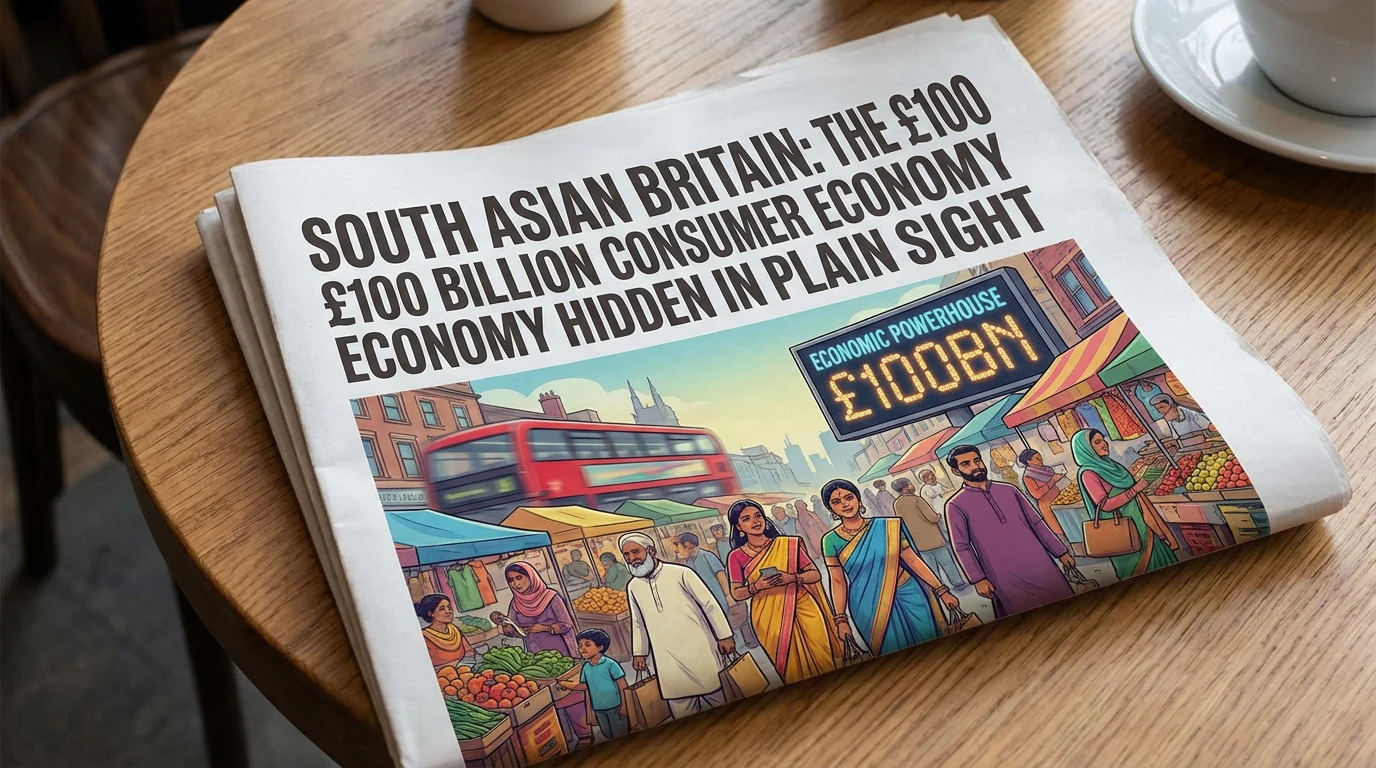
South Asian Britain: The £100 Billion Consumer Economy Hidden in Plain Sight
5.5 million people. Three major communities. Dozens of languages. One enormous opportunity that most brands are completely ignoring.
⏱ 9 min read
By Mediareach
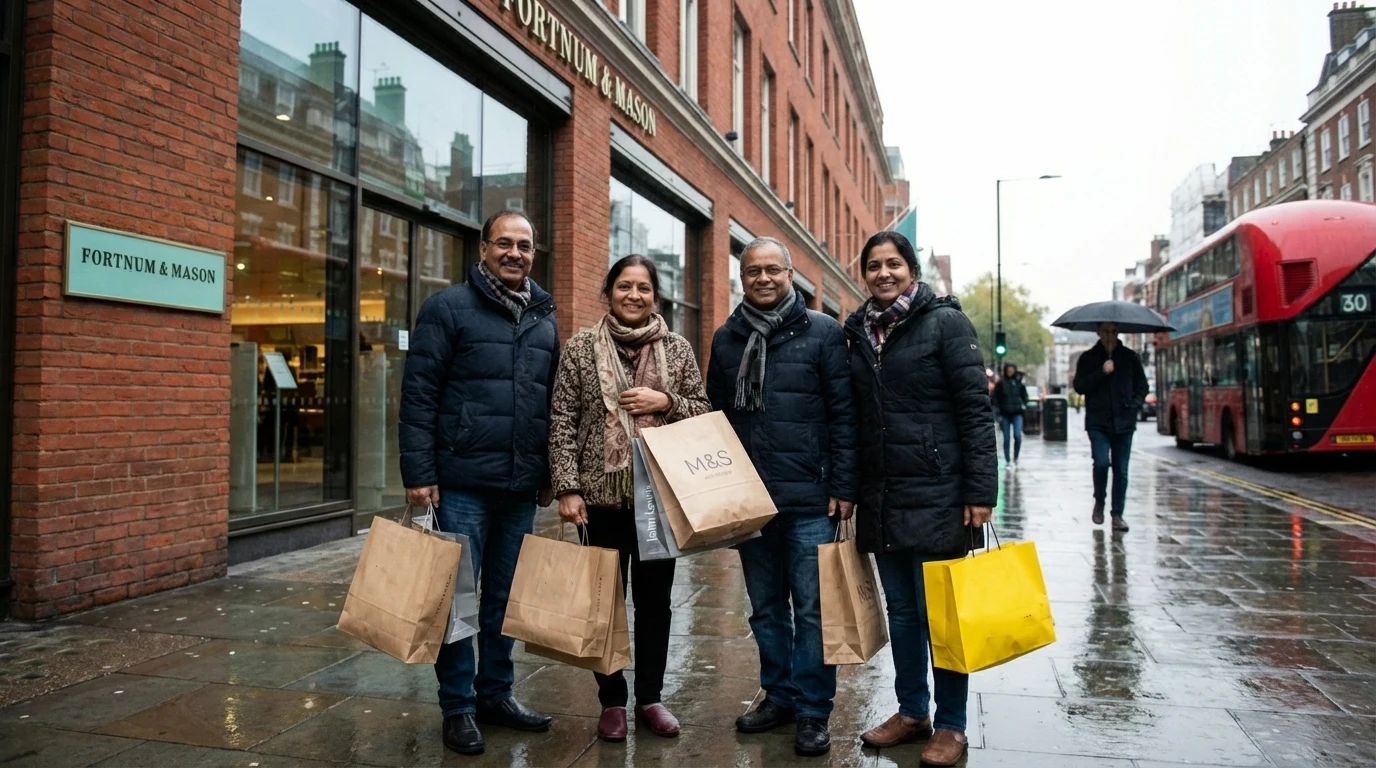
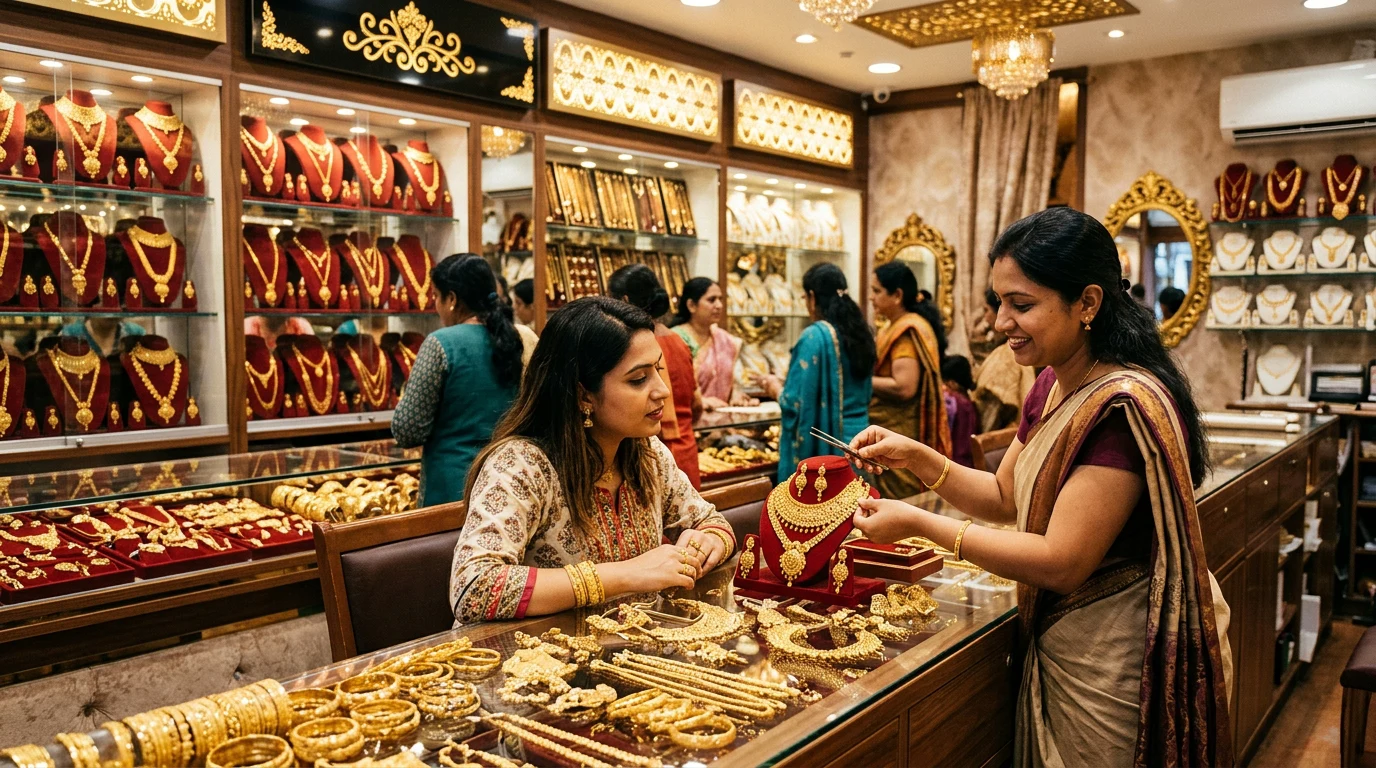
Walk through Southall, and you will find jewellers selling 22-carat gold necklaces alongside boutiques stocking designer lehengas that cost more than most high-street wedding dresses. Visit Tooting, and the food scene rivals anything you would find in Mumbai or Lahore. Step into Green Street in Newham, and the energy of a thriving South Asian commercial ecosystem is unmistakable.
Yet speak to most brand marketers about their strategy for reaching South Asian consumers, and you will get blank stares or, worse, a vague mention of "diversity" in their brand guidelines. This disconnect between the economic reality of South Asian Britain and the marketing industry's engagement with it represents one of the most significant missed opportunities in UK commerce.
The Scale of South Asian Britain
The 2021 Census confirmed what communities across the UK have long known: South Asian Britons are not a minority in any meaningful economic sense. At 5.5 million people—9.3% of the population of England and Wales, up from 7.5% in 2011—the Asian and Asian British population is the second-largest ethnic category in the country.
Indian Heritage
1.9M
Largest South Asian group. Strong presence in Leicester, London, Birmingham
Pakistani Heritage
1.6M
Major communities in Birmingham, Bradford, Manchester, London
Bangladeshi Heritage
650K+
Concentrated in Tower Hamlets, Birmingham, Luton, Oldham
But these headline numbers only scratch the surface. Within the broad "South Asian" category lies extraordinary diversity. The Indian British community includes Gujaratis, Punjabis, Tamils, Bengalis, Malayalis, and many more—each with distinct languages, religious practices, dietary preferences, and cultural traditions. The Pakistani British community spans Punjabis, Kashmiris, Pashtuns, and Sindhis, with different levels of cultural conservatism and commercial engagement. The Bangladeshi British community, while smaller in absolute numbers, is heavily concentrated in specific areas, creating micro-economies of significant scale.
Consumer Behaviour: What Brands Need to Understand
South Asian consumers in the UK defy easy categorisation, but several patterns emerge consistently that have profound implications for marketing strategy.
"People from ethnic backgrounds are aspirational and value education and status highly. The concept of family remains the most important social unit, with purchasing decisions that are often collective rather than individual."
Aspiration and Status Drive Purchasing
South Asian communities in the UK are disproportionately entrepreneurial—one-third of businesses in Greater London are owned by someone from an ethnic minority background. Educational attainment is high, with British Indian students consistently among the top-performing groups at GCSE and A-level. This creates a consumer profile that is highly aspirational, brand-conscious, and willing to invest in quality products that signal success and status.
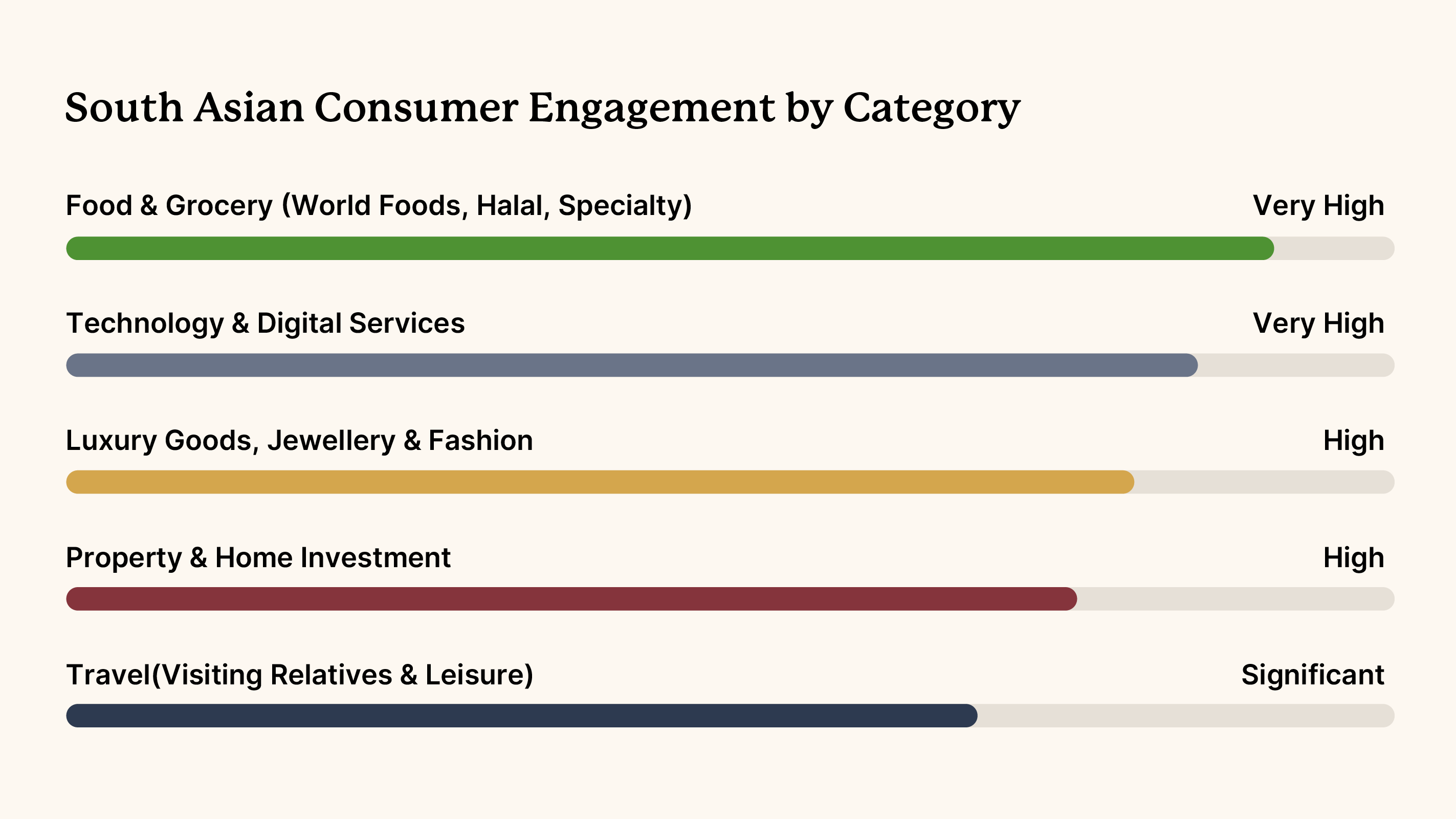
The luxury market implications are enormous. British Asian consumers are major purchasers of gold jewellery, designer fashion, premium cars, and high-end technology. Wedding spending in South Asian communities routinely exceeds national averages by a factor of three or more, with multi-day celebrations that involve extensive spending on venues, catering, clothing, jewellery, and photography.
The Family Decision-Making Unit
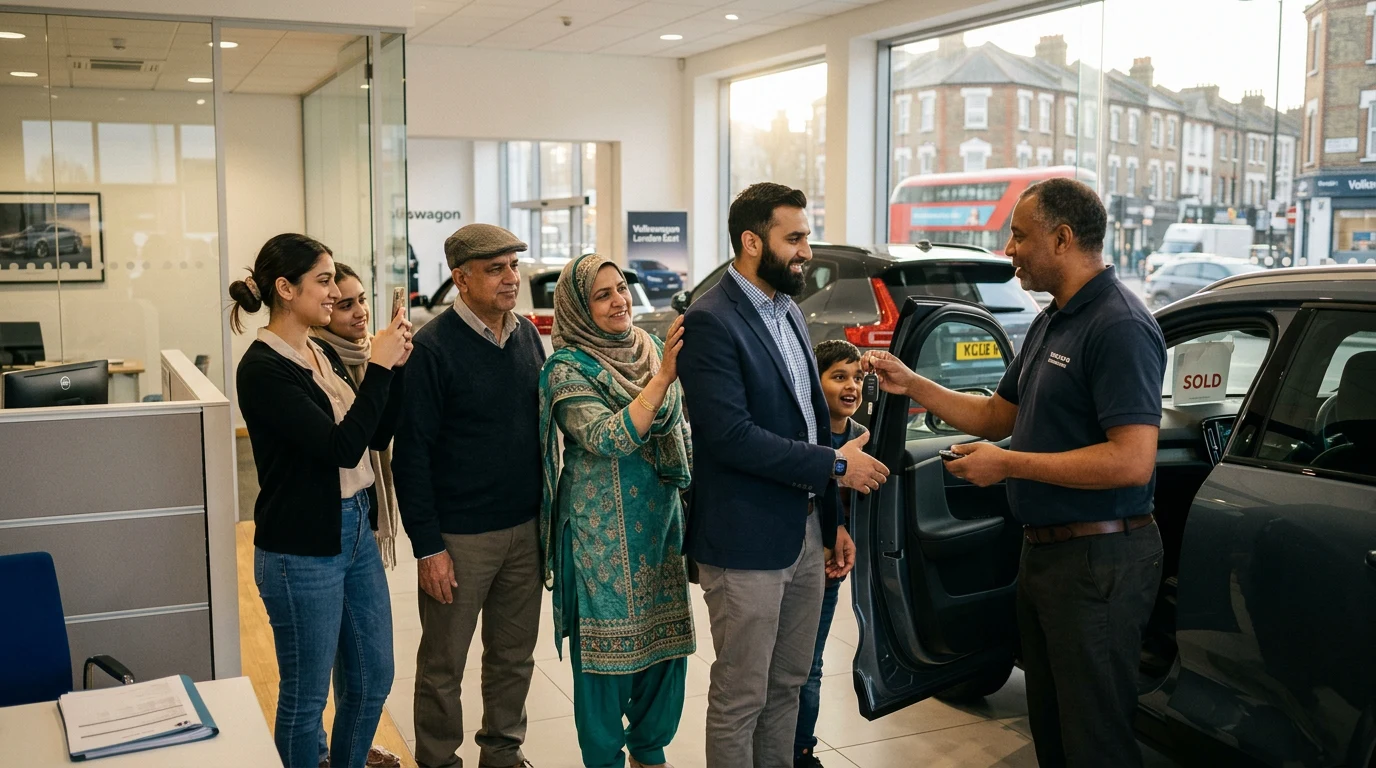
In many South Asian households, major purchasing decisions are made collectively. When a young British Pakistani professional buys a car, the opinions of parents, older siblings, and even extended family members may factor into the decision. When a British Indian family chooses a holiday destination, it may need to accommodate grandparents who want to visit a temple, teenagers who want a beach, and parents who want reliable halal food options.
This has profound implications for marketing. Campaigns that target individuals in isolation miss the reality of how decisions are actually made. Effective South Asian marketing often needs to speak to the family unit, acknowledging the intergenerational dynamics that shape consumer behaviour.
Festival Economies: Concentrated Spending Windows
The South Asian calendar creates multiple peak spending periods that brands can activate around. Diwali generates a surge in gold and jewellery purchases, new clothing, home decoration, sweets and gifts. Ramadan drives enormous food retail spending, with families purchasing specialty ingredients for elaborate Iftar meals. Eid-ul-Fitr triggers clothing purchases and gift-giving. Vaisakhi, Navratri, and countless other observances each create their own commercial opportunities.
Brands that develop authentic campaigns around these moments—not tokenistic social media posts on the day itself, but sustained engagement in the lead-up—see measurably higher returns than those that ignore them entirely.
Media Landscape: Where South Asian Consumers Are
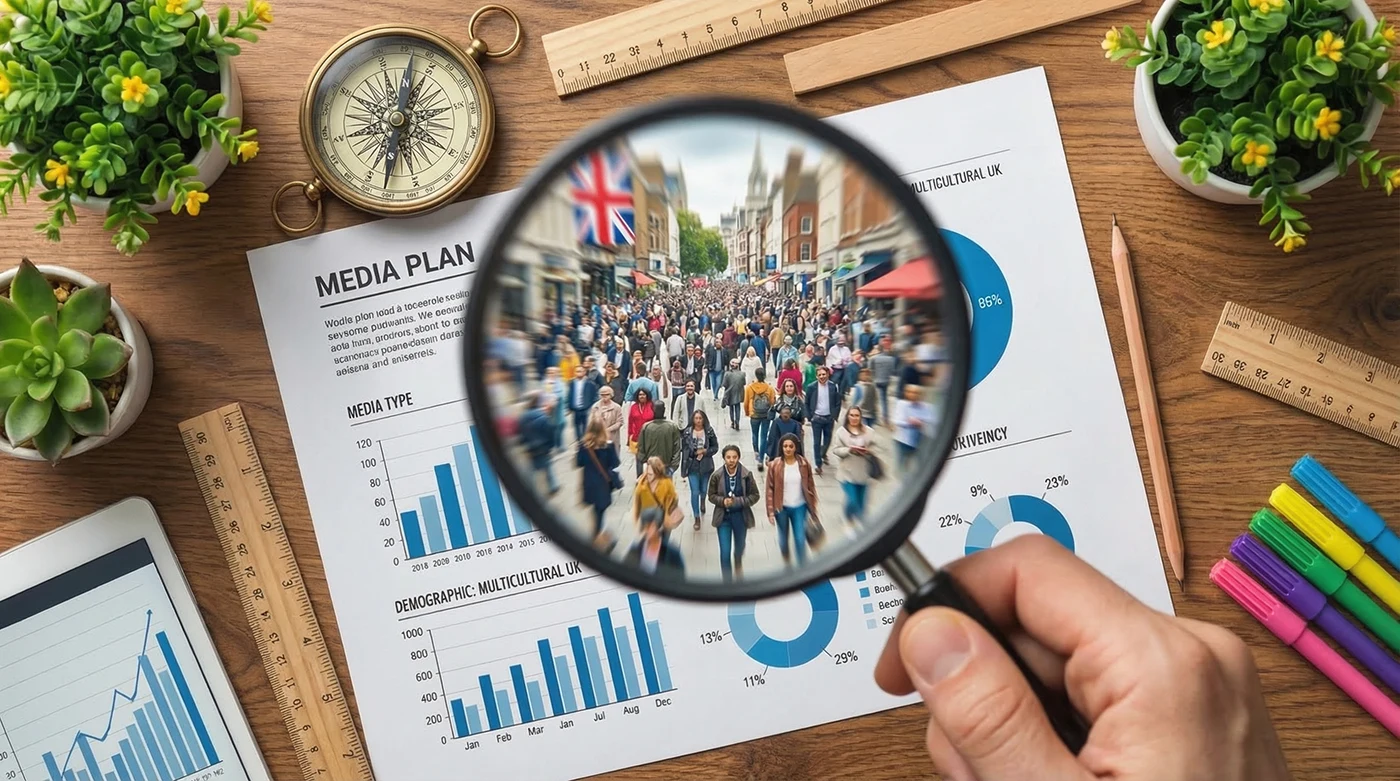
One of the biggest mistakes brands make is assuming that South Asian consumers can be reached exclusively through mainstream English-language channels. While younger, UK-born South Asians are certainly heavy users of Instagram, TikTok, and YouTube, the full picture is far more complex.
Older generations and more recently arrived immigrants rely heavily on satellite television—channels like Star Plus, Zee TV, ARY Digital, and Bangla TV are fixtures in many households. Community radio stations broadcasting in Punjabi, Urdu, Hindi, Bengali, and Gujarati have loyal listenership that mainstream media cannot replicate. Community newspapers and magazines remain influential, particularly for local business advertising and community event promotion.
WhatsApp functions as a de facto social network within South Asian communities, with family groups, community groups, and religious groups all serving as channels through which information, recommendations, and opinions flow. A positive word-of-mouth recommendation shared in a WhatsApp family group can be more commercially valuable than a thousand paid impressions.
This is precisely why Mediareach's media planning and buying service includes diaspora and cultural media activation alongside traditional and digital channels. Reaching South Asian consumers requires a blended strategy that mainstream media agencies simply do not understand.
The Halal Economy: A Market Within a Market
With approximately 3.9 million Muslims in the UK (many of South Asian heritage), the halal economy represents a significant commercial opportunity in its own right. Halal food retail, halal-certified cosmetics and pharmaceuticals, Islamic financial products, and modest fashion all represent growing market segments that require specialist cultural knowledge to engage with authentically.
Brands that demonstrate genuine commitment to halal standards—not as a marketing gimmick, but as a reflection of respect for consumer values—build deep loyalty within Muslim communities. This extends far beyond food: Muslim consumers are looking for halal-certified skincare, ethical investment products that comply with Islamic finance principles, and fashion brands that offer stylish modest clothing options.
The TalkTalk Approach: Connecting with South Asian Communities

Why Specialist Expertise is Non-Negotiable
The depth and diversity within South Asian Britain makes specialist multicultural marketing expertise not a luxury, but a necessity. A campaign that resonates with British Gujaratis may fall flat with British Kashmiris. A Ramadan campaign that works for Bangladeshi communities in Tower Hamlets may need significant adaptation for Pakistani communities in Bradford.
Mediareach has built this expertise over four decades—developing relationships with community leaders, religious institutions, cultural organisations, and media owners that no generalist agency can replicate. Our multicultural marketing consultancy begins with cultural audits and segmentation that identify the specific South Asian sub-communities most relevant to a brand, followed by insight-led strategy development that respects the nuances within each group.
Our proprietary Multicultural Intelligence System provides brands with the data-driven cultural insights needed to make informed decisions about targeting, messaging, and media placement. Combined with our creative and production capabilities—including AI-powered content creation that enables scalable, multilingual campaign delivery—we offer an end-to-end solution for brands serious about the South Asian opportunity.
The South Asian Market Will Not Wait
With 5.5 million consumers, billions in spending power, and a demographic trajectory pointing towards continued growth, South Asian Britain represents the single largest untapped growth opportunity for most UK brands. Mediareach has the cultural intelligence, media relationships, and creative expertise to help you seize it.
South Asian marketing UK
British Asian consumers
Indian consumer UK
Pakistani consumer UK
Bangladeshi marketing
Diwali marketing
Ramadan advertising UK
Eid marketing
halal economy UK
multicultural marketing agency
Mediareach
South Asian luxury market
ethnic media planning
diversity marketing
cultural insight

Mediareach
The UK's pioneering multicultural marketing and advertising agency. Over 40 years of cultural expertise connecting brands with diverse communities. mediareach.co

Mar 9, 2026
South Asian Britain: The £100 Billion Consumer Economy Hidden in Plain Sight
5.5 million people. Three major communities. Dozens of languages. One enormous opportunity that most brands are completely ignoring.
⏱ 9 min read
By Mediareach
Walk through Southall, and you will find jewellers selling 22-carat gold necklaces alongside boutiques stocking designer lehengas that cost more than most high-street wedding dresses. Visit Tooting, and the food scene rivals anything you would find in Mumbai or Lahore. Step into Green Street in Newham, and the energy of a thriving South Asian commercial ecosystem is unmistakable.
Yet speak to most brand marketers about their strategy for reaching South Asian consumers, and you will get blank stares or, worse, a vague mention of "diversity" in their brand guidelines. This disconnect between the economic reality of South Asian Britain and the marketing industry's engagement with it represents one of the most significant missed opportunities in UK commerce.
The Scale of South Asian Britain
The 2021 Census confirmed what communities across the UK have long known: South Asian Britons are not a minority in any meaningful economic sense. At 5.5 million people—9.3% of the population of England and Wales, up from 7.5% in 2011—the Asian and Asian British population is the second-largest ethnic category in the country.
Indian Heritage
1.9M
Largest South Asian group. Strong presence in Leicester, London, Birmingham
Pakistani Heritage
1.6M
Major communities in Birmingham, Bradford, Manchester, London
Bangladeshi Heritage
650K+
Concentrated in Tower Hamlets, Birmingham, Luton, Oldham
But these headline numbers only scratch the surface. Within the broad "South Asian" category lies extraordinary diversity. The Indian British community includes Gujaratis, Punjabis, Tamils, Bengalis, Malayalis, and many more—each with distinct languages, religious practices, dietary preferences, and cultural traditions. The Pakistani British community spans Punjabis, Kashmiris, Pashtuns, and Sindhis, with different levels of cultural conservatism and commercial engagement. The Bangladeshi British community, while smaller in absolute numbers, is heavily concentrated in specific areas, creating micro-economies of significant scale.
Consumer Behaviour: What Brands Need to Understand
South Asian consumers in the UK defy easy categorisation, but several patterns emerge consistently that have profound implications for marketing strategy.
"People from ethnic backgrounds are aspirational and value education and status highly. The concept of family remains the most important social unit, with purchasing decisions that are often collective rather than individual."
Aspiration and Status Drive Purchasing
South Asian communities in the UK are disproportionately entrepreneurial—one-third of businesses in Greater London are owned by someone from an ethnic minority background. Educational attainment is high, with British Indian students consistently among the top-performing groups at GCSE and A-level. This creates a consumer profile that is highly aspirational, brand-conscious, and willing to invest in quality products that signal success and status.
The luxury market implications are enormous. British Asian consumers are major purchasers of gold jewellery, designer fashion, premium cars, and high-end technology. Wedding spending in South Asian communities routinely exceeds national averages by a factor of three or more, with multi-day celebrations that involve extensive spending on venues, catering, clothing, jewellery, and photography.
The Family Decision-Making Unit
In many South Asian households, major purchasing decisions are made collectively. When a young British Pakistani professional buys a car, the opinions of parents, older siblings, and even extended family members may factor into the decision. When a British Indian family chooses a holiday destination, it may need to accommodate grandparents who want to visit a temple, teenagers who want a beach, and parents who want reliable halal food options.
This has profound implications for marketing. Campaigns that target individuals in isolation miss the reality of how decisions are actually made. Effective South Asian marketing often needs to speak to the family unit, acknowledging the intergenerational dynamics that shape consumer behaviour.
Festival Economies: Concentrated Spending Windows
The South Asian calendar creates multiple peak spending periods that brands can activate around. Diwali generates a surge in gold and jewellery purchases, new clothing, home decoration, sweets and gifts. Ramadan drives enormous food retail spending, with families purchasing specialty ingredients for elaborate Iftar meals. Eid-ul-Fitr triggers clothing purchases and gift-giving. Vaisakhi, Navratri, and countless other observances each create their own commercial opportunities.
Brands that develop authentic campaigns around these moments—not tokenistic social media posts on the day itself, but sustained engagement in the lead-up—see measurably higher returns than those that ignore them entirely.
Media Landscape: Where South Asian Consumers Are
One of the biggest mistakes brands make is assuming that South Asian consumers can be reached exclusively through mainstream English-language channels. While younger, UK-born South Asians are certainly heavy users of Instagram, TikTok, and YouTube, the full picture is far more complex.
Older generations and more recently arrived immigrants rely heavily on satellite television—channels like Star Plus, Zee TV, ARY Digital, and Bangla TV are fixtures in many households. Community radio stations broadcasting in Punjabi, Urdu, Hindi, Bengali, and Gujarati have loyal listenership that mainstream media cannot replicate. Community newspapers and magazines remain influential, particularly for local business advertising and community event promotion.
WhatsApp functions as a de facto social network within South Asian communities, with family groups, community groups, and religious groups all serving as channels through which information, recommendations, and opinions flow. A positive word-of-mouth recommendation shared in a WhatsApp family group can be more commercially valuable than a thousand paid impressions.
This is precisely why Mediareach's media planning and buying service includes diaspora and cultural media activation alongside traditional and digital channels. Reaching South Asian consumers requires a blended strategy that mainstream media agencies simply do not understand.
The Halal Economy: A Market Within a Market
With approximately 3.9 million Muslims in the UK (many of South Asian heritage), the halal economy represents a significant commercial opportunity in its own right. Halal food retail, halal-certified cosmetics and pharmaceuticals, Islamic financial products, and modest fashion all represent growing market segments that require specialist cultural knowledge to engage with authentically.
Brands that demonstrate genuine commitment to halal standards—not as a marketing gimmick, but as a reflection of respect for consumer values—build deep loyalty within Muslim communities. This extends far beyond food: Muslim consumers are looking for halal-certified skincare, ethical investment products that comply with Islamic finance principles, and fashion brands that offer stylish modest clothing options.
The TalkTalk Approach: Connecting with South Asian Communities
Why Specialist Expertise is Non-Negotiable
The depth and diversity within South Asian Britain makes specialist multicultural marketing expertise not a luxury, but a necessity. A campaign that resonates with British Gujaratis may fall flat with British Kashmiris. A Ramadan campaign that works for Bangladeshi communities in Tower Hamlets may need significant adaptation for Pakistani communities in Bradford.
Mediareach has built this expertise over four decades—developing relationships with community leaders, religious institutions, cultural organisations, and media owners that no generalist agency can replicate. Our multicultural marketing consultancy begins with cultural audits and segmentation that identify the specific South Asian sub-communities most relevant to a brand, followed by insight-led strategy development that respects the nuances within each group.
Our proprietary Multicultural Intelligence System provides brands with the data-driven cultural insights needed to make informed decisions about targeting, messaging, and media placement. Combined with our creative and production capabilities—including AI-powered content creation that enables scalable, multilingual campaign delivery—we offer an end-to-end solution for brands serious about the South Asian opportunity.
The South Asian Market Will Not Wait
With 5.5 million consumers, billions in spending power, and a demographic trajectory pointing towards continued growth, South Asian Britain represents the single largest untapped growth opportunity for most UK brands. Mediareach has the cultural intelligence, media relationships, and creative expertise to help you seize it.
South Asian marketing UK
British Asian consumers
Indian consumer UK
Pakistani consumer UK
Bangladeshi marketing
Diwali marketing
Ramadan advertising UK
Eid marketing
halal economy UK
multicultural marketing agency
Mediareach
South Asian luxury market
ethnic media planning
diversity marketing
cultural insight
Mediareach
The UK's pioneering multicultural marketing and advertising agency. Over 40 years of cultural expertise connecting brands with diverse communities. mediareach.co
Mar 9, 2026
South Asian Britain: The £100 Billion Consumer Economy Hidden in Plain Sight
5.5 million people. Three major communities. Dozens of languages. One enormous opportunity that most brands are completely ignoring.
⏱ 9 min read
By Mediareach
Walk through Southall, and you will find jewellers selling 22-carat gold necklaces alongside boutiques stocking designer lehengas that cost more than most high-street wedding dresses. Visit Tooting, and the food scene rivals anything you would find in Mumbai or Lahore. Step into Green Street in Newham, and the energy of a thriving South Asian commercial ecosystem is unmistakable.
Yet speak to most brand marketers about their strategy for reaching South Asian consumers, and you will get blank stares or, worse, a vague mention of "diversity" in their brand guidelines. This disconnect between the economic reality of South Asian Britain and the marketing industry's engagement with it represents one of the most significant missed opportunities in UK commerce.
The Scale of South Asian Britain
The 2021 Census confirmed what communities across the UK have long known: South Asian Britons are not a minority in any meaningful economic sense. At 5.5 million people—9.3% of the population of England and Wales, up from 7.5% in 2011—the Asian and Asian British population is the second-largest ethnic category in the country.
Indian Heritage
1.9M
Largest South Asian group. Strong presence in Leicester, London, Birmingham
Pakistani Heritage
1.6M
Major communities in Birmingham, Bradford, Manchester, London
Bangladeshi Heritage
650K+
Concentrated in Tower Hamlets, Birmingham, Luton, Oldham
But these headline numbers only scratch the surface. Within the broad "South Asian" category lies extraordinary diversity. The Indian British community includes Gujaratis, Punjabis, Tamils, Bengalis, Malayalis, and many more—each with distinct languages, religious practices, dietary preferences, and cultural traditions. The Pakistani British community spans Punjabis, Kashmiris, Pashtuns, and Sindhis, with different levels of cultural conservatism and commercial engagement. The Bangladeshi British community, while smaller in absolute numbers, is heavily concentrated in specific areas, creating micro-economies of significant scale.
Consumer Behaviour: What Brands Need to Understand
South Asian consumers in the UK defy easy categorisation, but several patterns emerge consistently that have profound implications for marketing strategy.
"People from ethnic backgrounds are aspirational and value education and status highly. The concept of family remains the most important social unit, with purchasing decisions that are often collective rather than individual."
Aspiration and Status Drive Purchasing
South Asian communities in the UK are disproportionately entrepreneurial—one-third of businesses in Greater London are owned by someone from an ethnic minority background. Educational attainment is high, with British Indian students consistently among the top-performing groups at GCSE and A-level. This creates a consumer profile that is highly aspirational, brand-conscious, and willing to invest in quality products that signal success and status.
The luxury market implications are enormous. British Asian consumers are major purchasers of gold jewellery, designer fashion, premium cars, and high-end technology. Wedding spending in South Asian communities routinely exceeds national averages by a factor of three or more, with multi-day celebrations that involve extensive spending on venues, catering, clothing, jewellery, and photography.
The Family Decision-Making Unit
In many South Asian households, major purchasing decisions are made collectively. When a young British Pakistani professional buys a car, the opinions of parents, older siblings, and even extended family members may factor into the decision. When a British Indian family chooses a holiday destination, it may need to accommodate grandparents who want to visit a temple, teenagers who want a beach, and parents who want reliable halal food options.
This has profound implications for marketing. Campaigns that target individuals in isolation miss the reality of how decisions are actually made. Effective South Asian marketing often needs to speak to the family unit, acknowledging the intergenerational dynamics that shape consumer behaviour.
Festival Economies: Concentrated Spending Windows
The South Asian calendar creates multiple peak spending periods that brands can activate around. Diwali generates a surge in gold and jewellery purchases, new clothing, home decoration, sweets and gifts. Ramadan drives enormous food retail spending, with families purchasing specialty ingredients for elaborate Iftar meals. Eid-ul-Fitr triggers clothing purchases and gift-giving. Vaisakhi, Navratri, and countless other observances each create their own commercial opportunities.
Brands that develop authentic campaigns around these moments—not tokenistic social media posts on the day itself, but sustained engagement in the lead-up—see measurably higher returns than those that ignore them entirely.
Media Landscape: Where South Asian Consumers Are
One of the biggest mistakes brands make is assuming that South Asian consumers can be reached exclusively through mainstream English-language channels. While younger, UK-born South Asians are certainly heavy users of Instagram, TikTok, and YouTube, the full picture is far more complex.
Older generations and more recently arrived immigrants rely heavily on satellite television—channels like Star Plus, Zee TV, ARY Digital, and Bangla TV are fixtures in many households. Community radio stations broadcasting in Punjabi, Urdu, Hindi, Bengali, and Gujarati have loyal listenership that mainstream media cannot replicate. Community newspapers and magazines remain influential, particularly for local business advertising and community event promotion.
WhatsApp functions as a de facto social network within South Asian communities, with family groups, community groups, and religious groups all serving as channels through which information, recommendations, and opinions flow. A positive word-of-mouth recommendation shared in a WhatsApp family group can be more commercially valuable than a thousand paid impressions.
This is precisely why Mediareach's media planning and buying service includes diaspora and cultural media activation alongside traditional and digital channels. Reaching South Asian consumers requires a blended strategy that mainstream media agencies simply do not understand.
The Halal Economy: A Market Within a Market
With approximately 3.9 million Muslims in the UK (many of South Asian heritage), the halal economy represents a significant commercial opportunity in its own right. Halal food retail, halal-certified cosmetics and pharmaceuticals, Islamic financial products, and modest fashion all represent growing market segments that require specialist cultural knowledge to engage with authentically.
Brands that demonstrate genuine commitment to halal standards—not as a marketing gimmick, but as a reflection of respect for consumer values—build deep loyalty within Muslim communities. This extends far beyond food: Muslim consumers are looking for halal-certified skincare, ethical investment products that comply with Islamic finance principles, and fashion brands that offer stylish modest clothing options.
The TalkTalk Approach: Connecting with South Asian Communities
Why Specialist Expertise is Non-Negotiable
The depth and diversity within South Asian Britain makes specialist multicultural marketing expertise not a luxury, but a necessity. A campaign that resonates with British Gujaratis may fall flat with British Kashmiris. A Ramadan campaign that works for Bangladeshi communities in Tower Hamlets may need significant adaptation for Pakistani communities in Bradford.
Mediareach has built this expertise over four decades—developing relationships with community leaders, religious institutions, cultural organisations, and media owners that no generalist agency can replicate. Our multicultural marketing consultancy begins with cultural audits and segmentation that identify the specific South Asian sub-communities most relevant to a brand, followed by insight-led strategy development that respects the nuances within each group.
Our proprietary Multicultural Intelligence System provides brands with the data-driven cultural insights needed to make informed decisions about targeting, messaging, and media placement. Combined with our creative and production capabilities—including AI-powered content creation that enables scalable, multilingual campaign delivery—we offer an end-to-end solution for brands serious about the South Asian opportunity.
The South Asian Market Will Not Wait
With 5.5 million consumers, billions in spending power, and a demographic trajectory pointing towards continued growth, South Asian Britain represents the single largest untapped growth opportunity for most UK brands. Mediareach has the cultural intelligence, media relationships, and creative expertise to help you seize it.
South Asian marketing UK
British Asian consumers
Indian consumer UK
Pakistani consumer UK
Bangladeshi marketing
Diwali marketing
Ramadan advertising UK
Eid marketing
halal economy UK
multicultural marketing agency
Mediareach
South Asian luxury market
ethnic media planning
diversity marketing
cultural insight
Mediareach
The UK's pioneering multicultural marketing and advertising agency. Over 40 years of cultural expertise connecting brands with diverse communities. mediareach.co