
Mar 3, 2026
The £300 Billion Opportunity: Why Multicultural Marketing is the UK's Most Undervalued Growth Strategy
With 18.3% of England and Wales identifying as ethnic minority and London at 63.2% non-White British, brands that ignore multicultural audiences are leaving billions on the table.
⏱ 8 min read
By Mediareach
Britain has fundamentally changed. The 2021 Census confirmed what multicultural marketing specialists have been saying for decades: the UK is one of the most ethnically diverse nations in Europe, and the pace of change is accelerating. Yet the overwhelming majority of brands continue to deploy one-size-fits-all campaigns that speak to a homogeneous audience that no longer exists.
For brands willing to look beyond the mainstream, the opportunity is staggering. The combined consumer spending power of the UK's diverse communities now exceeds £300 billion annually. This is not a niche segment. This is the future of British commerce.

The Demographic Reality: Britain in 2026
The numbers tell a story that demands attention. According to the Office for National Statistics' 2021 Census data, people from ethnic minority backgrounds now make up 18.3% of the population in England and Wales—up from 14% in 2011. That represents a jump of more than 4 percentage points in a single decade, translating to millions of new consumers with distinct needs, preferences, and media habits.
18.3%
Ethnic minority population in England & Wales
63.2%
Non-White British in London
5.5M
Asian/Asian British residents
2.4M
Black/Black British residents
London remains the epicentre of this transformation, where only 36.8% of residents identify as White British. But this is not solely a London story. Birmingham, Leicester, Manchester, and Luton are now classified as "no majority" cities—places where no single ethnic group accounts for more than half the population. The West Midlands has 29.4% ethnic minority representation. These are not emerging trends. They are the established reality of modern Britain.The Asian and Asian British population has become the second-largest ethnic category in England and Wales at 9.3%, accounting for 5.5 million people. The Black, Black British, Caribbean, or African population stands at 4% (2.4 million people), while those identifying as Mixed or Multiple heritage reached 2.9% (1.7 million). The "Other" ethnic group category doubled from the previous census to 2.1%
Why Generic Marketing Fails Multicultural Audiences
The fundamental challenge facing most brands is a failure of imagination. They assume that a single campaign, conceived with a mainstream audience in mind, will resonate equally across all demographic groups. This assumption is not just lazy—it is commercially damaging.
Different communities consume media in fundamentally different ways. Many South Asian households, particularly among older generations and more recent immigrants, rely heavily on diaspora media—community newspapers, ethnic radio stations, satellite television from the subcontinent, and WhatsApp groups that function as alternative social networks. Afro-Caribbean communities in the UK have distinct digital media habits, with strong engagement across specific social platforms and community-focused online spaces. Chinese British consumers often navigate between English-language and Mandarin or Cantonese media ecosystems simultaneously.
"Stop seeing ethnic marketing as a box to be checked, and start paying attention to targeting our communities properly. Forget about tokenistic gestures: start thinking ethnic and don't simply translate."

Mediareach Insights
Beyond media consumption, there are deep cultural nuances that determine whether a campaign resonates or alienates. The concept of family in South Asian communities—where joint and extended families remain the primary social unit, with grandparents, parents, and children frequently living together—means that purchasing decisions are often collective rather than individual. A campaign targeting a "young professional" making independent buying choices may completely miss the reality of how many British Asian consumers actually make decisions.
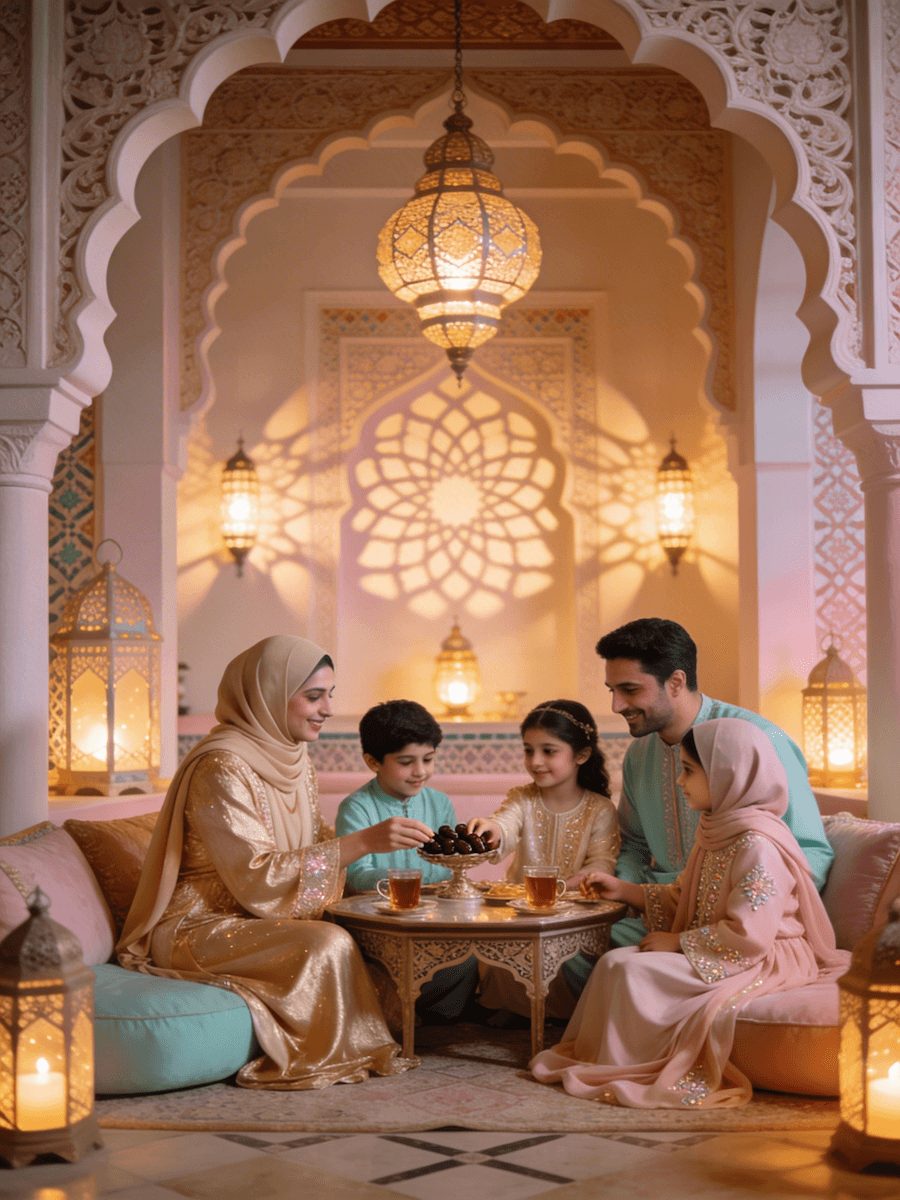
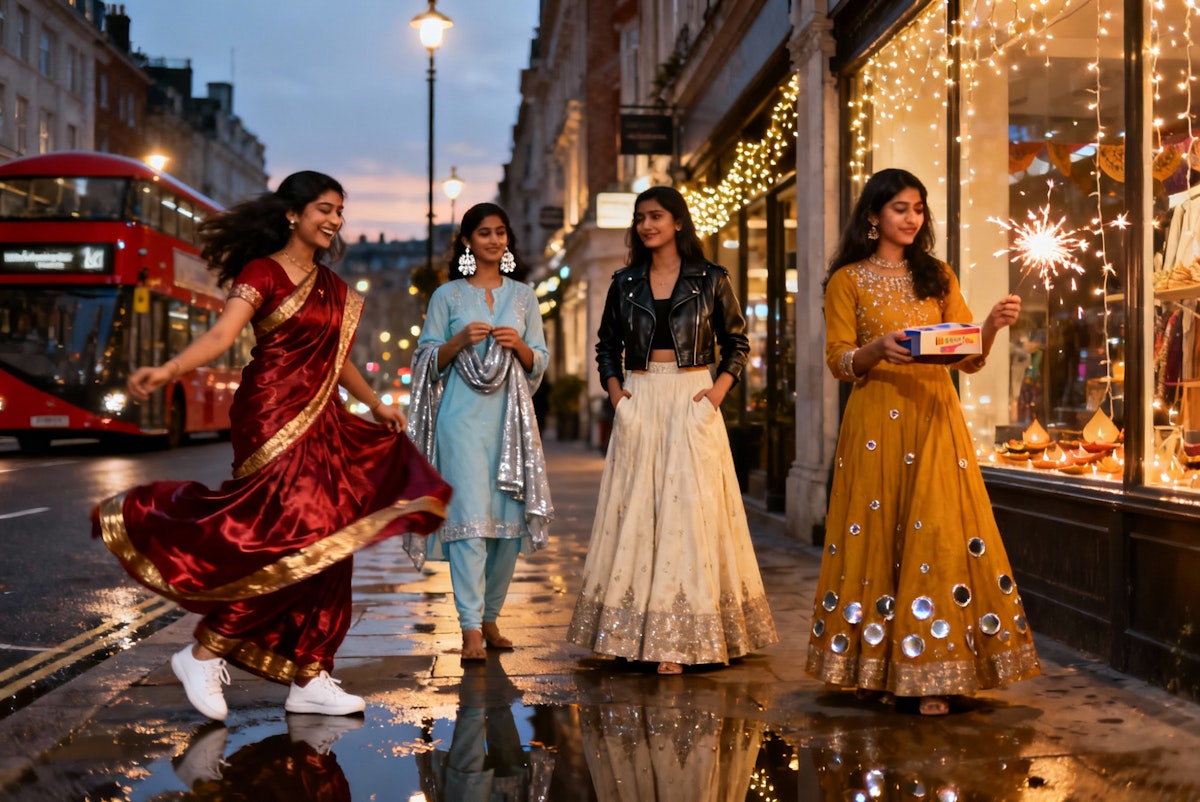
Religious observances create enormous commercial opportunities that most brands barely acknowledge. Ramadan spending alone in the UK runs into hundreds of millions of pounds. Diwali, Eid, Vaisakhi, Chinese New Year, and Navratri each represent concentrated periods of consumer activity—gift-buying, food preparation, clothing purchases, and celebratory spending—that rival Christmas in their intensity within their respective communities.

The Business Case: Revenue Left on the Table
Consider this: if your brand is running a generic campaign in London, you are effectively choosing not to speak directly to 63.2% of the city's population. In Birmingham, you are overlooking nearly a third of potential customers. Nationally, you are making a deliberate decision to ignore almost one in five consumers.
The commercial impact of this neglect is quantifiable. Research consistently shows that consumers are significantly more likely to purchase from brands that demonstrate genuine cultural understanding. This is not about superficial representation—a stock photograph of a diverse group of friends will not do. It is about authentic communication that reflects real cultural values, traditions, and aspirations.
Key Insight: Cultural Specificity Drives Commercial Results
Among the UK's South Asian communities, there are significant cultural differences between Indian, Pakistani, and Bangladeshi consumers—in language, religion, food preferences, festivals, and purchasing behaviour. A campaign that conflates these distinct communities is not "inclusive." It is imprecise marketing that wastes budget and erodes trust. Specialist multicultural marketing agencies understand these distinctions and build strategies that speak to specific communities with precision and authenticity.
How Specialist Multicultural Agencies Unlock Growth
This is precisely why specialist multicultural marketing agencies exist, and why they deliver results that generalist agencies cannot match. At Mediareach, we have spent more than 40 years building deep relationships within the UK's diverse communities. That institutional knowledge—understanding which community leaders are influential, which media channels are trusted, which cultural references build authenticity and which create offence—cannot be replicated by a generalist agency adding a "diversity module" to their existing playbook.Our approach begins with cultural intelligence: rigorous audience segmentation based on ethnicity, language, religion, generation, and cultural orientation. We conduct cultural audits that go far beyond demographics, examining how different communities relate to brands, what trust signals they respond to, and where they are most receptive to commercial messaging. This insight-led strategy informs every subsequent decision, from creative development to media placement.

CASE STUDY
Sainsbury's World Foods — Ramadan Campaign
When Sainsbury's needed to connect with British Muslim consumers during Ramadan, they turned to Mediareach. We developed an omnichannel campaign featuring a culturally resonant ambassador and authentic storytelling that positioned Sainsbury's world foods range as the go-to destination for Iftar meals. The campaign needed to reflect a wide product range while making people of all ethnicities feel that Sainsbury's understood their celebrations. The result was a campaign that delivered on both cultural authenticity and commercial performance—because it was built on genuine cultural insight, not assumptions.
CASE STUDY
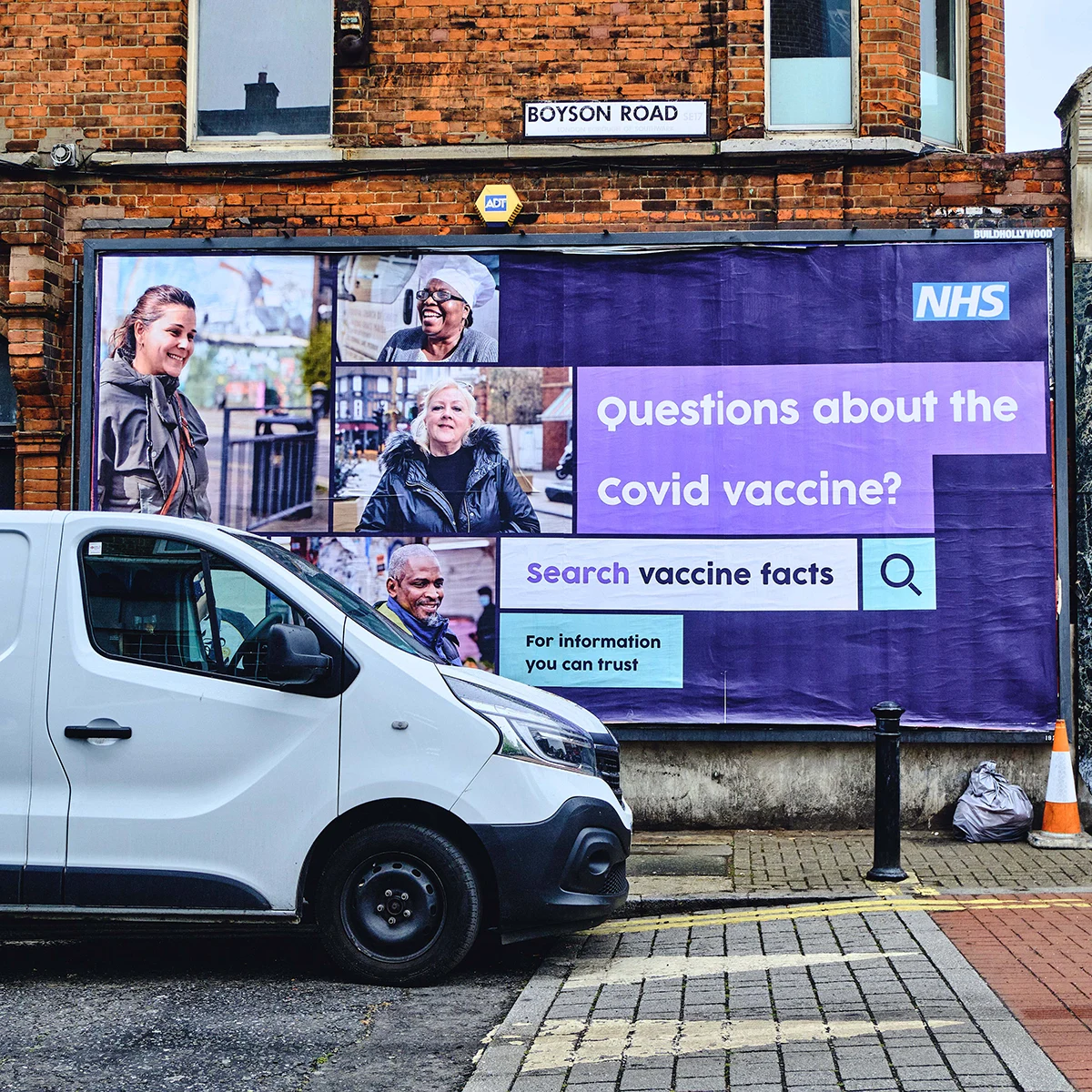
NHS South East London — Vaccine Hesitancy Campaign
When the NHS needed to address vaccine hesitancy in South East London's diverse communities, Mediareach developed targeted communications that acknowledged the specific concerns of different ethnic groups—from historical mistrust in healthcare systems to language barriers and misinformation circulating in community WhatsApp groups. By working through trusted community channels and culturally appropriate messaging, the campaign achieved engagement that a generic public health campaign could never have matched.
The Five Pillars of Effective Multicultural Marketing
Drawing on four decades of experience, Mediareach has identified five critical elements that determine whether a multicultural campaign succeeds or fails.
1. Cultural Intelligence Before Creative Execution
Every effective multicultural campaign begins with deep audience understanding. This means cultural audits, community insight gathering, audience persona development based on lived experience rather than assumptions, and cultural validation of all messaging before it reaches the public. At Mediareach, our multicultural marketing consultancy service provides brands with the foundation they need before a single creative asset is produced.
2. Authentic Representation, Not Tokenism
Consumers from ethnic minority backgrounds can instantly distinguish between genuine cultural understanding and tokenistic gestures. Authentic representation means involving community members in the creative process, using culturally appropriate language (not just translation), and reflecting real cultural values rather than stereotypes.
3. Culturally Grounded Media Planning
Reaching diverse audiences requires a fundamentally different media strategy. Mediareach's media planning and buying service spans traditional media (TV, radio, print, out-of-home, cinema), digital media (paid social, programmatic, display, video, search), and critically, diaspora and cultural media activation—the community-specific channels that mainstream agencies overlook entirely.
4. Digital Excellence with Cultural Sensitivity
Our digital marketing capabilities include SEO built specifically for diverse search behaviours, UX/UI designed for multicultural user journeys, multilingual content optimisation, and performance marketing calibrated for cultural moments. When a South Asian consumer searches for products during Navratri or a Black British consumer looks for hair care solutions, the search behaviour, language, and intent are fundamentally different from mainstream patterns.
5. AI Innovation Guided by Cultural Expertise
Mediareach's AI Content and Creator Innovation service represents the future of scalable multicultural marketing. We combine advanced AI tools with our 40 years of cultural expertise to help brands scale content production, create multilingual and multicultural content variations, and personalise creative at a level that was previously impossible. But every AI-generated asset is guided by human cultural intelligence—because algorithms alone cannot navigate cultural nuance.
The Race for Multicultural Market Leadership
The brands that act now will establish positions of trust and loyalty within diverse communities that late movers will find extraordinarily difficult to displace. Cultural trust, once earned, creates powerful competitive moats. Consumers who feel genuinely seen and understood by a brand become its most loyal advocates—and in communities where word-of-mouth and family recommendation carry enormous weight, that advocacy multiplies exponentially.
Conversely, the brands that continue to treat multicultural audiences as an afterthought will find their total addressable market shrinking year by year as Britain's demographic transformation continues. By 2040, current projections suggest that ethnic minority communities will account for more than one in four UK residents. The question is not whether to invest in multicultural marketing. The question is whether you can afford not to.
Ready to Unlock the Multicultural Opportunity?
Mediareach has spent 40+ years helping brands like Sainsbury's, the NHS, MoneyGram, TalkTalk, and the RAF connect authentically with the UK's diverse communities. Let us show you what culturally intelligent marketing can do for your brand.
Multicultural marketing UK
Diversity marketing
Ethnic advertising agency London
Inclusive brand strategy
Cultural marketing intelligence
BAME marketing
South Asian marketing UK
Black British consumer market
Multicultural media planning
Mediareach
UK ethnic demographics
Diverse audience engagement
Multicultural advertising campaigns
Cultural insight marketing
Ethnic minority consumer spending
Mediareach
The UK's pioneering multicultural marketing and advertising agency. For over 40 years, Mediareach has helped brands connect meaningfully with diverse communities through cultural insight, creative excellence, and intelligent media strategy. mediareach.co

Mar 3, 2026
The £300 Billion Opportunity: Why Multicultural Marketing is the UK's Most Undervalued Growth Strategy
With 18.3% of England and Wales identifying as ethnic minority and London at 63.2% non-White British, brands that ignore multicultural audiences are leaving billions on the table.
⏱ 8 min read
By Mediareach
Britain has fundamentally changed. The 2021 Census confirmed what multicultural marketing specialists have been saying for decades: the UK is one of the most ethnically diverse nations in Europe, and the pace of change is accelerating. Yet the overwhelming majority of brands continue to deploy one-size-fits-all campaigns that speak to a homogeneous audience that no longer exists.
For brands willing to look beyond the mainstream, the opportunity is staggering. The combined consumer spending power of the UK's diverse communities now exceeds £300 billion annually. This is not a niche segment. This is the future of British commerce.
The Demographic Reality: Britain in 2026
The numbers tell a story that demands attention. According to the Office for National Statistics' 2021 Census data, people from ethnic minority backgrounds now make up 18.3% of the population in England and Wales—up from 14% in 2011. That represents a jump of more than 4 percentage points in a single decade, translating to millions of new consumers with distinct needs, preferences, and media habits.
18.3%
Ethnic minority population in England & Wales
63.2%
Non-White British in London
5.5M
Asian/Asian British residents
2.4M
Black/Black British residents
London remains the epicentre of this transformation, where only 36.8% of residents identify as White British. But this is not solely a London story. Birmingham, Leicester, Manchester, and Luton are now classified as "no majority" cities—places where no single ethnic group accounts for more than half the population. The West Midlands has 29.4% ethnic minority representation. These are not emerging trends. They are the established reality of modern Britain.The Asian and Asian British population has become the second-largest ethnic category in England and Wales at 9.3%, accounting for 5.5 million people. The Black, Black British, Caribbean, or African population stands at 4% (2.4 million people), while those identifying as Mixed or Multiple heritage reached 2.9% (1.7 million). The "Other" ethnic group category doubled from the previous census to 2.1%
Why Generic Marketing Fails Multicultural Audiences
The fundamental challenge facing most brands is a failure of imagination. They assume that a single campaign, conceived with a mainstream audience in mind, will resonate equally across all demographic groups. This assumption is not just lazy—it is commercially damaging.
Different communities consume media in fundamentally different ways. Many South Asian households, particularly among older generations and more recent immigrants, rely heavily on diaspora media—community newspapers, ethnic radio stations, satellite television from the subcontinent, and WhatsApp groups that function as alternative social networks. Afro-Caribbean communities in the UK have distinct digital media habits, with strong engagement across specific social platforms and community-focused online spaces. Chinese British consumers often navigate between English-language and Mandarin or Cantonese media ecosystems simultaneously.
"Stop seeing ethnic marketing as a box to be checked, and start paying attention to targeting our communities properly. Forget about tokenistic gestures: start thinking ethnic and don't simply translate."
Mediareach Insights
Beyond media consumption, there are deep cultural nuances that determine whether a campaign resonates or alienates. The concept of family in South Asian communities—where joint and extended families remain the primary social unit, with grandparents, parents, and children frequently living together—means that purchasing decisions are often collective rather than individual. A campaign targeting a "young professional" making independent buying choices may completely miss the reality of how many British Asian consumers actually make decisions.
Religious observances create enormous commercial opportunities that most brands barely acknowledge. Ramadan spending alone in the UK runs into hundreds of millions of pounds. Diwali, Eid, Vaisakhi, Chinese New Year, and Navratri each represent concentrated periods of consumer activity—gift-buying, food preparation, clothing purchases, and celebratory spending—that rival Christmas in their intensity within their respective communities.
The Business Case: Revenue Left on the Table
Consider this: if your brand is running a generic campaign in London, you are effectively choosing not to speak directly to 63.2% of the city's population. In Birmingham, you are overlooking nearly a third of potential customers. Nationally, you are making a deliberate decision to ignore almost one in five consumers.
The commercial impact of this neglect is quantifiable. Research consistently shows that consumers are significantly more likely to purchase from brands that demonstrate genuine cultural understanding. This is not about superficial representation—a stock photograph of a diverse group of friends will not do. It is about authentic communication that reflects real cultural values, traditions, and aspirations.
Key Insight: Cultural Specificity Drives Commercial Results
Among the UK's South Asian communities, there are significant cultural differences between Indian, Pakistani, and Bangladeshi consumers—in language, religion, food preferences, festivals, and purchasing behaviour. A campaign that conflates these distinct communities is not "inclusive." It is imprecise marketing that wastes budget and erodes trust. Specialist multicultural marketing agencies understand these distinctions and build strategies that speak to specific communities with precision and authenticity.
How Specialist Multicultural Agencies Unlock Growth
This is precisely why specialist multicultural marketing agencies exist, and why they deliver results that generalist agencies cannot match. At Mediareach, we have spent more than 40 years building deep relationships within the UK's diverse communities. That institutional knowledge—understanding which community leaders are influential, which media channels are trusted, which cultural references build authenticity and which create offence—cannot be replicated by a generalist agency adding a "diversity module" to their existing playbook.Our approach begins with cultural intelligence: rigorous audience segmentation based on ethnicity, language, religion, generation, and cultural orientation. We conduct cultural audits that go far beyond demographics, examining how different communities relate to brands, what trust signals they respond to, and where they are most receptive to commercial messaging. This insight-led strategy informs every subsequent decision, from creative development to media placement.
CASE STUDY
Sainsbury's World Foods — Ramadan Campaign
When Sainsbury's needed to connect with British Muslim consumers during Ramadan, they turned to Mediareach. We developed an omnichannel campaign featuring a culturally resonant ambassador and authentic storytelling that positioned Sainsbury's world foods range as the go-to destination for Iftar meals. The campaign needed to reflect a wide product range while making people of all ethnicities feel that Sainsbury's understood their celebrations. The result was a campaign that delivered on both cultural authenticity and commercial performance—because it was built on genuine cultural insight, not assumptions.
CASE STUDY
NHS South East London — Vaccine Hesitancy Campaign
When the NHS needed to address vaccine hesitancy in South East London's diverse communities, Mediareach developed targeted communications that acknowledged the specific concerns of different ethnic groups—from historical mistrust in healthcare systems to language barriers and misinformation circulating in community WhatsApp groups. By working through trusted community channels and culturally appropriate messaging, the campaign achieved engagement that a generic public health campaign could never have matched.
The Five Pillars of Effective Multicultural Marketing
Drawing on four decades of experience, Mediareach has identified five critical elements that determine whether a multicultural campaign succeeds or fails.
1. Cultural Intelligence Before Creative Execution
Every effective multicultural campaign begins with deep audience understanding. This means cultural audits, community insight gathering, audience persona development based on lived experience rather than assumptions, and cultural validation of all messaging before it reaches the public. At Mediareach, our multicultural marketing consultancy service provides brands with the foundation they need before a single creative asset is produced.
2. Authentic Representation, Not Tokenism
Consumers from ethnic minority backgrounds can instantly distinguish between genuine cultural understanding and tokenistic gestures. Authentic representation means involving community members in the creative process, using culturally appropriate language (not just translation), and reflecting real cultural values rather than stereotypes.
3. Culturally Grounded Media Planning
Reaching diverse audiences requires a fundamentally different media strategy. Mediareach's media planning and buying service spans traditional media (TV, radio, print, out-of-home, cinema), digital media (paid social, programmatic, display, video, search), and critically, diaspora and cultural media activation—the community-specific channels that mainstream agencies overlook entirely.
4. Digital Excellence with Cultural Sensitivity
Our digital marketing capabilities include SEO built specifically for diverse search behaviours, UX/UI designed for multicultural user journeys, multilingual content optimisation, and performance marketing calibrated for cultural moments. When a South Asian consumer searches for products during Navratri or a Black British consumer looks for hair care solutions, the search behaviour, language, and intent are fundamentally different from mainstream patterns.
5. AI Innovation Guided by Cultural Expertise
Mediareach's AI Content and Creator Innovation service represents the future of scalable multicultural marketing. We combine advanced AI tools with our 40 years of cultural expertise to help brands scale content production, create multilingual and multicultural content variations, and personalise creative at a level that was previously impossible. But every AI-generated asset is guided by human cultural intelligence—because algorithms alone cannot navigate cultural nuance.
The Race for Multicultural Market Leadership
The brands that act now will establish positions of trust and loyalty within diverse communities that late movers will find extraordinarily difficult to displace. Cultural trust, once earned, creates powerful competitive moats. Consumers who feel genuinely seen and understood by a brand become its most loyal advocates—and in communities where word-of-mouth and family recommendation carry enormous weight, that advocacy multiplies exponentially.
Conversely, the brands that continue to treat multicultural audiences as an afterthought will find their total addressable market shrinking year by year as Britain's demographic transformation continues. By 2040, current projections suggest that ethnic minority communities will account for more than one in four UK residents. The question is not whether to invest in multicultural marketing. The question is whether you can afford not to.
Ready to Unlock the Multicultural Opportunity?
Mediareach has spent 40+ years helping brands like Sainsbury's, the NHS, MoneyGram, TalkTalk, and the RAF connect authentically with the UK's diverse communities. Let us show you what culturally intelligent marketing can do for your brand.
Multicultural marketing UK
Diversity marketing
Ethnic advertising agency London
Inclusive brand strategy
Cultural marketing intelligence
BAME marketing
South Asian marketing UK
Black British consumer market
Multicultural media planning
Mediareach
UK ethnic demographics
Diverse audience engagement
Multicultural advertising campaigns
Cultural insight marketing
Ethnic minority consumer spending
Mediareach
The UK's pioneering multicultural marketing and advertising agency. For over 40 years, Mediareach has helped brands connect meaningfully with diverse communities through cultural insight, creative excellence, and intelligent media strategy. mediareach.co
Mar 3, 2026
The £300 Billion Opportunity: Why Multicultural Marketing is the UK's Most Undervalued Growth Strategy
With 18.3% of England and Wales identifying as ethnic minority and London at 63.2% non-White British, brands that ignore multicultural audiences are leaving billions on the table.
⏱ 8 min read
By Mediareach
Britain has fundamentally changed. The 2021 Census confirmed what multicultural marketing specialists have been saying for decades: the UK is one of the most ethnically diverse nations in Europe, and the pace of change is accelerating. Yet the overwhelming majority of brands continue to deploy one-size-fits-all campaigns that speak to a homogeneous audience that no longer exists.
For brands willing to look beyond the mainstream, the opportunity is staggering. The combined consumer spending power of the UK's diverse communities now exceeds £300 billion annually. This is not a niche segment. This is the future of British commerce.
The Demographic Reality: Britain in 2026
The numbers tell a story that demands attention. According to the Office for National Statistics' 2021 Census data, people from ethnic minority backgrounds now make up 18.3% of the population in England and Wales—up from 14% in 2011. That represents a jump of more than 4 percentage points in a single decade, translating to millions of new consumers with distinct needs, preferences, and media habits.
18.3%
Ethnic minority population in England & Wales
63.2%
Non-White British in London
5.5M
Asian/Asian British residents
2.4M
Black/Black British residents
London remains the epicentre of this transformation, where only 36.8% of residents identify as White British. But this is not solely a London story. Birmingham, Leicester, Manchester, and Luton are now classified as "no majority" cities—places where no single ethnic group accounts for more than half the population. The West Midlands has 29.4% ethnic minority representation. These are not emerging trends. They are the established reality of modern Britain.The Asian and Asian British population has become the second-largest ethnic category in England and Wales at 9.3%, accounting for 5.5 million people. The Black, Black British, Caribbean, or African population stands at 4% (2.4 million people), while those identifying as Mixed or Multiple heritage reached 2.9% (1.7 million). The "Other" ethnic group category doubled from the previous census to 2.1%
Why Generic Marketing Fails Multicultural Audiences
The fundamental challenge facing most brands is a failure of imagination. They assume that a single campaign, conceived with a mainstream audience in mind, will resonate equally across all demographic groups. This assumption is not just lazy—it is commercially damaging.
Different communities consume media in fundamentally different ways. Many South Asian households, particularly among older generations and more recent immigrants, rely heavily on diaspora media—community newspapers, ethnic radio stations, satellite television from the subcontinent, and WhatsApp groups that function as alternative social networks. Afro-Caribbean communities in the UK have distinct digital media habits, with strong engagement across specific social platforms and community-focused online spaces. Chinese British consumers often navigate between English-language and Mandarin or Cantonese media ecosystems simultaneously.
"Stop seeing ethnic marketing as a box to be checked, and start paying attention to targeting our communities properly. Forget about tokenistic gestures: start thinking ethnic and don't simply translate."
Mediareach Insights
Beyond media consumption, there are deep cultural nuances that determine whether a campaign resonates or alienates. The concept of family in South Asian communities—where joint and extended families remain the primary social unit, with grandparents, parents, and children frequently living together—means that purchasing decisions are often collective rather than individual. A campaign targeting a "young professional" making independent buying choices may completely miss the reality of how many British Asian consumers actually make decisions.
Religious observances create enormous commercial opportunities that most brands barely acknowledge. Ramadan spending alone in the UK runs into hundreds of millions of pounds. Diwali, Eid, Vaisakhi, Chinese New Year, and Navratri each represent concentrated periods of consumer activity—gift-buying, food preparation, clothing purchases, and celebratory spending—that rival Christmas in their intensity within their respective communities.
The Business Case: Revenue Left on the Table
Consider this: if your brand is running a generic campaign in London, you are effectively choosing not to speak directly to 63.2% of the city's population. In Birmingham, you are overlooking nearly a third of potential customers. Nationally, you are making a deliberate decision to ignore almost one in five consumers.
The commercial impact of this neglect is quantifiable. Research consistently shows that consumers are significantly more likely to purchase from brands that demonstrate genuine cultural understanding. This is not about superficial representation—a stock photograph of a diverse group of friends will not do. It is about authentic communication that reflects real cultural values, traditions, and aspirations.
Key Insight: Cultural Specificity Drives Commercial Results
Among the UK's South Asian communities, there are significant cultural differences between Indian, Pakistani, and Bangladeshi consumers—in language, religion, food preferences, festivals, and purchasing behaviour. A campaign that conflates these distinct communities is not "inclusive." It is imprecise marketing that wastes budget and erodes trust. Specialist multicultural marketing agencies understand these distinctions and build strategies that speak to specific communities with precision and authenticity.
How Specialist Multicultural Agencies Unlock Growth
This is precisely why specialist multicultural marketing agencies exist, and why they deliver results that generalist agencies cannot match. At Mediareach, we have spent more than 40 years building deep relationships within the UK's diverse communities. That institutional knowledge—understanding which community leaders are influential, which media channels are trusted, which cultural references build authenticity and which create offence—cannot be replicated by a generalist agency adding a "diversity module" to their existing playbook.Our approach begins with cultural intelligence: rigorous audience segmentation based on ethnicity, language, religion, generation, and cultural orientation. We conduct cultural audits that go far beyond demographics, examining how different communities relate to brands, what trust signals they respond to, and where they are most receptive to commercial messaging. This insight-led strategy informs every subsequent decision, from creative development to media placement.
CASE STUDY
Sainsbury's World Foods — Ramadan Campaign
When Sainsbury's needed to connect with British Muslim consumers during Ramadan, they turned to Mediareach. We developed an omnichannel campaign featuring a culturally resonant ambassador and authentic storytelling that positioned Sainsbury's world foods range as the go-to destination for Iftar meals. The campaign needed to reflect a wide product range while making people of all ethnicities feel that Sainsbury's understood their celebrations. The result was a campaign that delivered on both cultural authenticity and commercial performance—because it was built on genuine cultural insight, not assumptions.
CASE STUDY
NHS South East London — Vaccine Hesitancy Campaign
When the NHS needed to address vaccine hesitancy in South East London's diverse communities, Mediareach developed targeted communications that acknowledged the specific concerns of different ethnic groups—from historical mistrust in healthcare systems to language barriers and misinformation circulating in community WhatsApp groups. By working through trusted community channels and culturally appropriate messaging, the campaign achieved engagement that a generic public health campaign could never have matched.
The Five Pillars of Effective Multicultural Marketing
Drawing on four decades of experience, Mediareach has identified five critical elements that determine whether a multicultural campaign succeeds or fails.
1. Cultural Intelligence Before Creative Execution
Every effective multicultural campaign begins with deep audience understanding. This means cultural audits, community insight gathering, audience persona development based on lived experience rather than assumptions, and cultural validation of all messaging before it reaches the public. At Mediareach, our multicultural marketing consultancy service provides brands with the foundation they need before a single creative asset is produced.
2. Authentic Representation, Not Tokenism
Consumers from ethnic minority backgrounds can instantly distinguish between genuine cultural understanding and tokenistic gestures. Authentic representation means involving community members in the creative process, using culturally appropriate language (not just translation), and reflecting real cultural values rather than stereotypes.
3. Culturally Grounded Media Planning
Reaching diverse audiences requires a fundamentally different media strategy. Mediareach's media planning and buying service spans traditional media (TV, radio, print, out-of-home, cinema), digital media (paid social, programmatic, display, video, search), and critically, diaspora and cultural media activation—the community-specific channels that mainstream agencies overlook entirely.
4. Digital Excellence with Cultural Sensitivity
Our digital marketing capabilities include SEO built specifically for diverse search behaviours, UX/UI designed for multicultural user journeys, multilingual content optimisation, and performance marketing calibrated for cultural moments. When a South Asian consumer searches for products during Navratri or a Black British consumer looks for hair care solutions, the search behaviour, language, and intent are fundamentally different from mainstream patterns.
5. AI Innovation Guided by Cultural Expertise
Mediareach's AI Content and Creator Innovation service represents the future of scalable multicultural marketing. We combine advanced AI tools with our 40 years of cultural expertise to help brands scale content production, create multilingual and multicultural content variations, and personalise creative at a level that was previously impossible. But every AI-generated asset is guided by human cultural intelligence—because algorithms alone cannot navigate cultural nuance.
The Race for Multicultural Market Leadership
The brands that act now will establish positions of trust and loyalty within diverse communities that late movers will find extraordinarily difficult to displace. Cultural trust, once earned, creates powerful competitive moats. Consumers who feel genuinely seen and understood by a brand become its most loyal advocates—and in communities where word-of-mouth and family recommendation carry enormous weight, that advocacy multiplies exponentially.
Conversely, the brands that continue to treat multicultural audiences as an afterthought will find their total addressable market shrinking year by year as Britain's demographic transformation continues. By 2040, current projections suggest that ethnic minority communities will account for more than one in four UK residents. The question is not whether to invest in multicultural marketing. The question is whether you can afford not to.
Ready to Unlock the Multicultural Opportunity?
Mediareach has spent 40+ years helping brands like Sainsbury's, the NHS, MoneyGram, TalkTalk, and the RAF connect authentically with the UK's diverse communities. Let us show you what culturally intelligent marketing can do for your brand.
Multicultural marketing UK
Diversity marketing
Ethnic advertising agency London
Inclusive brand strategy
Cultural marketing intelligence
BAME marketing
South Asian marketing UK
Black British consumer market
Multicultural media planning
Mediareach
UK ethnic demographics
Diverse audience engagement
Multicultural advertising campaigns
Cultural insight marketing
Ethnic minority consumer spending
Mediareach
The UK's pioneering multicultural marketing and advertising agency. For over 40 years, Mediareach has helped brands connect meaningfully with diverse communities through cultural insight, creative excellence, and intelligent media strategy. mediareach.co